



The Architectural Shift
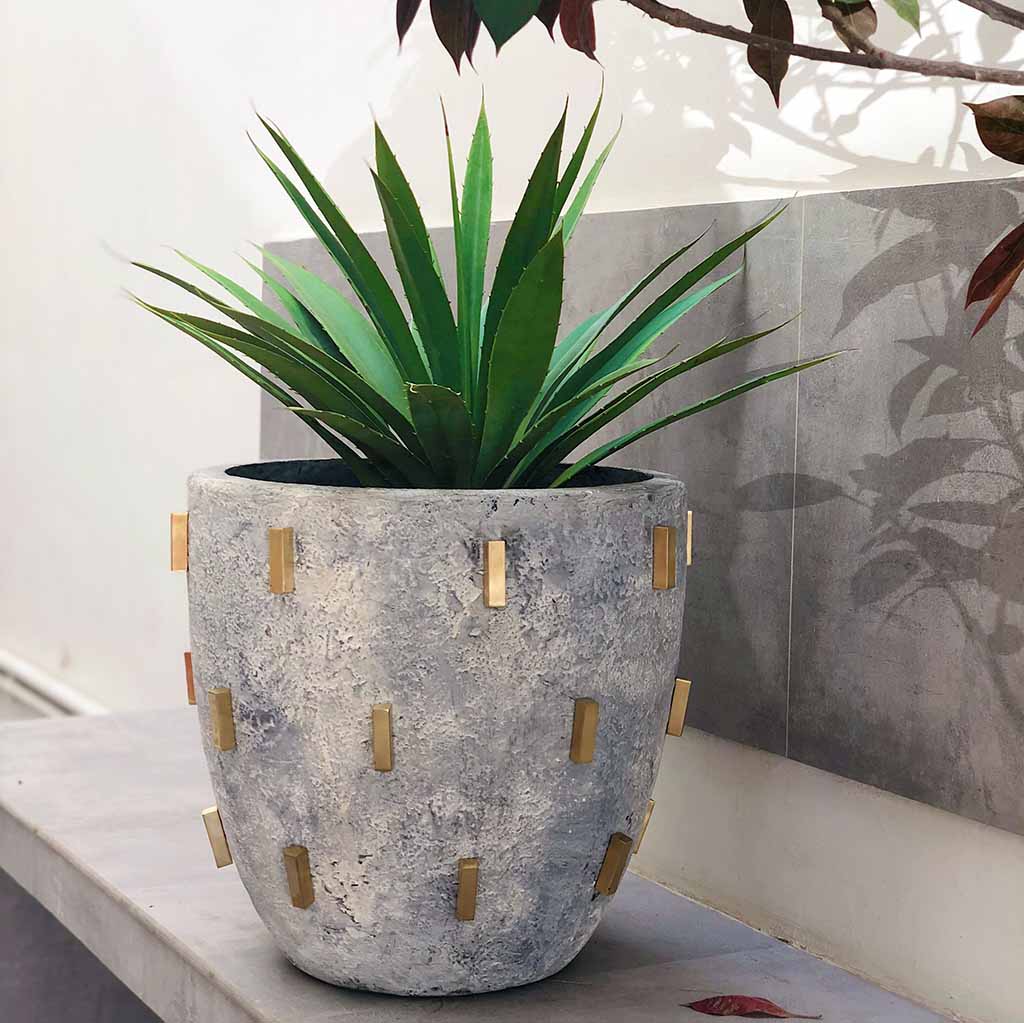
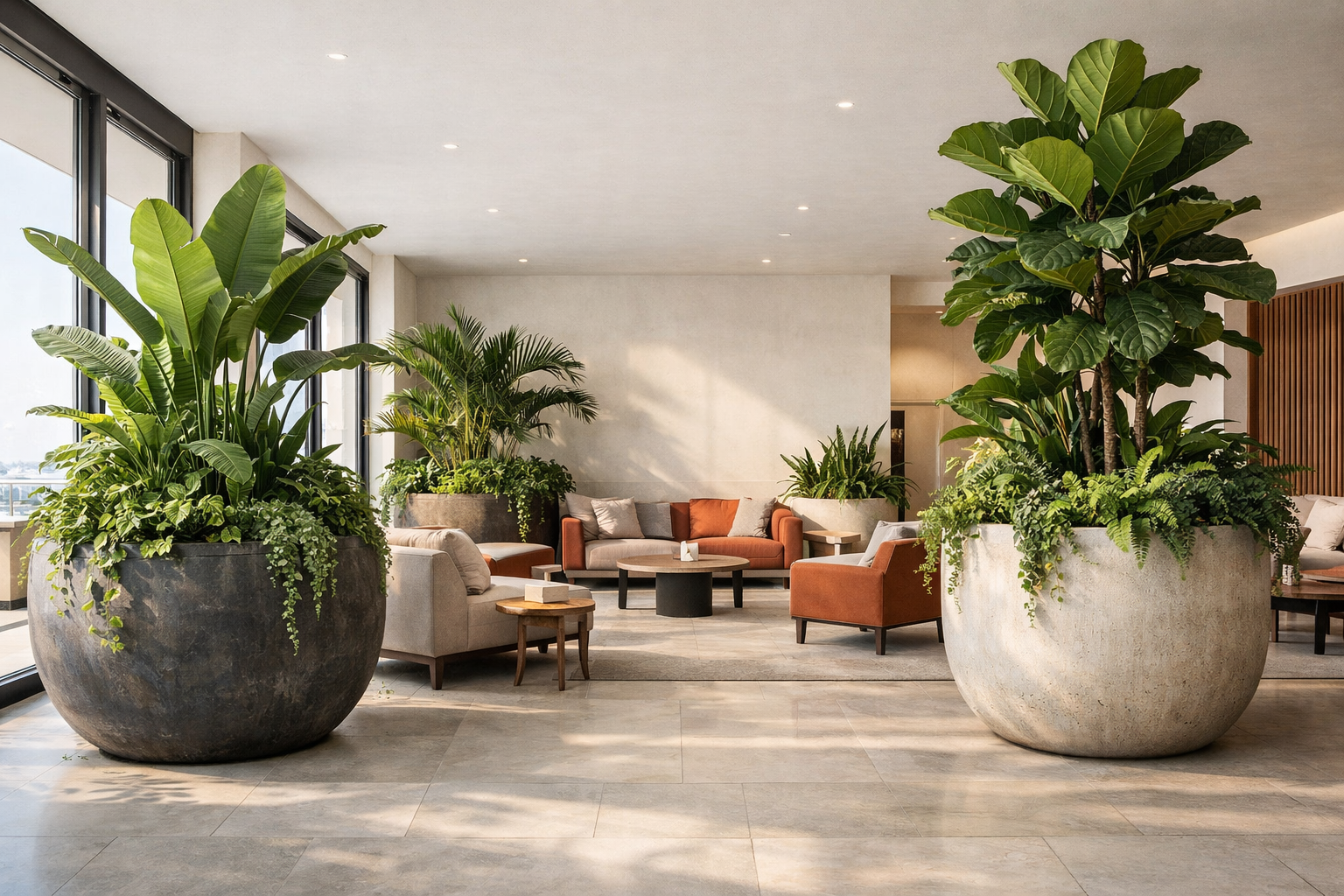
There is a quiet mistake repeated across otherwise well-considered homes: the potted plant treated as decoration, tucked into a leftover corner once every “important” purchase has been made. It is time to retire that habit. A large-scale planter is furniture, an object with structure, mass, and presence that deserves the same deliberation given to a console table or a sculptural armchair.
This shift changes how indoor planters are selected and placed. Approach plant pots indoor as architectural elements rather than afterthoughts, and a floor-standing planter starts doing what furniture does: grounding a space, establishing a focal point, introducing a rhythm the eye can follow.
The appeal is not purely visual. Indoor floor planters bring organic texture into spaces otherwise dominated by hard surfaces, glass, plaster, stone, lacquer. Foliage softens sharp architectural lines in a way static furnishings cannot replicate, and the shifting light through leaves is part of what makes a room feel inhabited rather than staged.
Curing Dead Space: Corner Dynamics & Architectural Warmth
Every home has them: corners that never quite work. Too small for a chair, too awkward for shelving, too visible to ignore. These forgotten zones are precisely where indoor floor planters for corners earn their keep.
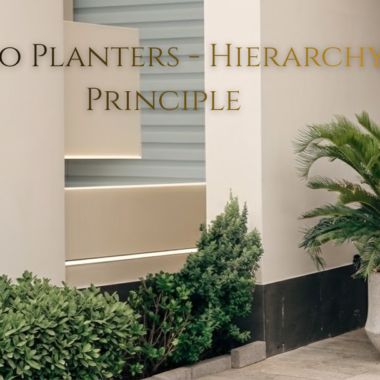
A well-scaled planter fills a dead corner with purpose rather than clutter. Where a hard 90-degree wall meets a window mullion or beam, the geometry can feel unforgiving. A tall, leafy silhouette against that angularity creates a visual conversation, stiff lines softened by organic form.
Particularly effective corner conditions:
- Beside floor-to-ceiling windows, where height mirrors the vertical glass line
- Behind or beside seating, anchoring a sofa without crowding the walking path
- In entryway corners, setting the tone before a guest has taken three steps inside
- Flanking staircases, echoing the vertical climb of the stair rail
The principle is simple: a corner that feels empty is rarely solved by adding more furniture. It is solved by adding the right mass at the right height.
Sizing & Proportions: Scale Rules for Different Room Volumes
Nothing undermines a beautifully chosen plant faster than poor proportion. A planter too small looks apologetic; one too large overwhelms. The relationship between ceiling height, floor area, and the planter itself is a matter of arithmetic as much as taste.
A few working guidelines:
- Ceilings under 9 feet: planters between 12–16 inches in diameter, foliage no taller than 5–6 feet
- Ceilings 9–12 feet: planters of 16–20 inches with foliage between 6–8 feet
- Ceilings above 12 feet or double-height spaces: commit to genuine scale, 24-inch planters and specimens reaching 8–10 feet
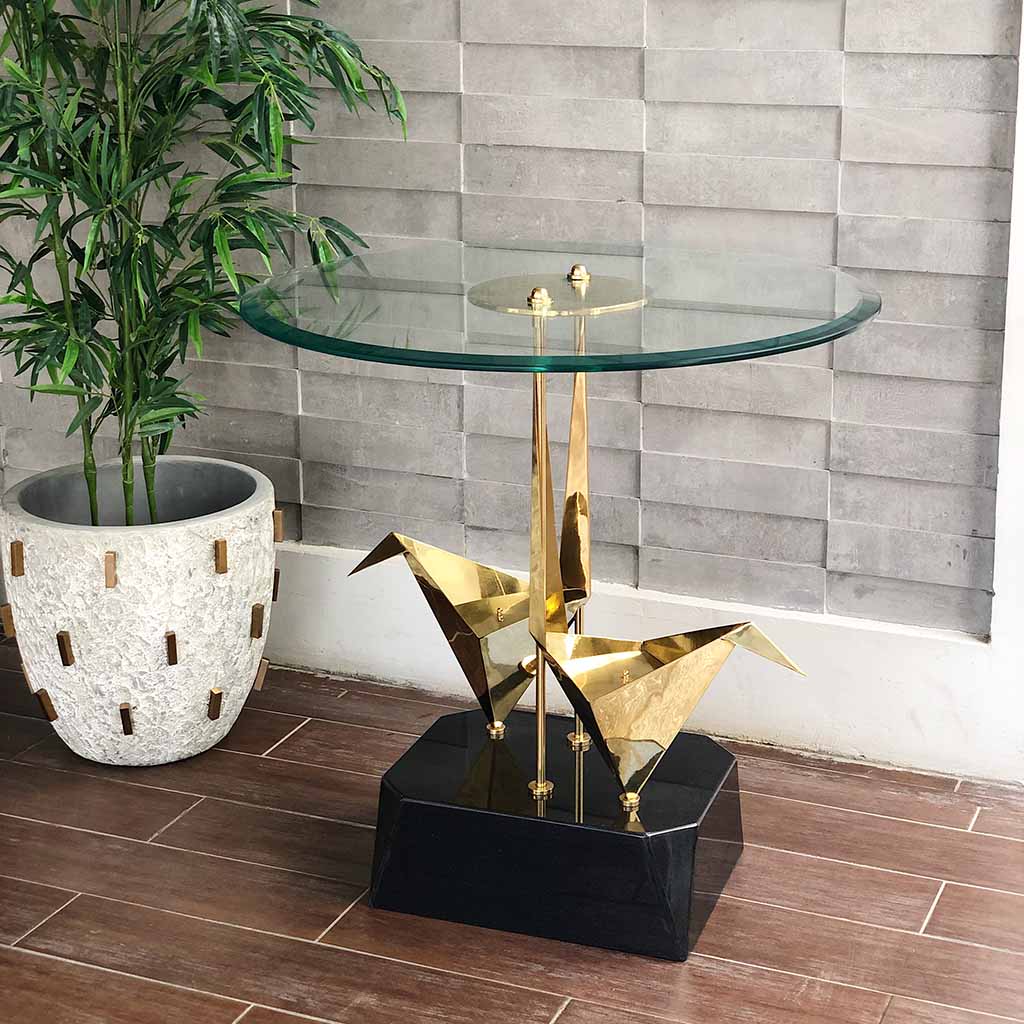
Room footprint matters as much as ceiling height. In compact layouts, resist shrinking the planter itself, choose decorative tall plant pots for indoor use with a slimmer profile on an elevated base instead. A narrow silhouette lifted off the floor preserves sightlines while still delivering height and drama, a more elegant solution than a wide, ground-hugging pot that eats into limited circulation.
The golden rule across every room size: the planter and its foliage together should occupy roughly one-third of the available wall space behind it. Less, and the composition feels tentative; more, and it competes with the architecture rather than complementing it.
Compositional Strategy: Single Statement vs. Clustered Heights
There are two disciplined approaches to styling with indoor planters, and knowing which a space calls for is a matter of reading the room.
The single statement works best in rooms with strong architectural bones, a soaring ceiling, an unbroken wall, or a dramatic window. One monumental specimen does the work of an entire furniture grouping. A Fiddle Leaf Fig catching light at every angle, a gnarled Olive Tree with the gravity of an antique, or a Strelitzia unfurling paddle-shaped leaves toward the ceiling, each reads as sculpture. Resist adding companions; the power of the single statement lies in its solitude.
Clustered heights, by contrast, suit rooms that benefit from layered depth, a reading nook, a wide living room corner, a stair landing. The rule of threes governs this well:
- One tall anchor plant (7–8 feet) for vertical presence
- One mid-height plant (3–4 feet) for transition
- One low, wide or trailing variety for ground-level texture
Vary the pot diameters as much as the plant heights, uniformity flattens the composition. The goal is a silhouette that reads as intentional layering, not a row of identical pots.
Material Intelligence: How Planter Finishes Define Room Tone
The plant itself is only half the equation. The vessel that holds it does as much to define a room’s character as the foliage rising from it.
- Ceramic and terrazzo bring tactile elegance to classic and contemporary interiors alike. Glazed ceramic in deep tones suits rooms already rich with color and pattern, while terrazzo’s flecked surface introduces movement without competing with other textures.
- Concrete and stone offer industrial grounding with surprisingly minimal architectural weight, matte surfaces that read as calm rather than heavy, ideal for pared-back interiors.
- Metallic and dark metal finishes deliver sleek modernism. A brushed brass or blackened steel planter introduces subtle reflectivity, suiting urban, design-forward interiors chosen with restraint.
- Fiberglass and composite planters offer clean lines with genuine lightweight versatility, particularly for oversized pieces that need repositioning. They deliver the visual weight of stone without the literal weight, practical for larger-scale indoor floor planters in upper-floor apartments or seasonally restyled spaces.
Choosing the right material is ultimately about tonal consistency, matching the planter’s finish to the room’s existing material story, rather than an isolated decorative choice.
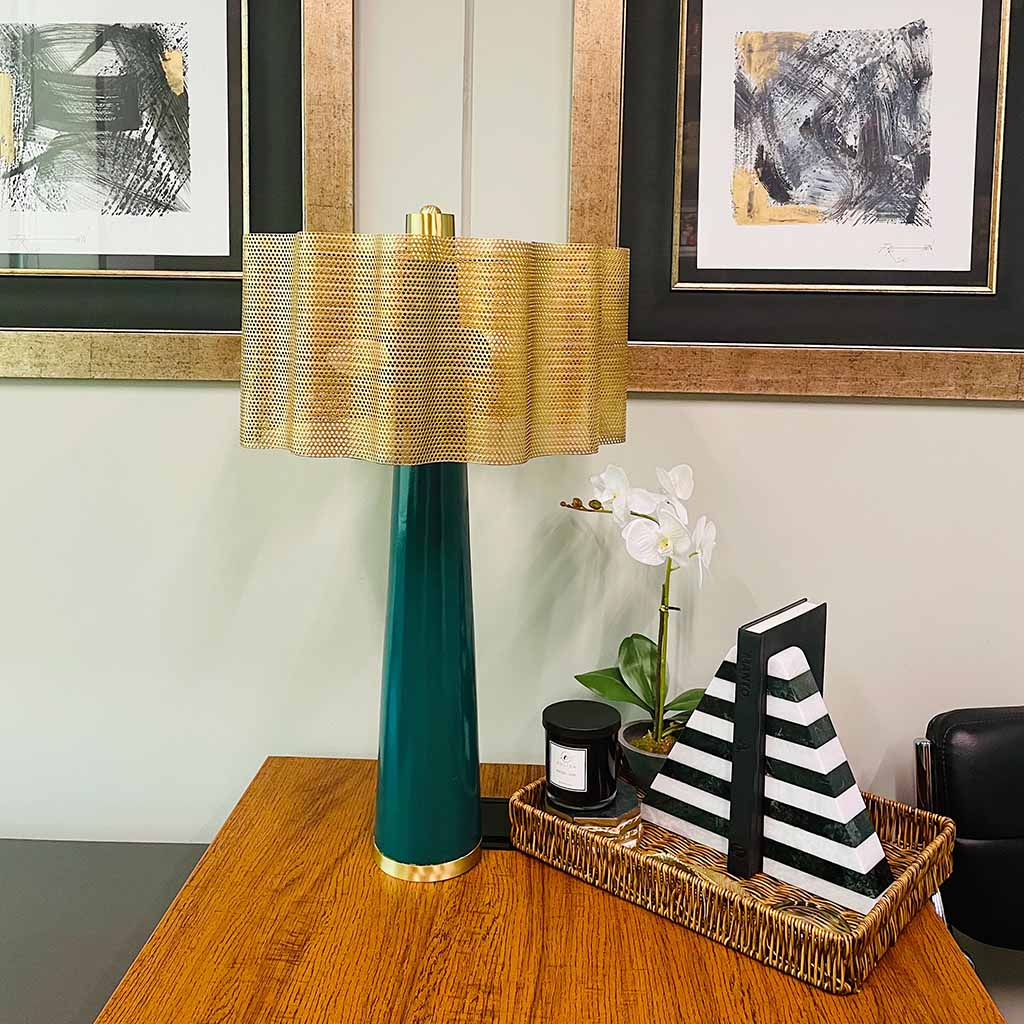
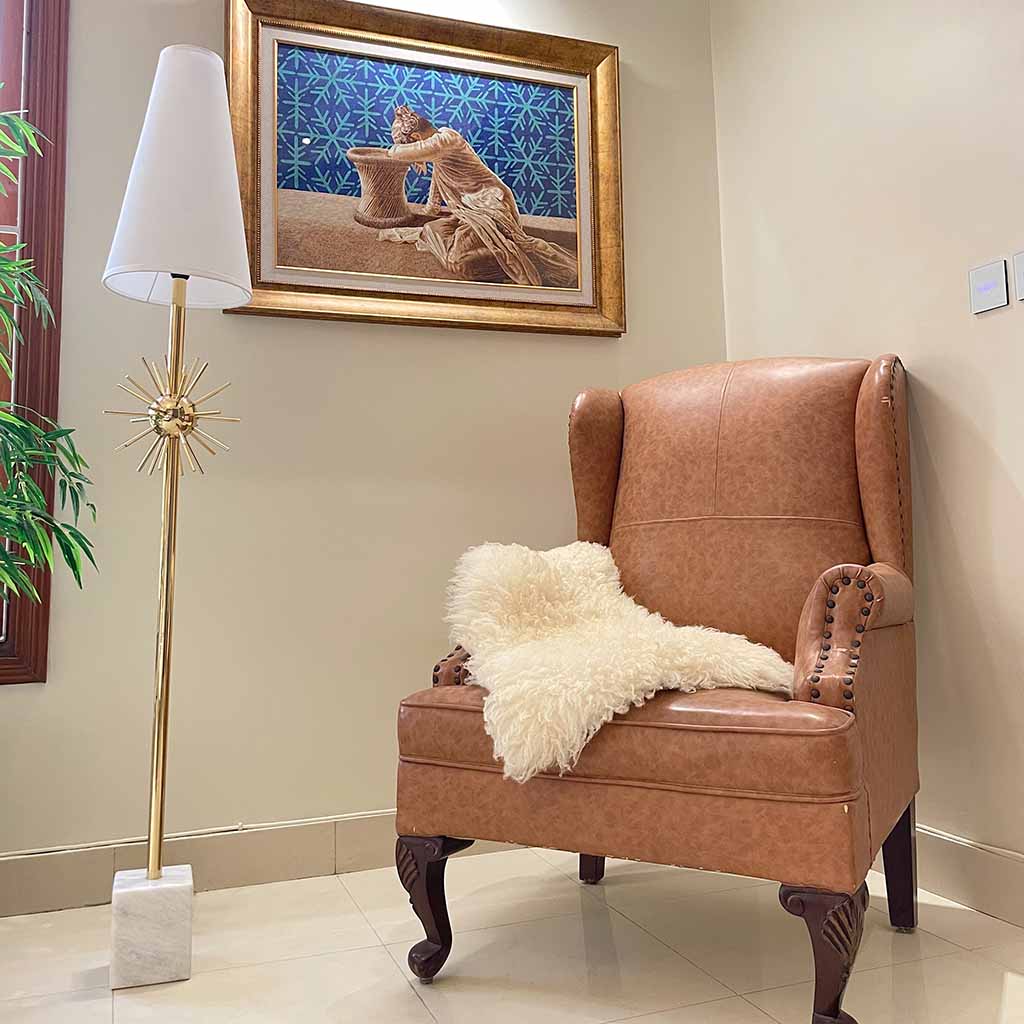
Your home’s corners, landings, and quiet volumes deserve more than an afterthought. Creo Living’s collection of home decor, furniture, lamps, and serveware brings the same material intelligence to every room, turning considered choices into a home that feels complete.
FAQs
1. How do I know if a planter is too big for my room?
If it exceeds roughly one-third of the wall space behind it, or obstructs walking paths, it’s oversized. Scale down the diameter before reducing the height.
2. Can I mix planter materials within the same room?
Yes, provided one material dominates. Pair a primary finish, say, ceramic, with a single secondary material like metal or concrete, rather than introducing three or more competing textures.
3. What is the ideal planter height for a corner beside a window?
Aim for foliage reaching at least two-thirds of the window height, so the planter reads as a continuation of the architectural line.
4. Should clustered planters match in style?
They should relate, not match. Vary height, diameter, and material slightly while keeping a consistent color family so the grouping still feels cohesive.