



The kettle clicks off. Cups come down from the cabinet, a few matching, a few not. Someone tips biscuits into the nearest bowl, and the tray crosses the room with a slight tilt and a lot of goodwill.
Still, the chai table may be the most used hosting arrangement in a Pakistani home, and it is usually assembled for convenience alone. The dining table gets a runner and a plan. The chai tray gets whatever is closest.
Pakistani chai table styling comes down to four decisions: a tray sized to its contents, one anchor object, two or three materials, and enough open space to pour comfortably. None of it requires buying more. It asks for a little extra care, which turns a daily habit into a small ceremony.
Why the Chai Table Is More Than a Serving Arrangement
In many Pakistani homes, tea is the first thing a guest is offered, an invitation to sit without the formality of a meal. Households do it differently: some boil leaves and milk together for doodh patti, others brew in a pot and pour into delicate cups, and pink Kashmiri chai is especially associated with Punjab and Kashmir. Biscuits, rusks, nimko and samosas often keep it company.
A mug at the counter is one thing; a guest spread is a deliberate pause. Since the tray appears so often, it deserves the attention we give the sideboard. Modern home decor and a few well-chosen home accessories can sit comfortably beside your mother’s cup set.
Start With the Tray: The Foundation of Chai Tray Styling
Choose the tray first; everything else is placed around it. It should hold cups, saucers and bowls with a hand’s width to spare, because a tray filled edge to edge looks anxious and is harder to carry. Rectangular trays line cups up neatly on a sideboard, while round ones soften a square table. Look for grippable handles, a stable base and an easy-wipe surface.
A serving tray such as the Flora Flat Deep Serving Tray shows the logic. It measures 20.5 by 10.5 inches, with a detachable glass tray framed by chrome-finished brass handles, so cups stay visible. Test any tray with a full teapot first; more sit in Creo Living’s serving trays collection.
Build the Composition Around One Anchor Object
The teapot or kettle usually earns the anchor role. Place it where the pourer can reach without leaning across anything. Group cups and saucers beside it, then add two or three small bowls for sugar, biscuits or nuts, and a spoon or tongs only where they will really be used. One restrained accent from your existing decoration items is plenty.
Here is a practical rule: if you will reach for it in the first two minutes, it goes on the tray; everything else waits on the side. Favour odd numbers and varied heights.
A compact Flora Condiment Bowl can work as a sugar station: three stainless steel bowls around a central handle, 9 inches wide and 7 inches tall. It is designed for chutneys and pickles, so sugar is a styling idea, not its stated purpose. Its height suits the back of the tray.
Materials That Make Chai Styling Feel Warm and Considered
Choose two or three materials and let one lead:
- Brass-toned metal adds warmth and catches light; one small accent is enough.
- Warm stone and marble bring weight and natural variation.
- Handcrafted or artisanal-looking ceramic, such as cups you own, adds softness.
- Clear glass keeps things light and lets shapes show.
- Wood adds an organic note beside neutral ceramics.
Palettes can stay quiet: creamy whites, warm browns, soft greens, stone tones and one metallic. The best mix depends on your room and existing dinnerware.
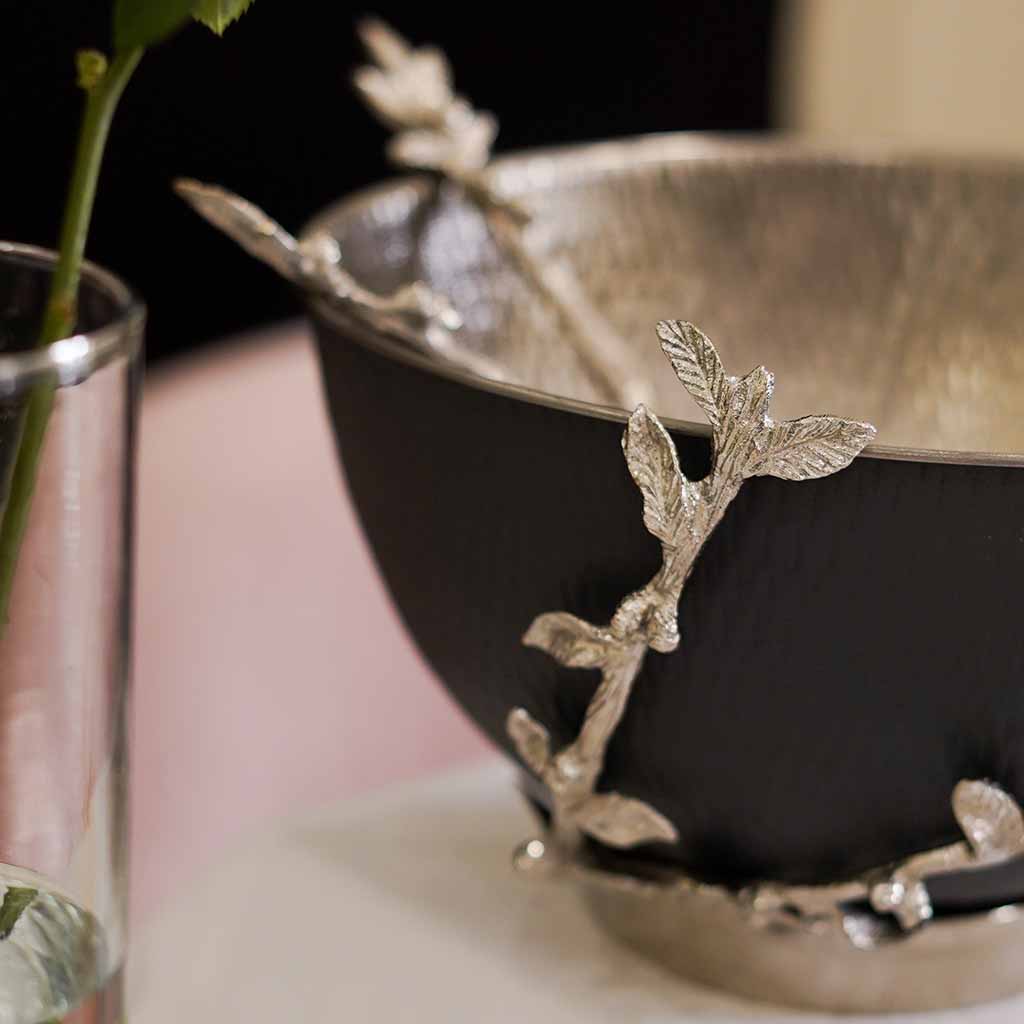
The Lumen Serving Bowls show two materials working together: a round onyx bowl with a hand-cast brass starfish, in 8, 10 and 12 inch sizes. The product page suggests dry fruits. Keep its neighbours calm, or choose plainer serving bowls.
The Permanently Styled Chai Tray
A tray left on a counter, sideboard or console makes the daily ritual feel intentional. Six steps:
- Choose a stable, accessible surface.
- Pick a tray that fits with room to spare.
- Group a few useful objects on it.
- Keep frequently used items within reach.
- Leave an open surface for daily tasks.
- Remove anything that gathers dust or has no clear job.
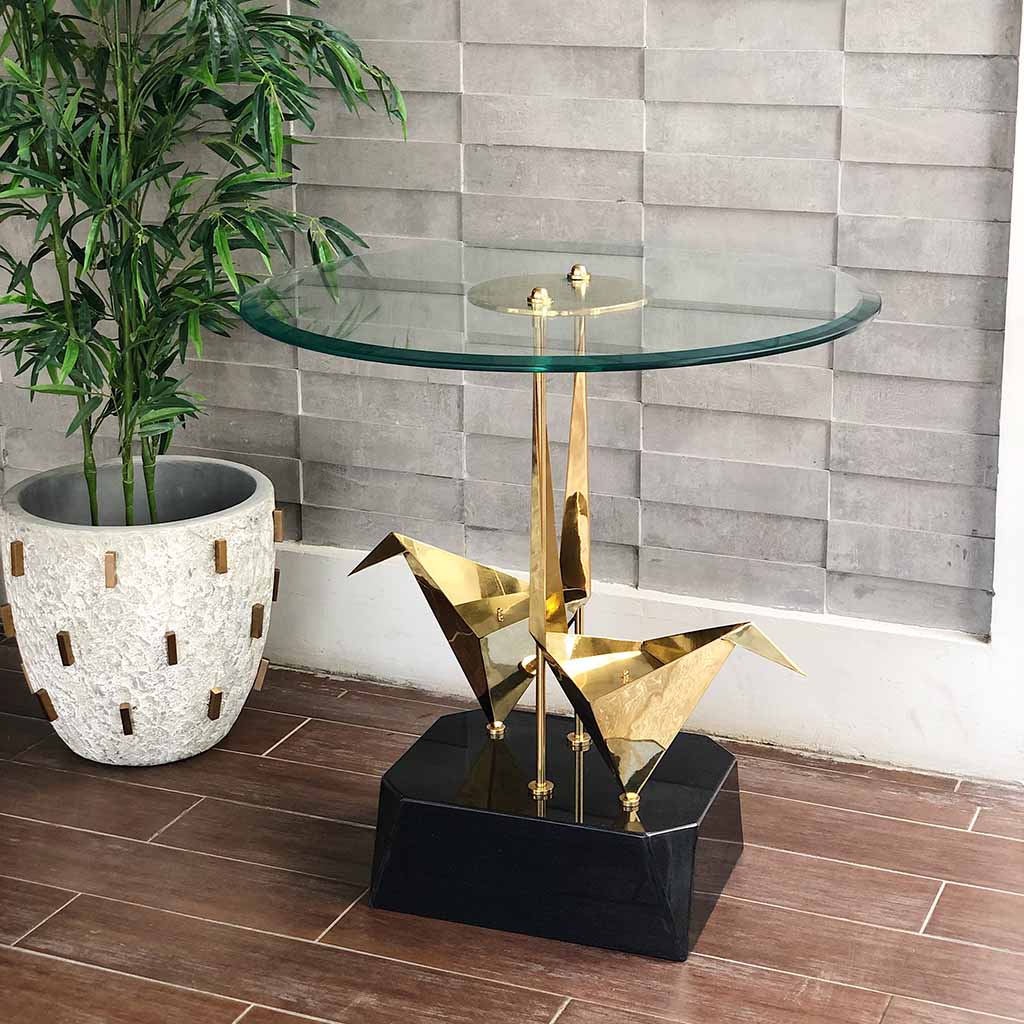
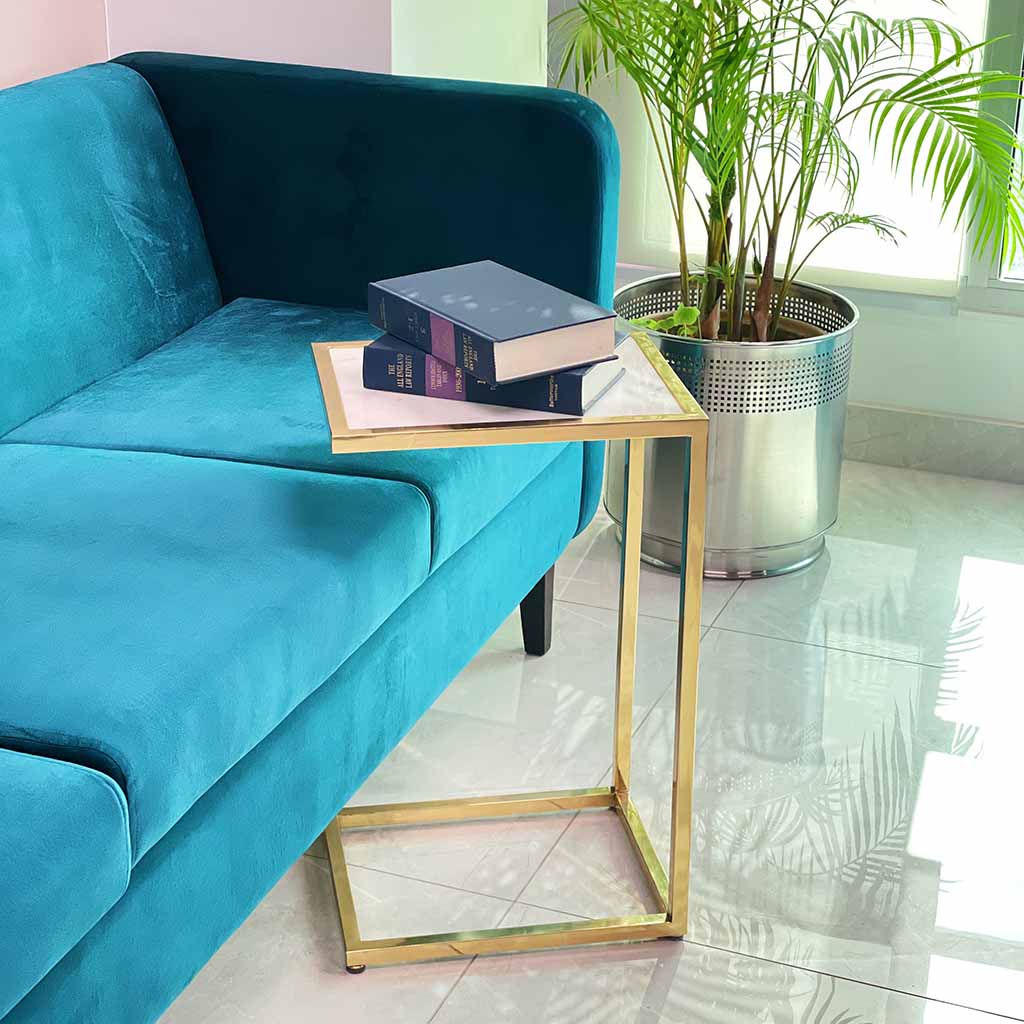
A display vignette is not a tray ready to serve. Leave a bowl and a few decorative items for home out between uses, and add the kettle, cups and fresh biscuits only when needed. In a compact kitchen, style one corner of the counter; in a multifunctional dining area, use a console. A side table for a dedicated chai corner adds a flat surface where space is tight.
The Guest Chai Edit: Three Thoughtful Upgrades
For guests, keep the everyday setup and add three things:
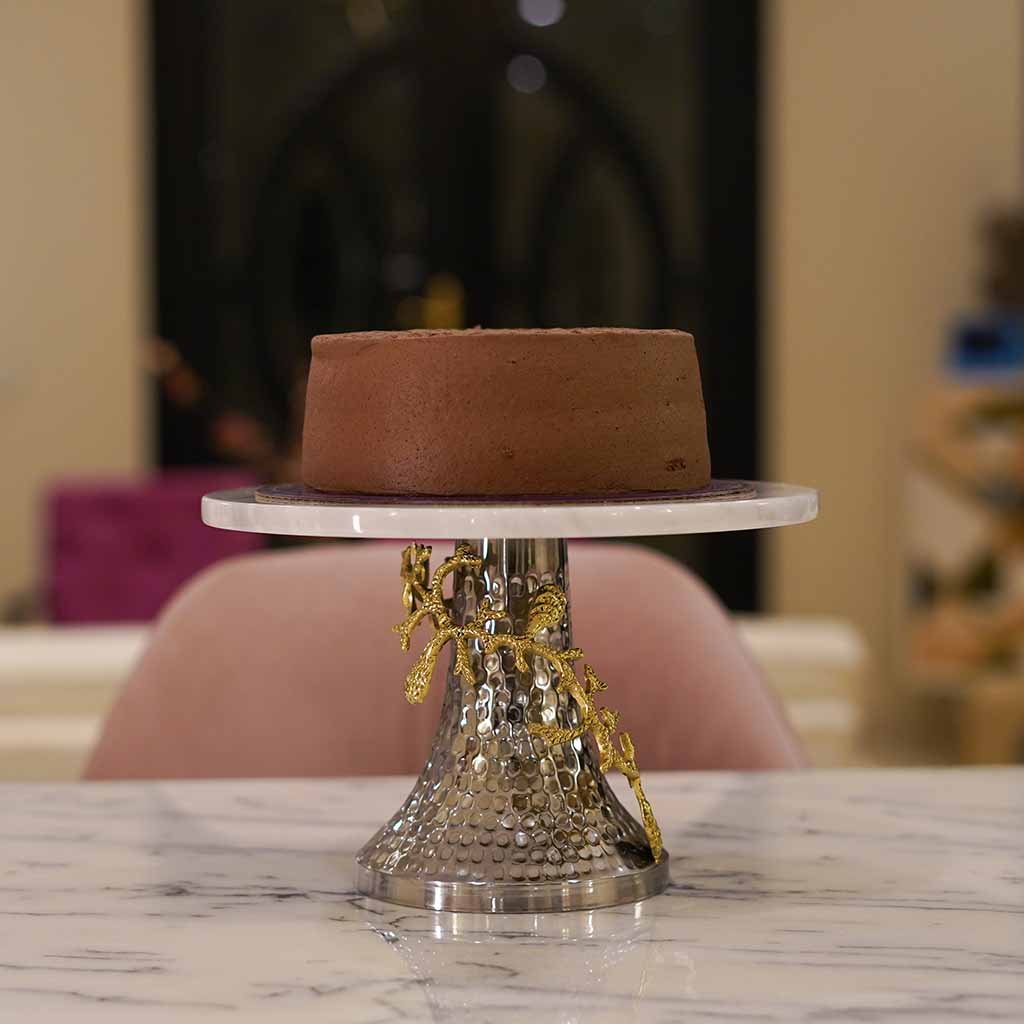
- A raised level. A cake stand Pakistan hosts will use all year gives biscuits and mithai their own height. The Capra Cake Stand pairs an 11.5 inch white marble top with a detachable brass ibex base, 5.5 inches tall.
- A better bowl. Move nimko or dry fruit into something sculptural.
- Matching utensils. Tongs or spoons from the serving utensils and accessories range tie separate pieces together.
Separate by function: hot items near the pourer, dry accompaniments opposite, delicate sweets on the raised stand away from drips. Two guests need one level; eight may need two trays.
Common Chai Table Styling Mistakes
- Overfilling. Remove items until pouring feels easy.
- Mixing too many finishes. Stay within three materials.
- Awkward bowls. Check that a spoon fits.
- Symmetry over access. Arrange for the pourer’s reach first.
- Ornaments in the pouring zone. Keep accents at the back edge.
- Buying a full matching set. A few coordinated pieces beat a boxed set of dinnerware Pakistan stores sell.
- A permanent tray in the way. Move it if it crowds the kettle.
A Ritual Worth Styling
Genuine elegance is not a matter of luxury home decor budgets. It is a handful of considered choices and the people around them. The tray only needs to be at hand when someone says, “Baith jao, chai ban rahi hai.”
Find high-quality, luxurious gifting items, home decor items, furniture, lamps, and serveware accessories at Creo Living. Bring home considered pieces that suit your space and make thoughtful gifts.
FAQs
1. How do you style a Pakistani chai table elegantly?
Start with a tray sized to its contents, then build around one anchor, the teapot or kettle. Add cups, two or three serving bowls and one restrained accent, keep to two or three materials, and leave space for pouring.
2. What should you include on a chai serving tray?
Essentials are the teapot or kettle, cups and saucers, sugar, spoons, and one bowl of biscuits or rusks. Napkins and accents are optional. If you will not reach for it in the first two minutes, leave it off.
3. How can you style a small chai corner in a Pakistani home?
Use one tray on a counter, sideboard, or slim console with a few useful objects. Keep surface space free for daily tasks, store cups nearby, and consider a compact side table for a dedicated corner.
4. Which serveware pieces make a chai setup suitable for guests?
A tray with secure handles, a serving bowl for dry accompaniments, and a cake stand or platter for sweets give guests a clear, generous layout. Add tongs or spoons where they help.