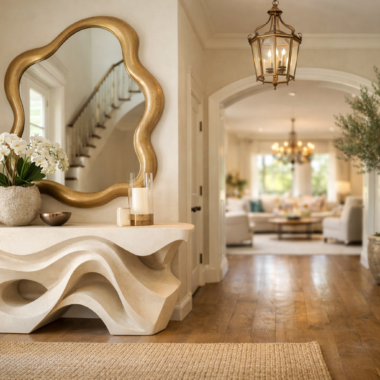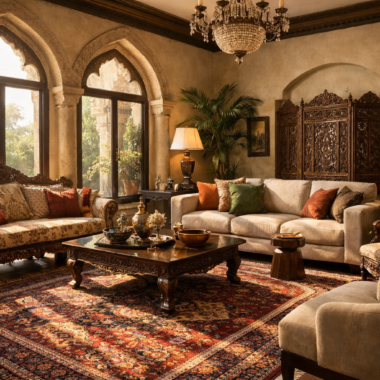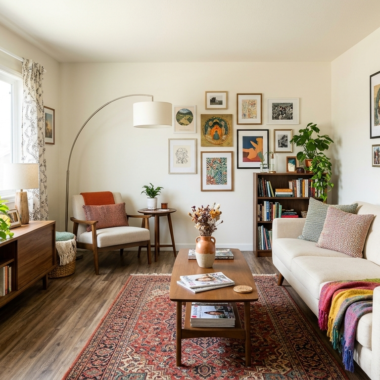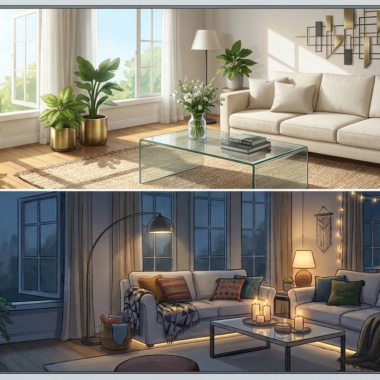

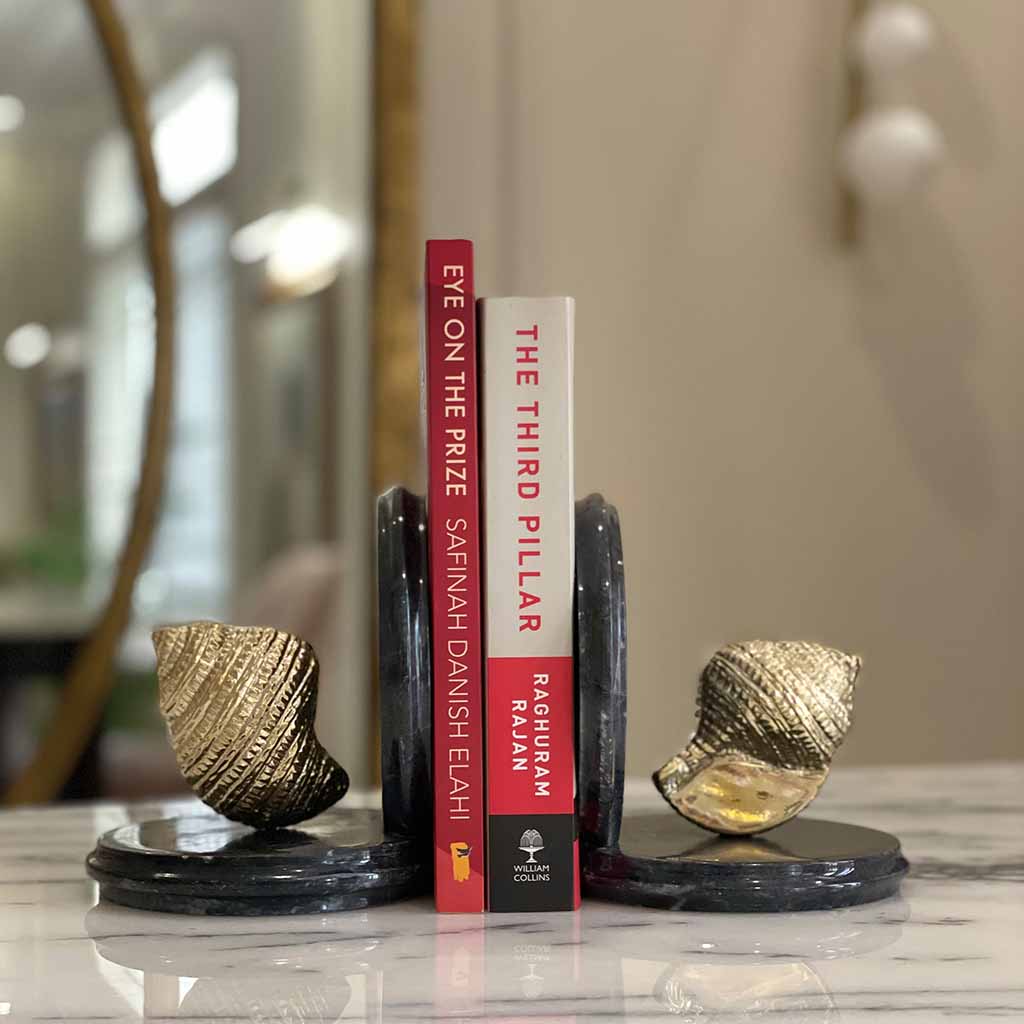
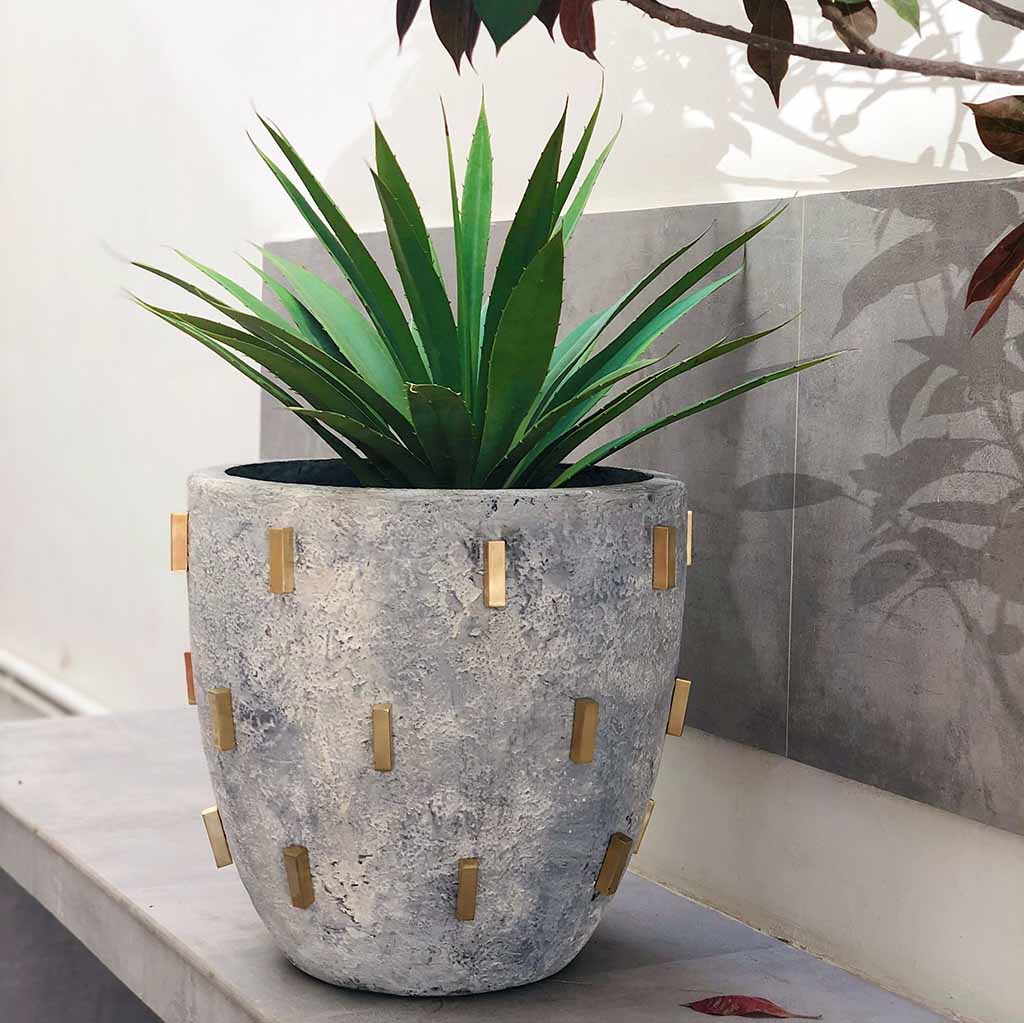

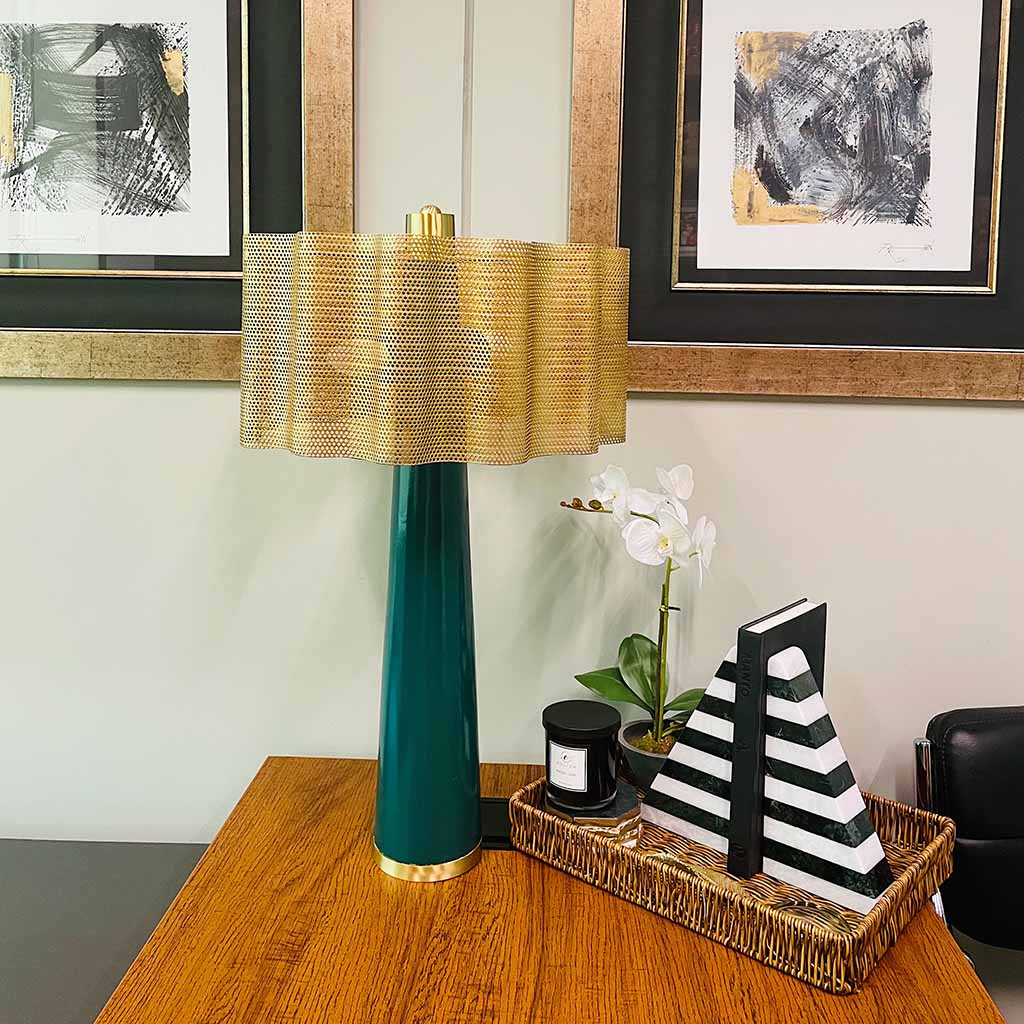
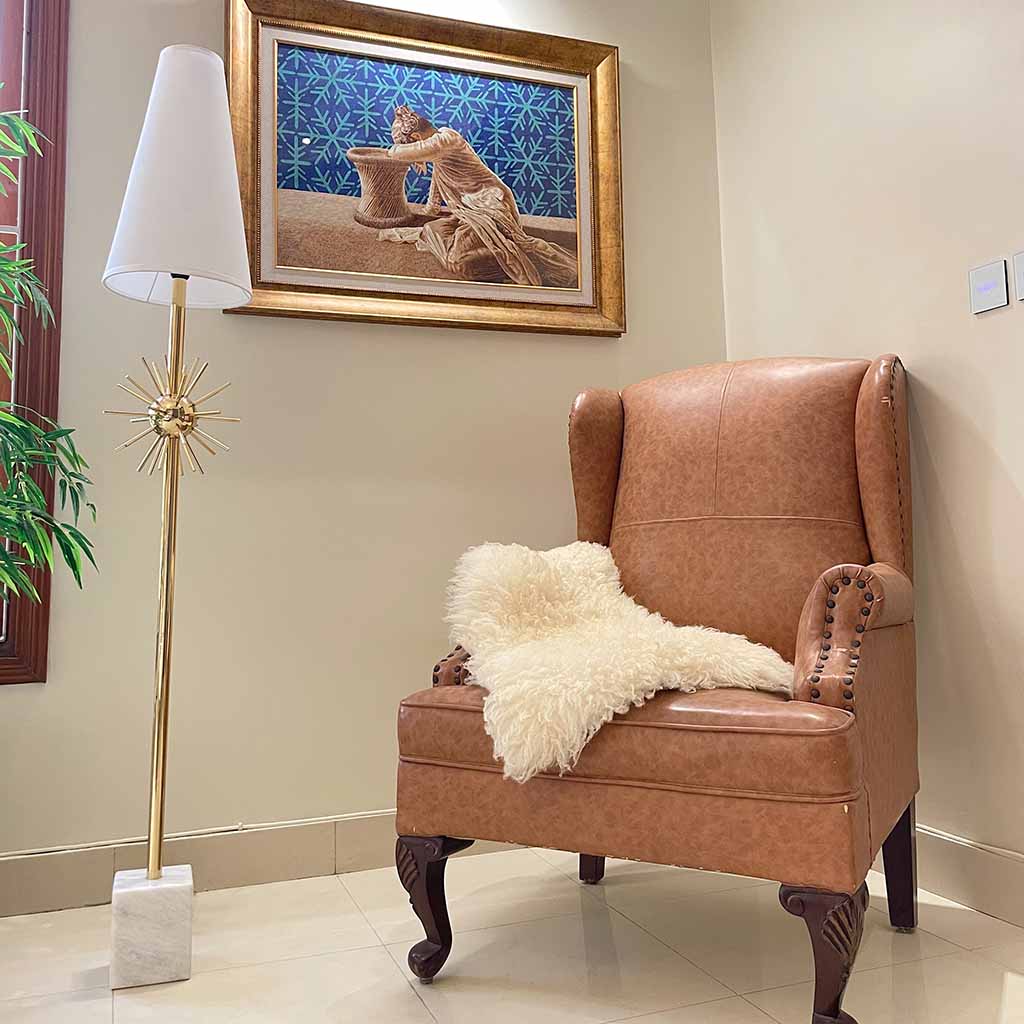

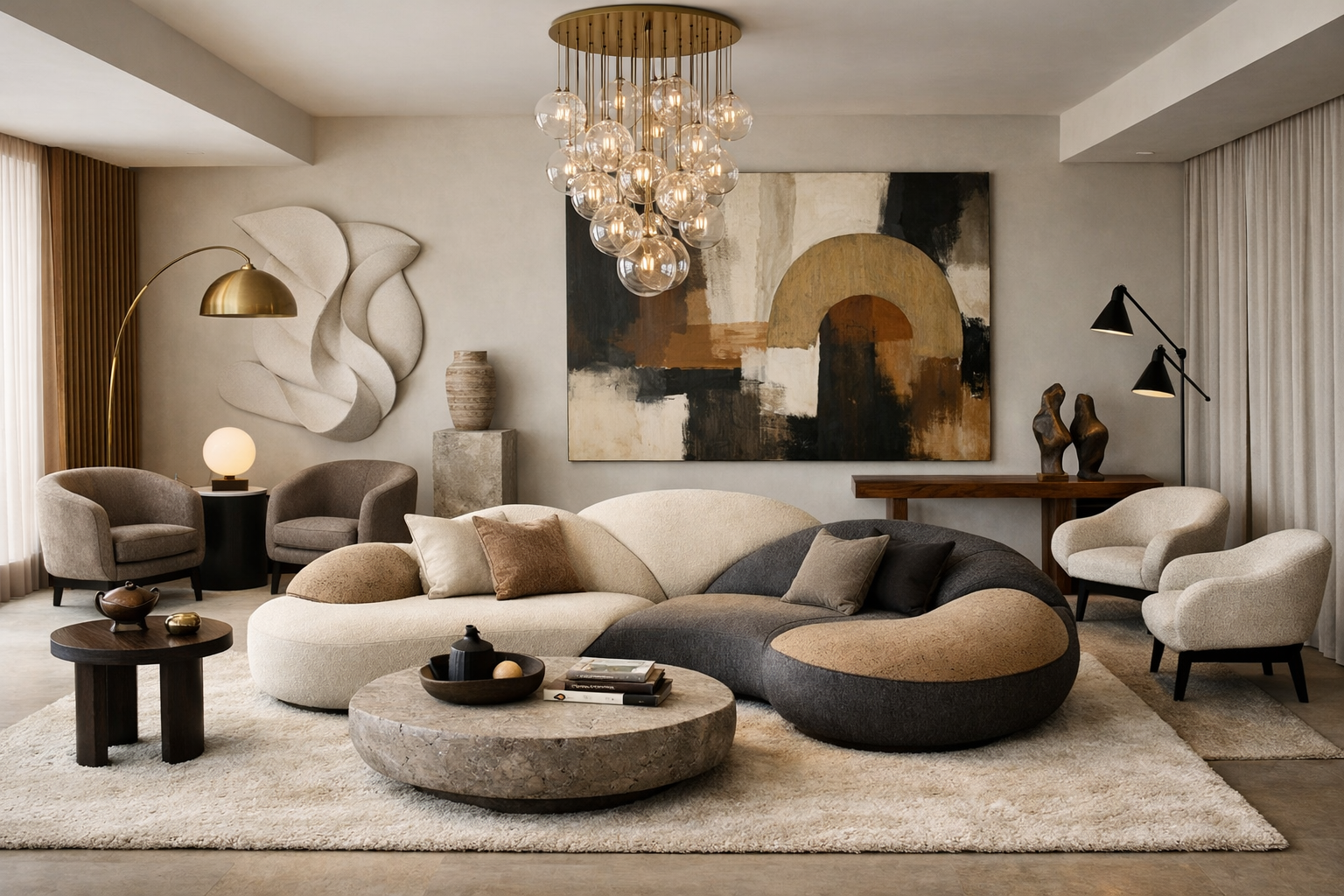
A statement sofa rarely makes a room hard to style because it demands attention. It gets difficult when the lamp, the side table, the vase, and the cushions all demand it too. Most of us treat the sofa as a fixed obstacle, then shop for home decor items and hope something agrees. Reverse the order: let the sofa write the brief, and give every other object a job within it.
This works for an emerald velvet L-shape, a dark leather three-seater or a pale linen sofa that dominates through scale alone. Nothing needs replacing; you only need to read what is there.
Read the Sofa Before You Shop
Start by asking how the sofa dominates: colour (burgundy or navy velvet), mass (a deep sectional), material (dark leather), or scale and texture, as neutral statement sofas do. The rest of the room should not repeat that quality.
Then identify the undertone:
- Warm: yellow, red or earthy brown leanings, such as caramel leather or olive.
- Cool: blue, grey or blue-green leanings, such as navy, slate or deep teal.
- Neutral: greige, oatmeal and taupe, which swing warm or cool depending on their neighbours.
Context shifts everything. A grey sofa looks crisp beside cool marble and softer beside warm wood; deep green velvet settles beside brass, cream and earthy tones but fights random brights. Judge fabric in daylight and lamplight, in the room itself; showrooms and phone screens mislead. Before buying anything, note the sofa’s colour, undertone, material and visual weight.
Build a Colour Story, Not a Matching Set
Matching every object to the upholstery gives you a showroom display. Think in roles: the sofa’s colour, calm neutrals for the eye to rest on, one or two deliberate accents, and linking finishes such as brass, black, marble, wood or glass.
Two starting points: a deep green velvet sectional with warm ivory, muted stone and restrained brass; or caramel or dark brown leather with charcoal, textured ceramics, warm wood and a few lighter accents. These are prompts, not formulas; floors, walls, curtains and daylight will adjust them. Repeating two or three colours across unlike objects creates continuity without a catalogue look.
Furniture That Answers the Sofa’s Scale
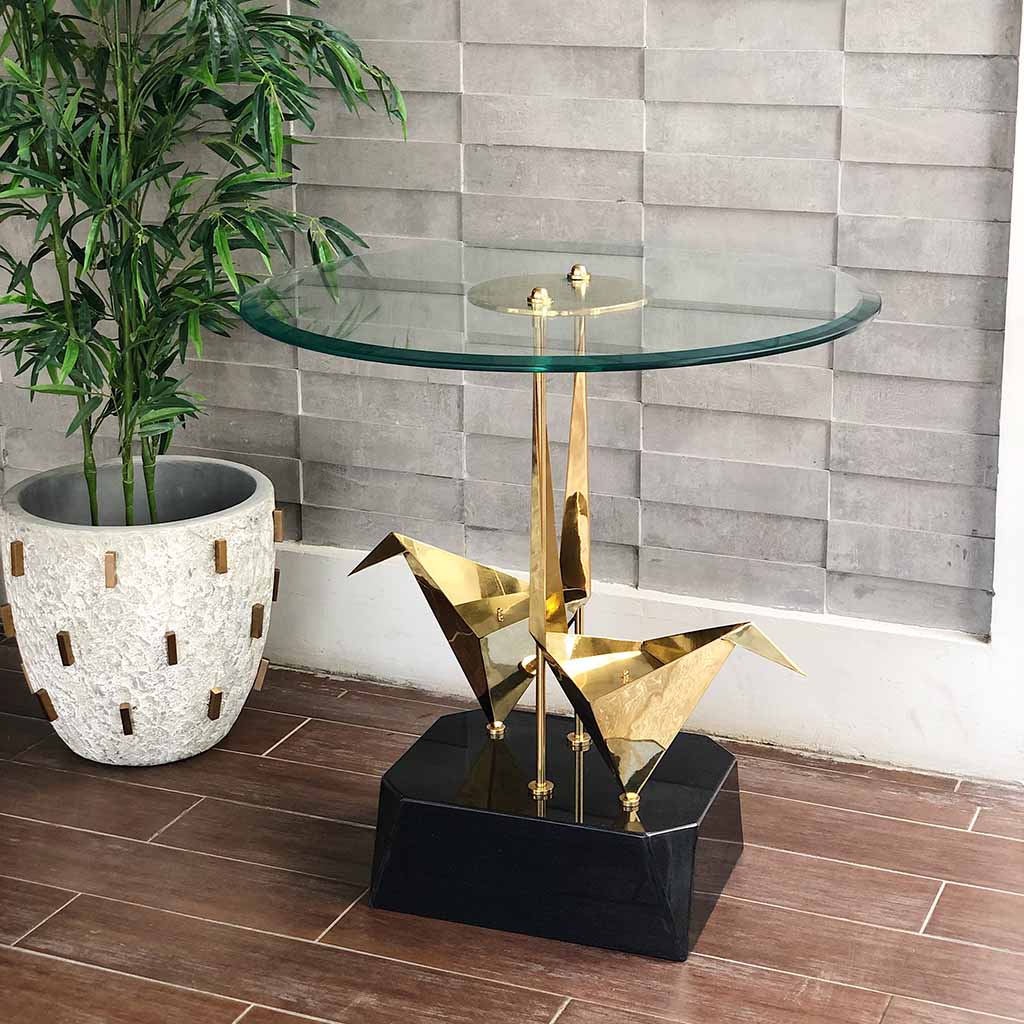
A substantial sectional can carry a table with real presence; a slender sofa is overwhelmed by something bulky or ornate. Keep the tabletop within a few inches of the sofa’s arm height. Round forms soften an angular L-shape; straight edges sharpen a rounded sofa. Leave negative space at the open end of a sectional and keep walkways clear. A sculptural table suits a plain sofa; beside a sculptural one, choose something quiet.
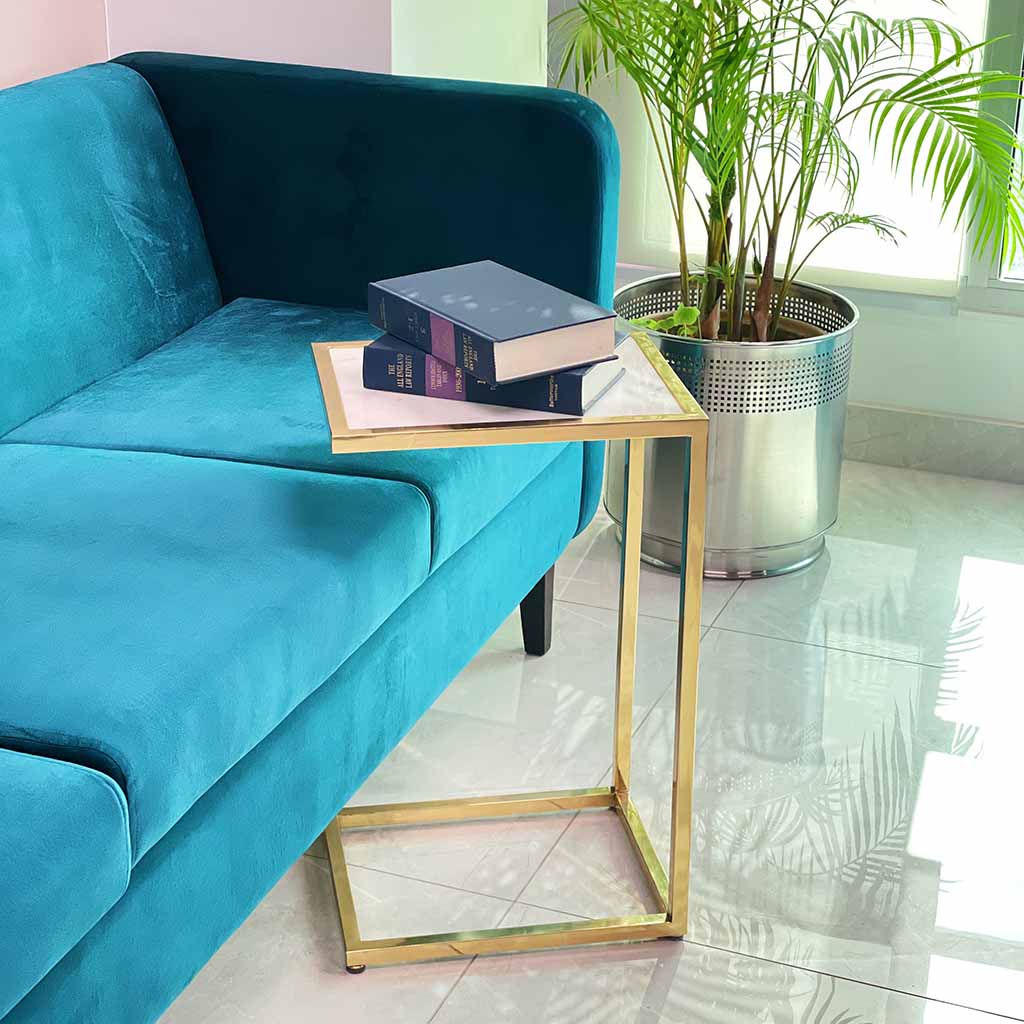
The Ceto Side Table has a slim brass frame under a white marble top (16.5″ L, 12″ D, 26″ H), and its open profile sits snugly against a sofa without adding bulk. The Clio Side Table, a 24-inch round of brass mesh over fiberglass with a wood top, is more sculptural, best beside a plain neutral sofa where it can be the single textured object. Neither suits every sofa; check scale first.
Layer Lighting So the Sofa Has Context
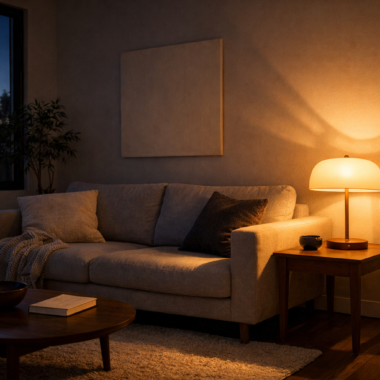
One overhead light leaves a dominant sofa a flat block. A second pool of warm light adds depth, softens dark upholstery, and brings out velvet pile or leather grain. Put a table lamp on a side table or console and a floor lamp at a sectional’s open end. Keep the shade’s lower edge near eye level when seated, and let the finish relate to the palette without matching it.
The Magnus Table Lamp, a hammered brass dish on a matte black fiberglass cone (30″ high), gives black-and-brass contrast against ivory or green upholstery. Its warm, indirect glow suits atmosphere more than reading, so pair it with another source. When choosing a table lamp in Pakistan, check its height against your sofa. The Ciel Floor Lamp is a 67-inch dark blue pillar with brass rings, a slim vertical that repeats the brass.
Echo Materials, Then Introduce Contrast
Repetition links objects; overmatching flattens them. Velvet cushions, pouf, and curtains around a velvet sofa are overmatching. Echo a tone or finish, and let textures differ:
- Velvet: textured ceramics, matte finishes, restrained metallics.
- Leather: burnished brass, natural wood, tactile stone.
- Neutral linen: sculptural dark objects and a contrasting table finish.
- Dark sofa: lighter surfaces such as pale wood, marble or glass, without turning the room stark.
Contrast adds interest when deliberate and limited, like one dark object against a pale sofa. It becomes confusing when every object brings its own material, colour and shape. Two things need not share a material; they need a relationship through tone, scale, shape, texture or purpose.
Use Trays, Candle Stands and Decorative Objects With Intention
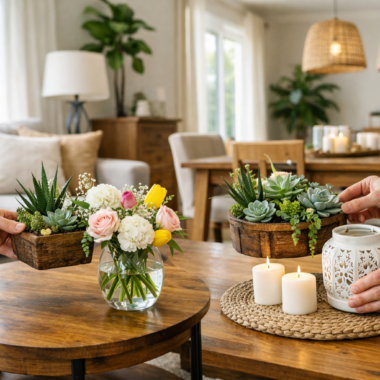
Choose one surface (side table, centre table or console) and style it as a group: a tray as the base, one sculptural object, and a candle stand or small vessel. Vary height and shape, leave empty space around the statement piece, and repeat a finish once. When buying home decor in Pakistan, favour decorative items for home that are useful, characterful, or both.
The Vulcano Tray, in black, white and beige marble with a brass frame (15.5″ L, 8″ D), gathers objects into one composition. The Mira Candle Stands, tapered marble in travertine or black (16 to 17 inches high), add vertical counterpoint to a low tray: travertine warms caramel leather, while black marble sharpens neutral linen.
Bring In Greenery Without Starting Another Competition
A floor planter at an open corner softens a large sectional’s mass and gives upholstery, stone, metal, and wood a natural counterpoint. Use a smaller one where it won’t block circulation or crowd a lamp. Indoor planters suit rooms with good light; hanging planters only where ceiling height and layout allow. The Planters & Sculptures collection includes both; skip them if the room is already full.
The Mistake That Makes These Rooms Look Overdone
The culprit is over-accessorising. A bold sofa already brings colour, volume, or sculptural presence; several statement lamps, ornate tables, competing metals, and unrelated decoration items only dilute it. Edit with these rules:
- Identify the dominant focal point.
- Keep only what offers function, balance, contrast or continuity.
- Remove objects that repeat an effect already present.
- Protect negative space and walkways.
- Step back and judge the room as one composition.
Restraint is not bareness; in interior design it means giving each of your home accessories a clear role. The sequence: read the sofa, set the palette, choose supporting furniture, layer lighting, add a few purposeful accessories, edit.
Good styling begins with well-made pieces, and Creo Living offers high-quality home decor, furniture, lamps, and serveware accessories. Browse luxurious gifting items and thoughtful home accessories at pk.creoliving.com and build your next room with intention.
FAQs
1. How do I decorate around a bold-coloured sofa without making the room busy?
A: Let the sofa carry the colour. Keep walls, rugs and large objects calm, limit accents to one or two colours, and link everything with a finish or two, such as brass or black.
2. Which colours work best with a large L-shaped or sectional sofa?
A: Tonal neutrals such as ivory, stone and warm grey usually work, since a sectional covers so much floor. With a saturated sofa, keep everything else muted and let texture, rather than extra colour, supply the interest.
3. How do I choose side tables and lamps that suit a statement sofa?
A: Keep the table near arm height and within reach, scaled to the sofa’s mass. Choose a lamp whose shade sits near eye level when seated, with a finish that relates to your palette.
4. How can I accessorise a statement sofa without clutter?
A: Style small groups, not every surface: one tray, one sculptural object and one candle stand per surface, with empty space around them. Remove anything that repeats what another object already does.