



Put a beautifully made lamp with a shade a size too small on a bedside table, and it looks wrong, even though nothing about the lamp itself is. The same happens when a sculptural base crowds a slim console until the whole surface feels cramped.
Most lamp mistakes trace back to poor proportions, light that doesn’t suit the task, or materials that ignore the room. A few deliberate decisions fix all three, and they hold for any of the table lamps Pakistan homes are choosing today. A lamp is judged as a relationship: base to shade, lamp to surface, light to the objects beside it.
Base and Shade Are One Composition
A shade that is too small makes a substantial base look top-heavy and unfinished. An oversized one swallows an elegant base and makes the lamp cumbersome. Even switched off, the shade sets the silhouette.
Lampshade specialists commonly suggest a shade about two-thirds the height of the visible base, wide enough to clear its widest point. Guides disagree on exact widths, so treat these as starting points, not laws. Shape matters too: a rounded or sculptural base usually wants a simple drum, while a slim base can carry something wider and more architectural.
The Solida Table Lamp shows the idea: a low, 20-inch lamp with a stout cement-finish body, topped by a white drum shade 16 inches across that echoes its heft.
Photographs hide scale. Searching “table lamp pakistan” returns plenty of handsome options, but a thumbnail can’t show how a shade will sit against your table, so measure the surface, not the picture. Ask whether the shade balances the base, claims too much of the surface, and looks finished with the light off. Good home decor starts there.
Getting the Height Right for Every Surface
Judge height against the furniture beneath, the person using the lamp, and the objects nearby. No single height suits every surface.
Bedside tables
Sit up in bed the way you actually read. The bottom of the shade should sit roughly at eye level, so the bulb stays hidden and light falls on the page; guides differ by a few inches, so test it. Mattress, headboard and nightstand height decide the answer, and so does the switch: if you must reach around the shade to find it, the lamp is wrong. Keep the shade narrower than the table so a book and a glass still fit.
Console tables and entryways
On a console, a lamp adds vertical emphasis and balances a mirror, artwork or other home accessories on the wall. Its shade shouldn’t overhang the edge. The Altum Table Lamp stands 32 inches tall on a 5-inch marble base, which spares tabletop on a shallow console, though its 12-inch shade still needs depth. Without a console, slim accent and side tables can do the same job.
Sideboards and living-room furniture
Relate the lamp to the sideboard’s length and to whatever hangs above. A long sideboard under a low mirror can take a taller lamp as a vertical anchor; under tall artwork, a shorter, sculptural lamp keeps things balanced. In compact apartments or on shallow surfaces, use one lamp, off-centre, not a pair. Where pieces compete, let the lamp be the one tall note.
Shade Materials and the Quality of Light
Choosing a shade is a lighting decision before it is a decorative one. Shades fall along a continuum from translucent to opaque. Translucent shades, such as suitable linen, diffuse light through the material for a softer, wider glow. Opaque shades send light up and down in more directed pools, which suits reading and intimate corners. Lining colour shifts the warmth, and the bulb and construction change the result, so no two shades behave identically.
Glare deserves attention alongside appearance. Check where the bulb sits relative to the shade’s lower edge. The Magnus Table Lamp uses a forward-facing, hammered-brass dish 13 inches across, and its page describes it as favouring ambience over task lighting: a console lamp, not a reading lamp.
A simple framework:
- Reading in bed: an opaque or well-lined shade, deep enough to hide the bulb.
- Atmosphere on a console or sideboard: a translucent shade or an indirect design.
- A living-room corner: a translucent shade for a soft, conversational wash.
Matching the Base to the Room’s Palette
Ceramic suits layered, organic rooms: natural fabrics, textured upholstery, warm neutrals and wood. A matte, simple form stays understated; an irregular, glazed one reads as sculpture.
Brass brings warmth and continuity to warm woods and existing metal accents. Coordinate rather than match; two brass tones a shade apart look collected, not careless.
Stone and marble add weight and permanence, and work best in restrained rooms where form and texture outrank colour. Altum’s black marble and brass rings combine stone and metal in one lamp.
Contrast can beat matching. The Rebus Table Lamp sets a brass foot beneath a cement-finish fiberglass body and a dark grey shade, a deliberate clash that suits warm oak or concrete. That flexibility matters in home decor Pakistan homeowners live with: carved wood beside contemporary upholstery, brass beside lacquer. These pairings are tendencies, not rules.
A Lamp Is Also a Decorative Object
A lamp contributes shape, texture, colour and height all day, long before dusk. A dominant lamp needs one or two companions; a simpler one can join a more layered group.
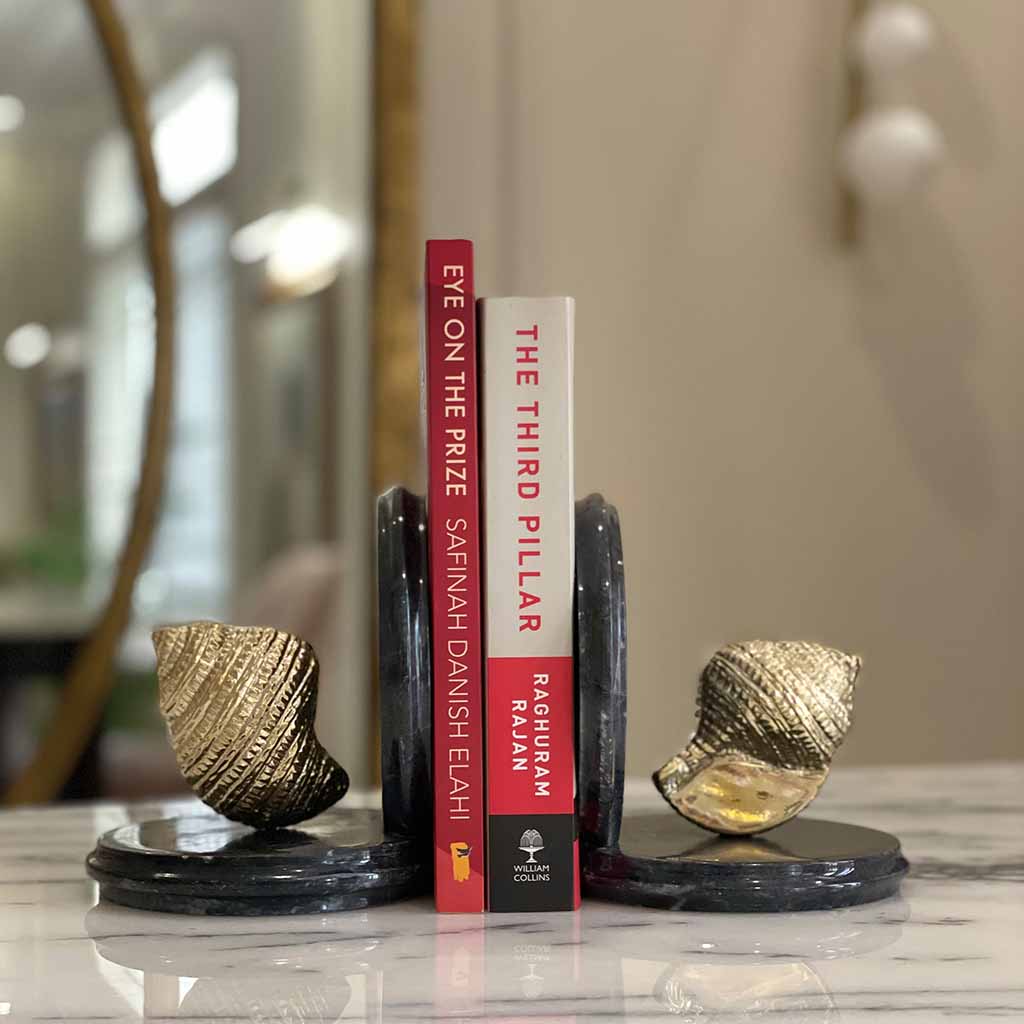
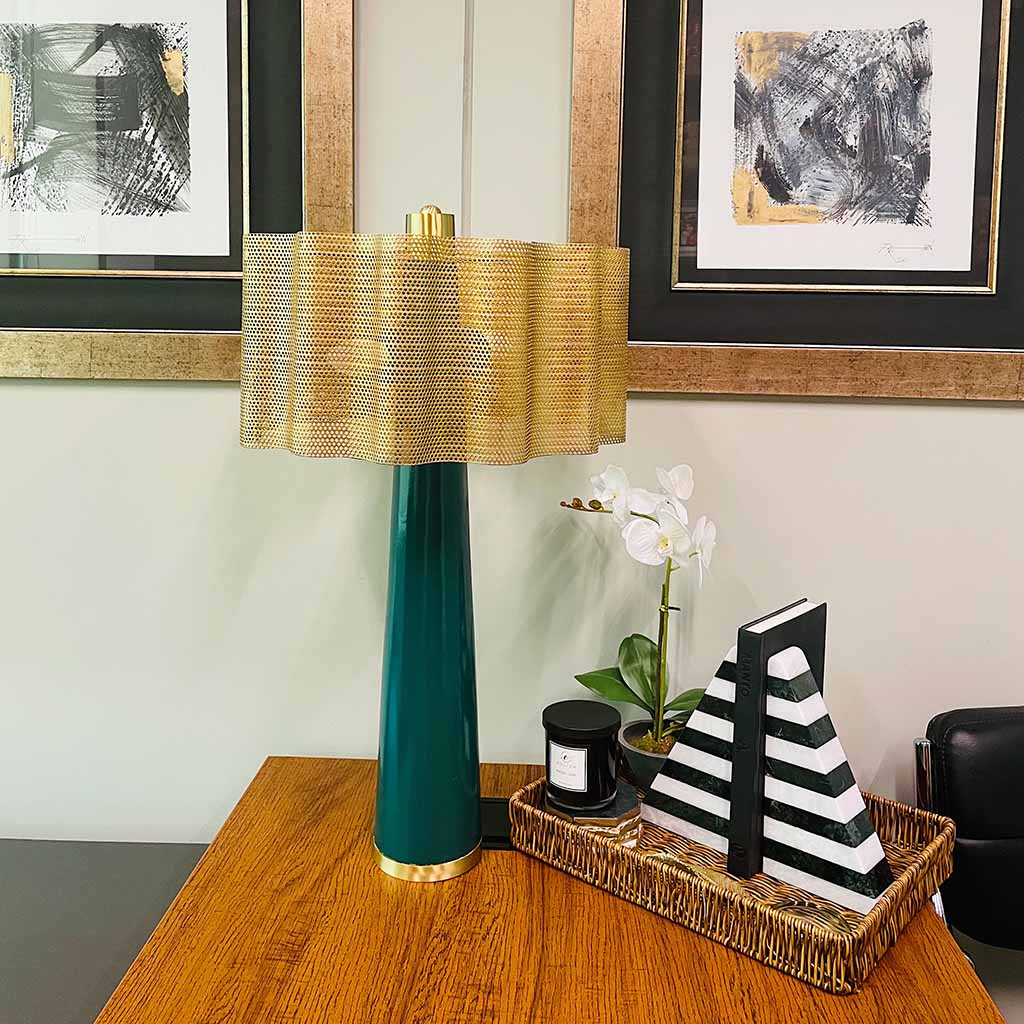
Choose supporting home decor items that contrast in height and material: a small tray or bowl, a few books held by bookends, a candle stand, a vase. Repeating one material, such as a brass tray echoing the lamp, links the group. The decorative items for home in Creo Living’s decor collection show how scale and finish can work together.
Leave negative space. Asymmetry feels relaxed, and a surface that breathes looks more deliberate than one crowded with decoration items. On a bedside table, protect usable room first.
A Quick Lamp-Selection Checklist
- Is the lamp proportionate to the surface?
- Does the shade complement the base?
- Is the total height right for the seat or bed?
- Does the shade distribute light to suit the lamp’s purpose?
- Does the base material relate to the room’s finishes?
- Will enough usable tabletop remain?
- Does it look intentional when switched off?
Find high-quality, luxurious gifting items alongside thoughtfully made home decor, furniture, lamps, and serveware accessories at Creo Living. Choose pieces that look right on the surface today and still feel right years from now.
FAQs
1. How tall should a table lamp be for a bedside table?
A: There is no single height. Sit up as you normally read and note where your eyes fall; the bottom of the shade should sit roughly there. Mattress and headboard height decide the final figure.
2. How do I choose the right lampshade size for a lamp base?
A: Start with the base’s widest point; the shade should clear it comfortably. A common starting point is a shade about two-thirds the height of the visible base. Then check the silhouette with the lamp switched off.
3. Should a table lamp match the furniture or other finishes in the room?
A: It should relate to them, not copy them. One repeated tone, such as brass echoing a handle, ties a lamp into the room, and a deliberate contrast can look more considered than an exact match.
4. Which type of lampshade is better for reading versus ambient lighting?
A: For reading, an opaque or well-lined shade directs light up and down and hides the bulb. For ambient light, a translucent shade glows softly through its sides. Bulb and shade construction also matter.