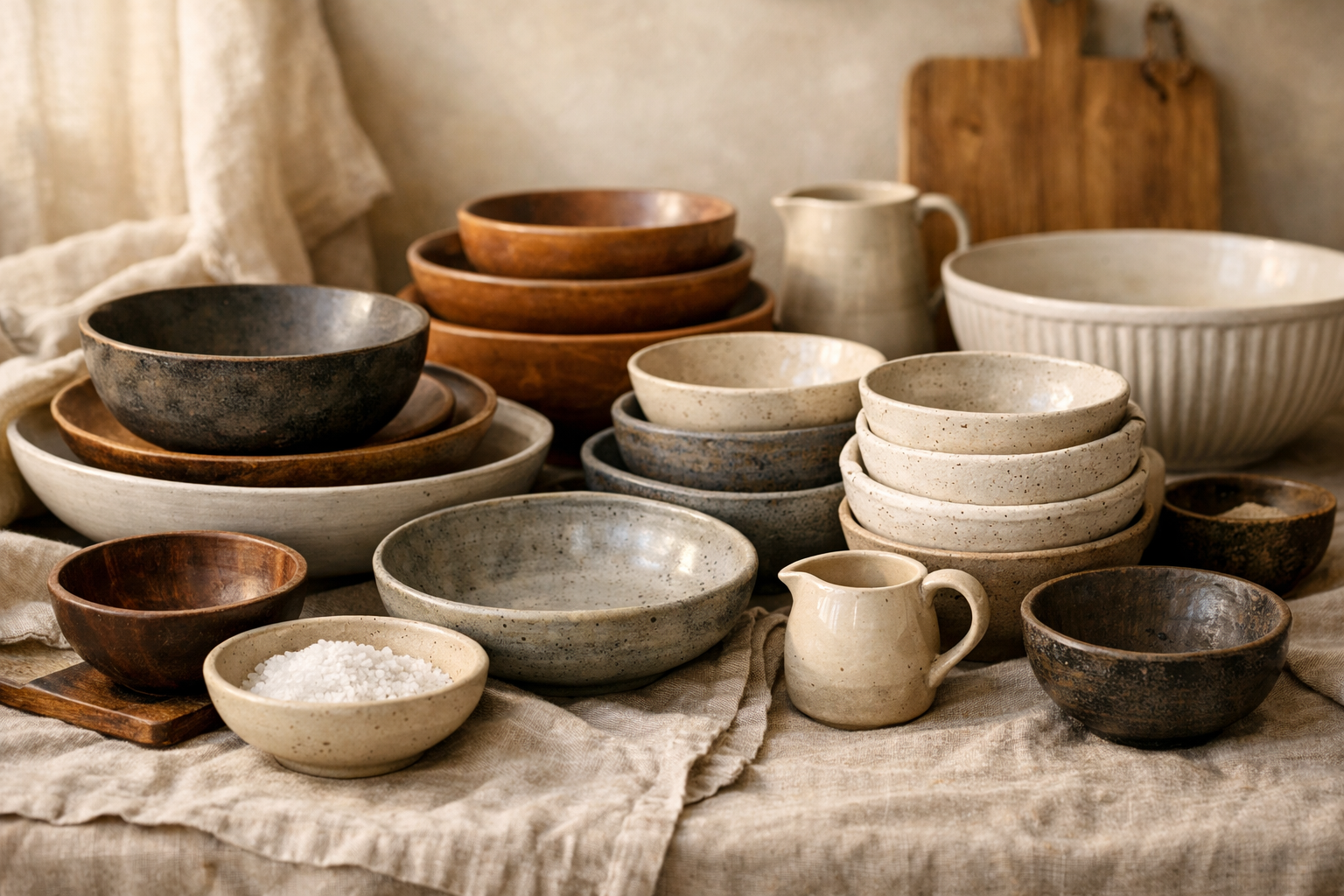
The Three-Dimensional Dining Table
A table that lingers in memory is rarely flat. It behaves like a piece of architecture in miniature, proportioned, weighted, and composed with the same care an architect brings to a façade. Yet most home entertaining still defaults to a single-level layout: dishes placed side by side, each competing for the same sightline, none given room to breathe.
The shift from flat to layered is a shift in thinking. Instead of asking “where does each dish go,” the composed host asks “how does the eye move across this table.” Once serving bowls, platters, and vessels are treated as volumes rather than flat placements, the table stops reading as a checklist of food and starts reading as a designed landscape.
Vertical & Horizontal Rhythm: Diameter and Height Staggering
Depth begins with variation. A table where every vessel sits at the same height and shares a similar diameter will always feel static. Rhythm comes from deliberate staggering: low, wide serving bowls next to taller pedestal pieces, shallow risers breaking up long stretches of flat surface.
Think of the table in cross-section, the way a skyline reads against the horizon. Tall stoneware or footed compotes act as the high points; wide, shallow bowls fill the valleys between them; mid-height tureens hold the middle register. This staggering also improves function, since guests can reach lower dishes without leaning across taller ones.
A useful height-layering checklist before guests arrive:
- Place at least one elevated piece, a footed bowl, cake stand, or pedestal tray, per table zone, not just at the centre
- Alternate tall and low silhouettes rather than grouping similar heights together
- Keep the tallest pieces away from direct sightlines between seated guests
- Reserve the widest, shallowest serving bowls for dishes meant to be shared generously
- Leave enough clearance for lids to be lifted without grazing a neighbouring vessel
The Visual Weight Principle: Anchoring Edges vs. Floating Centers
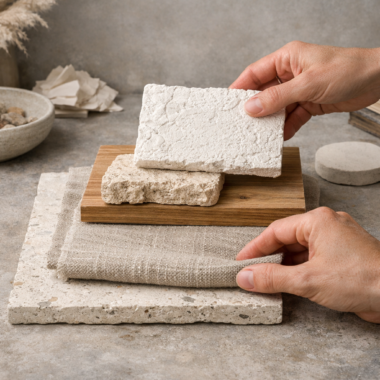
Every material carries visual weight, independent of its actual mass. Dark wood, raw stone, and thick-glazed ceramic read as heavy. Clear glass, pale ceramic, and slender metal read as light. A table that ignores this distinction will feel either top-heavy or strangely unanchored.
The governing principle is simple: weight belongs at the edges, lightness belongs at the centre. Heavy materials along the table’s perimeter act as visual ballast, framing the composition. Lighter pieces toward the middle keep the interior open, so the eye has somewhere to rest rather than a cluttered core.
A quick guide to visual weight distribution:
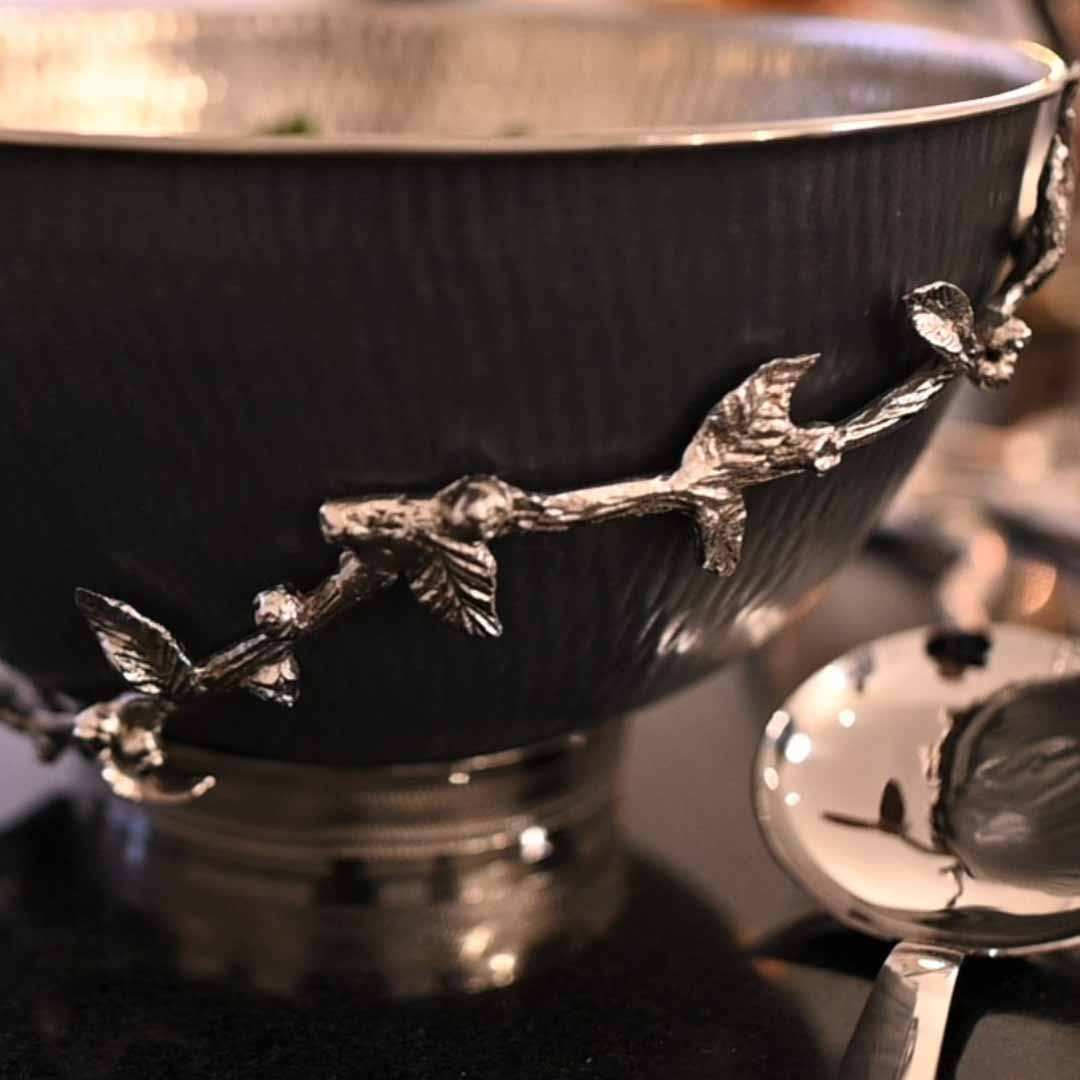
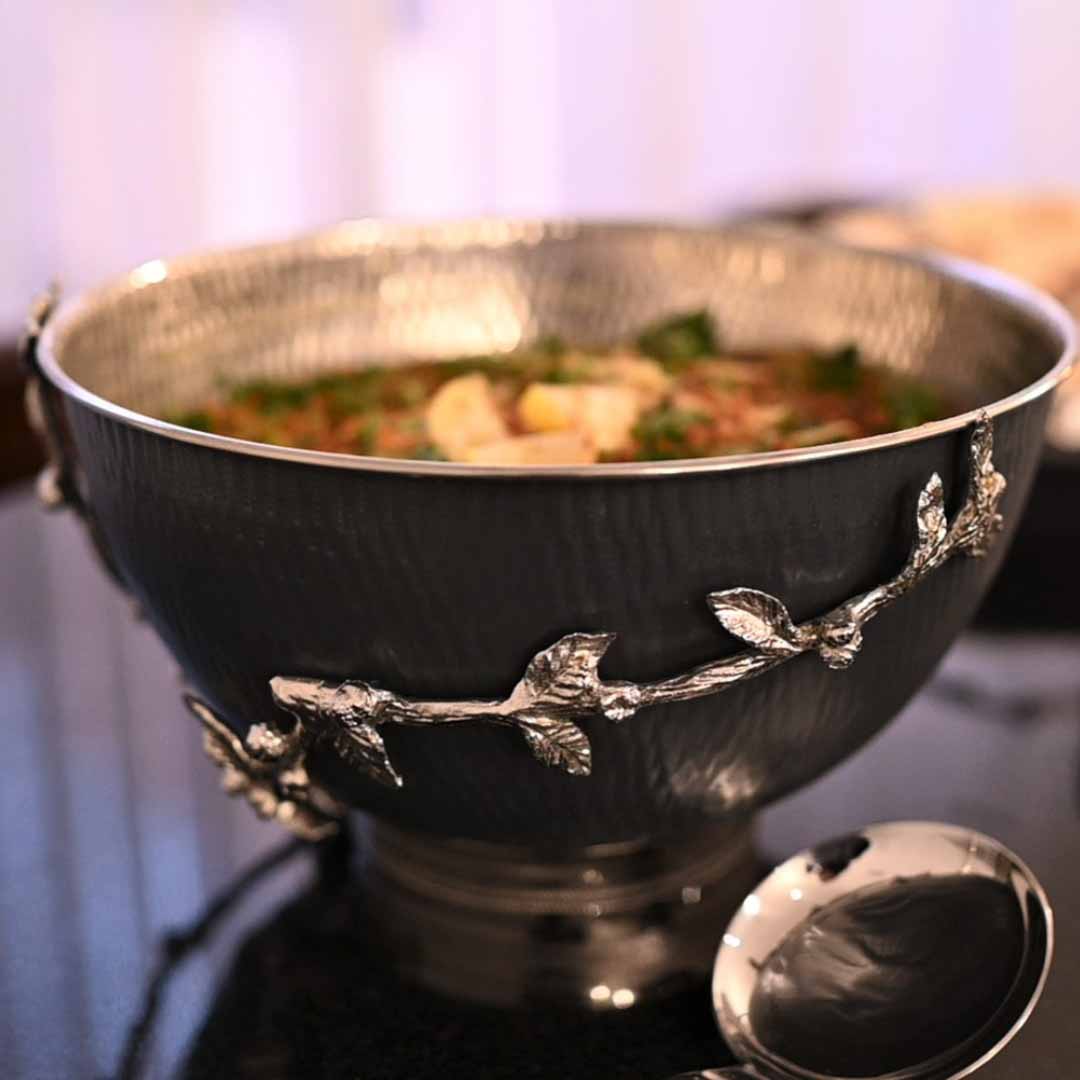
- Outer edges and corners: dark stoneware, marble, aged wood, or cast-iron serving bowls
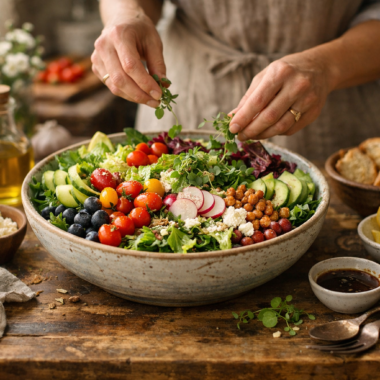
- Central footprint: ceramic salad serving bowls, clear glass vessels, and pale porcelain
- Transitional zones: mixed-material pieces that bridge the two registers, such as glazed ceramic with a wooden base
- Avoid clustering two heavy pieces adjacent to one another, even at the edges
This is also where material sourcing matters. Pakistani hosts assembling a considered dinnerware Pakistan collection often build outward from a few anchor pieces, one or two substantial stone or dark ceramic serving bowls, before layering lighter, everyday pieces around them.
Textural Modulation: Alternating Open and Enclosed Vessels
Depth is not only about height and weight; it is also about what the eye is allowed to see. A table where every dish sits fully exposed offers no mystery and, paradoxically, feels less abundant than one where some vessels remain partially concealed.
Lidded tureens and covered stoneware introduce a pause in the visual rhythm, a moment of anticipation before the lid is lifted. Alternating these enclosed forms with wide-open serving bowls creates a push-and-pull across the table, open bowls revealing colour and texture, covered pieces holding it back.
This modulation pairs naturally with the layered dinnerware Pakistan hosts increasingly favour for formal dawats and family feasts, where textured stoneware sits beside smoother, glazed pieces. The contrast between matte and glossy, rough and smooth, closed and open, is what keeps a table from reading as monotonous even when the palette is restrained.
The Negative Space Rule: Framing Abundance
Counterintuitively, the most generous-looking tables are not the fullest ones. Luxury entertaining relies on negative space, deliberate areas of visible tablecloth or bare surface that frame the serving pieces and let each one register individually. A table crowded edge to edge collapses into visual noise; a table with breathing room reads as curated and, in turn, more abundant.
The practical guideline is to treat empty space as its own design element rather than a gap to be filled. Before the meal, step back and look at the negative space between vessels the same way you would assess the vessels themselves.
Guidelines for staging negative space:
- Leave visible tablecloth between every second or third serving piece, not just at the table’s outer margins
- Group vessels in odd-numbered clusters of three or five, with clear space separating each cluster
- Resist the instinct to fill a gap with an extra dish, an empty corner is doing design work
- When you buy serving bowls online in Pakistan for a specific event, purchase slightly fewer, larger pieces rather than many small ones, since fewer vessels make negative space easier to control
Elevate your next table setting with Creo Living’s curated collection of luxurious serveware, home décor, and gifting pieces. Shop considered design that turns everyday hosting into a lasting impression.
FAQs
1. How many layers of height should a dining table actually have?
A: Three registers are usually enough, low and wide, mid-height, and one or two elevated pieces. More than that risks visual clutter rather than added depth.
2. How do I keep tall or footed serving bowls stable during a busy dinner?
A: Choose pieces with a wide, weighted base relative to their height, and position them away from high-traffic reach zones such as the centre of a shared platter run.
3. Can different materials be mixed on the same table without looking chaotic?
A: Yes, provided heavier materials stay toward the edges and lighter ones toward the centre. Limiting the palette to two or three material families also keeps the mix cohesive.
4. How much table space should be left empty for the layout to feel intentional rather than sparse?
A: As a starting point, aim for roughly a third of the visible surface to remain uncovered, distributed in small gaps between clusters rather than one large empty zone.