



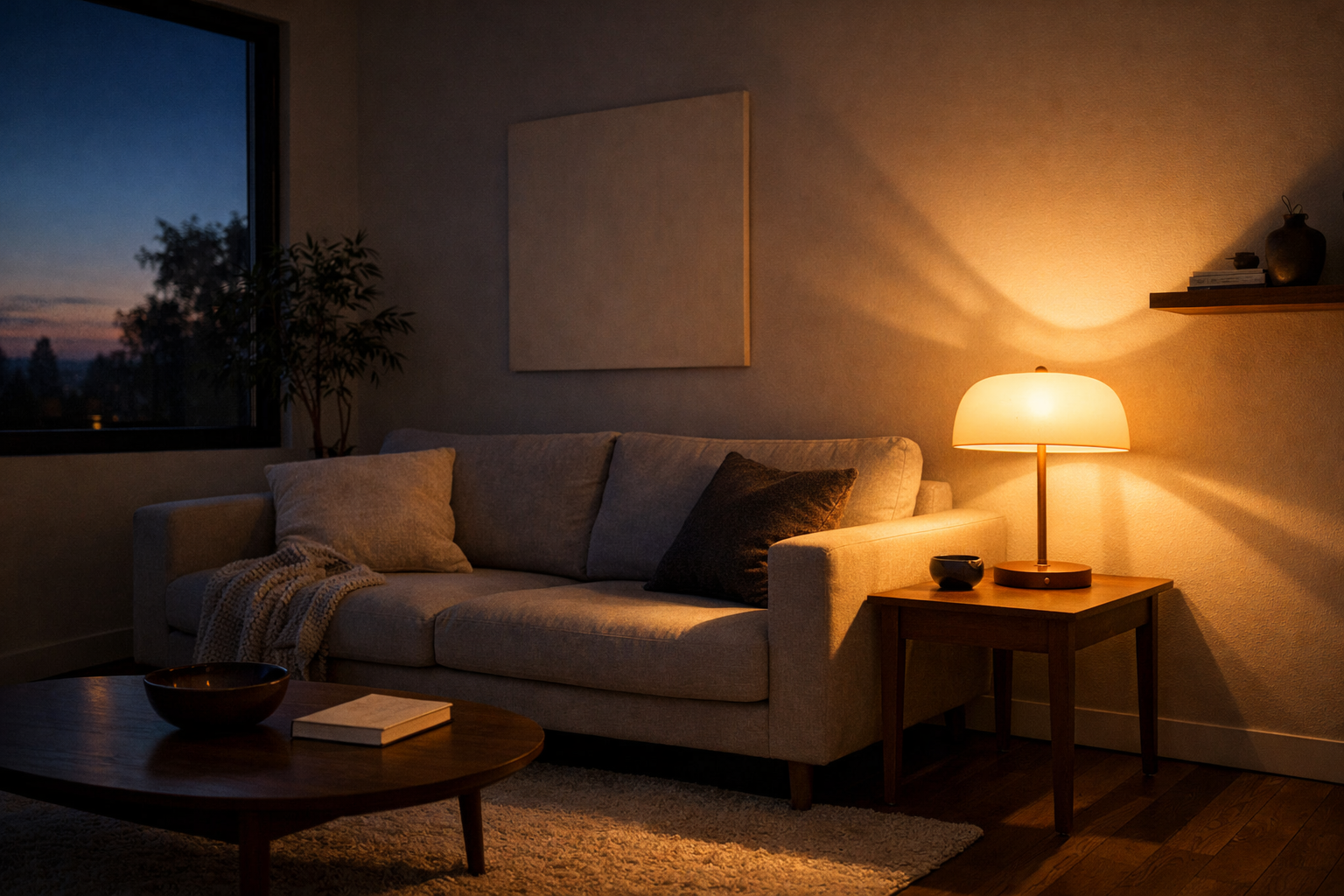
Paint gets the credit. Furniture gets the photograph. But at nine in the evening, when the daylight has gone, and the ceiling light feels either too bright or too much trouble, something else decides how your room feels: the lamp.
Interior design conversations usually start with wall colour and sofas. Yet the lamp rarely announces itself. It simply chooses where the eye rests, which fabric glows and which corner turns private. It may be the quietest designer in the room, but once evening arrives, it can become one of the most influential.
A Room Has Two Personalities: Day and Night
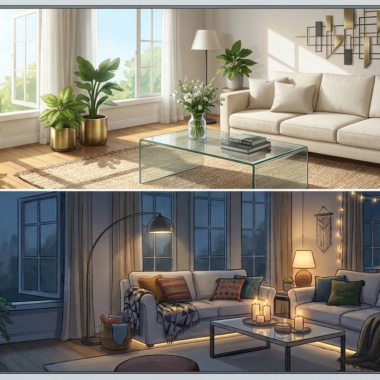
Picture a Karachi apartment: cream sofa, walnut console, walls in soft greige. By day, window light makes it open and easy. At night, a single ceiling fixture flattens the sofa’s folds, greys the wall and dulls the wood. Nothing changed except the light.
Colour is never fixed; it responds to whatever light reaches it. Warm light tends to deepen wood and brass and give polished marble a soft gleam, while matte, dark finishes swallow light and need a nearby source to show their texture. That is why a beautifully furnished room can still feel emotionally flat after dark.
Warm vs Cool Light: The Emotional Temperature of a Room
Warm-white bulbs, in the 2700–3000K range that designers commonly favour for living rooms and bedrooms, tend to bring:
- Intimacy and softness to evening seating
- A kinder glow on wood, brass and neutral upholstery
- A relaxed, residential feel rather than a showroom one
Cooler, more neutral light earns its place when:
- You’re working at a desk or reading small print
- The room is crisp and contemporary, with glass, steel, or white surfaces
- Clarity matters more than comfort
Neither is automatically better. The right temperature depends on what the room does and who it’s for.
The Shade Is a Mood Filter
A drum shade spreads light evenly and calmly. A tapered shade opens it into a wider, more flexible pool. A metal or opaque shade directs light, trading softness for drama. Lighter fabric glows; darker material holds the light close. Even switched off, the silhouette is part of your room’s design language.
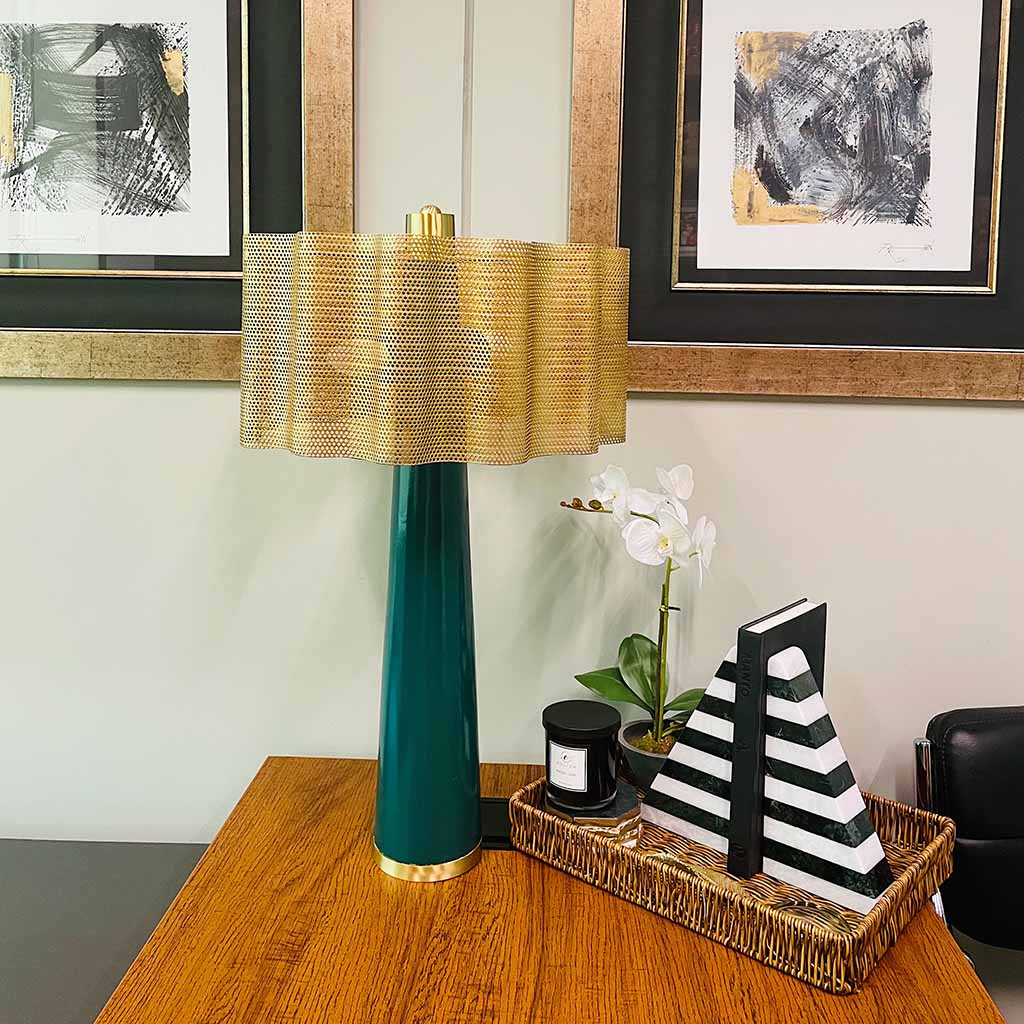
The Magnus Table Lamp pairs a hammer-beaten brass shade with a matt black cone, so light is shaped rather than spread, which suits a console where you want atmosphere over brightness. The Rebus Table Lamp, with its dark grey shade over a cement-finish sculptural body, belongs on a bedside table where evenings are meant to feel low and quiet.
Height Changes the Whole Room
Where the light sits decides where the eye travels.
- Low (bedside and side tables): a quiet pool of light that draws seating closer
- Mid (consoles, sideboards, desks): visual balance around sofas and chairs
- Tall (corners, beside accent chairs): vertical movement that stretches the room upward
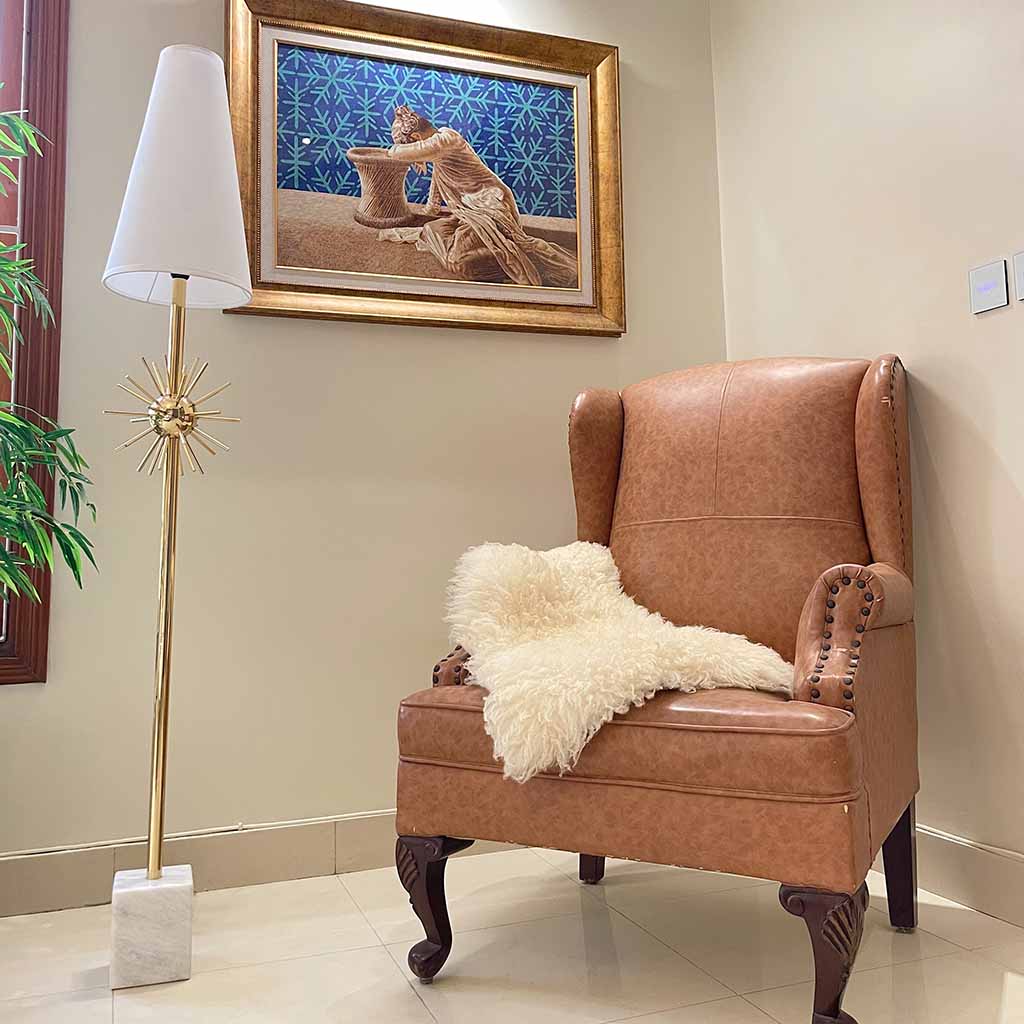
A floor lamp does the stretching best. The Ciel Floor Lamp, a dark blue cylindrical pillar with brass rings, stands about 67 inches tall and suits an empty corner beside a reading chair. The Orbis Floor Lamp sets a brass pillar and brass ball on a white marble base; at roughly 64 inches, it reads less like a lamp than a piece of the room’s architecture.
Placement Is Part of the Design
The same lamp behaves differently depending on where it stands.
- Beside a sofa: keep the bottom of the shade near seated eye level so the bulb stays hidden
- On a console or entryway: choose vertical form, like the Altum Table Lamp, whose marble-and-brass build gives a narrow surface real presence
- Bedside: lower and softer, with the shade at eye level when you’re propped up reading
- Beside an accent chair or in an empty corner: a floor lamp, just behind shoulder height
- On a home office desk: a cooler, more directed light
Scale matters as much as position. A heavy lamp on a slim side table looks top-heavy; a petite one on a long console disappears. Browse any table lamp Pakistan collection, and you will find endless shapes, so start with that proportion, then choose the look.
The Lamp Can Change the Importance of Everything Around It
Light decides which objects feel important. A lamp works like a soft stage light for the things you’ve chosen to live with:
- Book spines and ceramics come forward when lit from the side
- A textured wall gains depth when light grazes it
- Marble and brass catch highlights, and artwork gets a quiet frame of light
The Gena Table Lamp, built from cylindrical white marble with brass studs and rings, is one of those objects itself. As a pair on a console, it frames the artwork between them with symmetry. This is where home decor items stop being ornaments and start working as a composition, and where the best decorative items for home are the ones light has been arranged to flatter.
The Designer’s Rule: Layer, Don’t Flood
A room lit only from overhead feels flat, like a stage with one floodlight. Designers layer instead: overhead light for general use, task light for doing, and accent or ambient light for mood. Lamps break a large room into smaller, calmer zones, which matters in a living room that hosts family evenings and guests in the same hour. Anyone building a layered scheme from the home decor Pakistan offers today can start small:
- Living room: overhead dimmed or off, a table lamp at each end of the sofa, a floor lamp in the corner
- Bedroom: bedside lamps instead of the ceiling light
- Reading corner: a floor lamp placed slightly behind the shoulder
- Entryway: one lamp on the console, nothing more
- Home office: overhead plus a directed desk lamp
The decoration items that matter most here are often the ones that give off light. Creo Living is a good place to start looking for thoughtfully selected lamps and home pieces.
Browse Creo Living for high-quality, luxurious lamps, furniture and home decor, along with gifting items and serveware accessories made to be lived with. Shop the collection and bring home the piece that quietly changes how your evenings look.
FAQs
1. What colour temperature is best for a living room?
A: Warm white, around 2700–3000K, suits most evening living rooms. Choose a cooler bulb only for a corner where you read closely or work. A dimmer lets one room move between moods.
2. Should a table lamp be taller than the furniture around it?
A: Not necessarily. Aim for the bottom of the shade to sit near seated eye level, which keeps the bulb hidden and glare low. Then check that the lamp’s visual weight suits its table.
3. Are floor lamps better for large rooms?
A: They help, because height lets one light cover a corner or seating group. But large rooms still need several sources, and a floor lamp plus table lamps gives better layers than one tall light alone.
4. Can a lamp change how a wall colour looks?
A: Yes. Warm bulbs deepen creams and earthy tones, while cooler ones make the same wall look crisper and greyer. Test any bulb in the evening, not just by day.