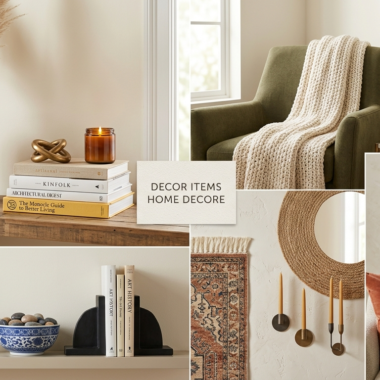


Most crowded shelves don’t hold too many beautiful things. They hold things nobody decided to stop adding. Each object is lovely alone, but together they have no beginning, no end, and nowhere for the eye to rest.
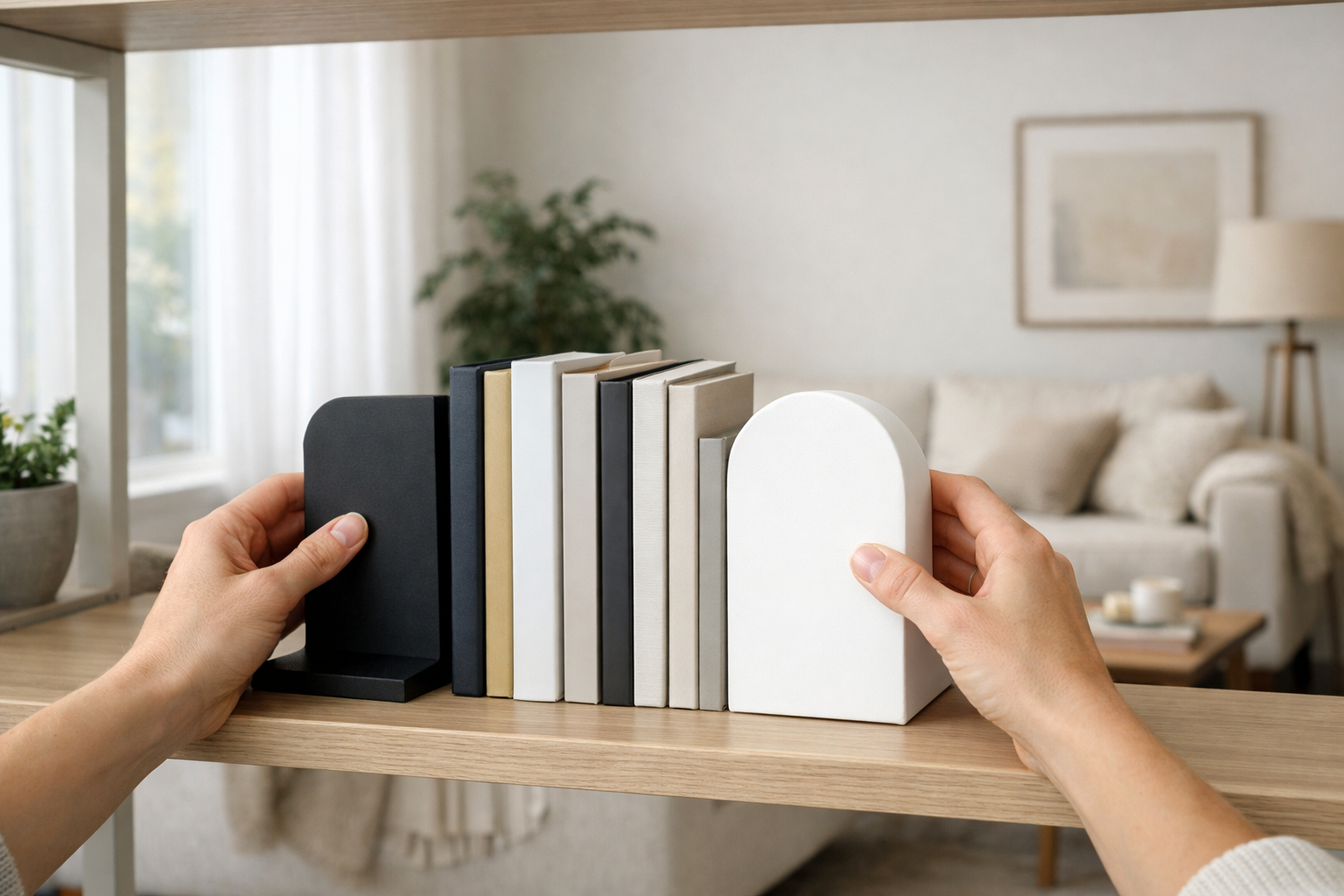
Styling a shelf is mostly an exercise in editing, and bookends are one of the best editing tools in home decor. They hold books upright, certainly, but they also decide where an arrangement starts and where it ends.
Why Good Shelves Start to Look Messy
Attractive things still look chaotic when nothing leads, and nothing follows. The usual causes:
- Too many small objects, each asking for equal attention
- Everything sitting at the same height
- No empty space for the eye to rest
- Too many colours competing at once
- Objects scattered instead of grouped
- Books stacked and angled at random
- Bookends treated as plumbing rather than design
Good interior design is as much subtraction as addition. A shelf isn’t finished when nothing more fits. It’s finished when nothing more is needed.
The Book-to-Object Balance
Think of the ratio as a visual guideline, not arithmetic.
A book-led shelf, typical of studies and libraries, might be roughly two-thirds books, with objects and air sharing the rest. A balanced shelf, common in living rooms, leans closer to half and half. An object-led shelf, such as a console or display shelf, treats books as a supporting layer.
Draw from books, a sculptural piece, a vase, a framed print, a tray or box, and bookends. A deep, tall unit can carry more. A narrow floating shelf wants less. Scale changes everything, so trust your eye over any formula.
Standing Books and Leaning Books
Standing
Upright books bring structure, height, and order. A run of spines creates visual columns that give a shelf its backbone.
Leaning
Leaning books soften the composition. They add movement and break up repeated vertical lines, so the shelf feels more relaxed.
Combine them. A column of standing books that tapers into two or three leaning ones works better than either alone. All standing can read like a library index, and all leaning can look unfinished.
Stacking Without the Busyness
Horizontal stacks add layers, and a flat top is a natural platform for a small object. Keep them under control:
- Use two or three books per stack, largest at the base
- Pitch the stack’s height between your tall verticals and low accents
- Stay at one or two stacks per shelf, because many tiny stacks read as noise
- Leave breathing room on both sides
Not every gap needs an object. Empty space is what makes the things you chose look chosen.
Where Bookends Actually Belong
A bookend does far more than stop a slump. It can anchor a grouping, create a boundary, give a loose arrangement weight, introduce a contrasting material, create symmetry where you want it, and give the eye a clear stopping point.
Some practical placements:
- Both ends of a vertical run for order and symmetry, using a matching pair
- One end only, with books leaning toward it, for a looser, asymmetrical look
- Beside an object, as the endpoint that links a book group to a vase or sculpture
- Framing a collection, one on either side of a small cluster of mixed objects
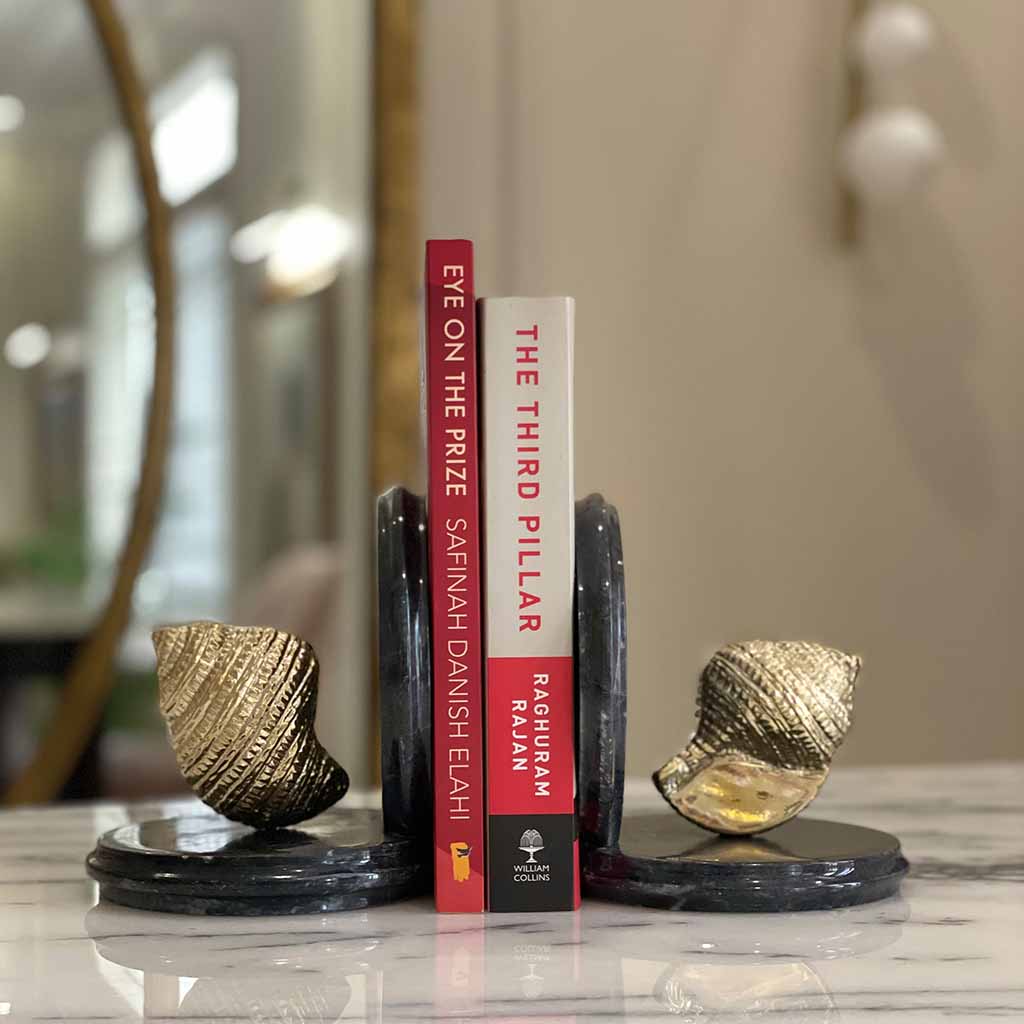
- On show, turned so the sculptural face is visible rather than hidden behind spines
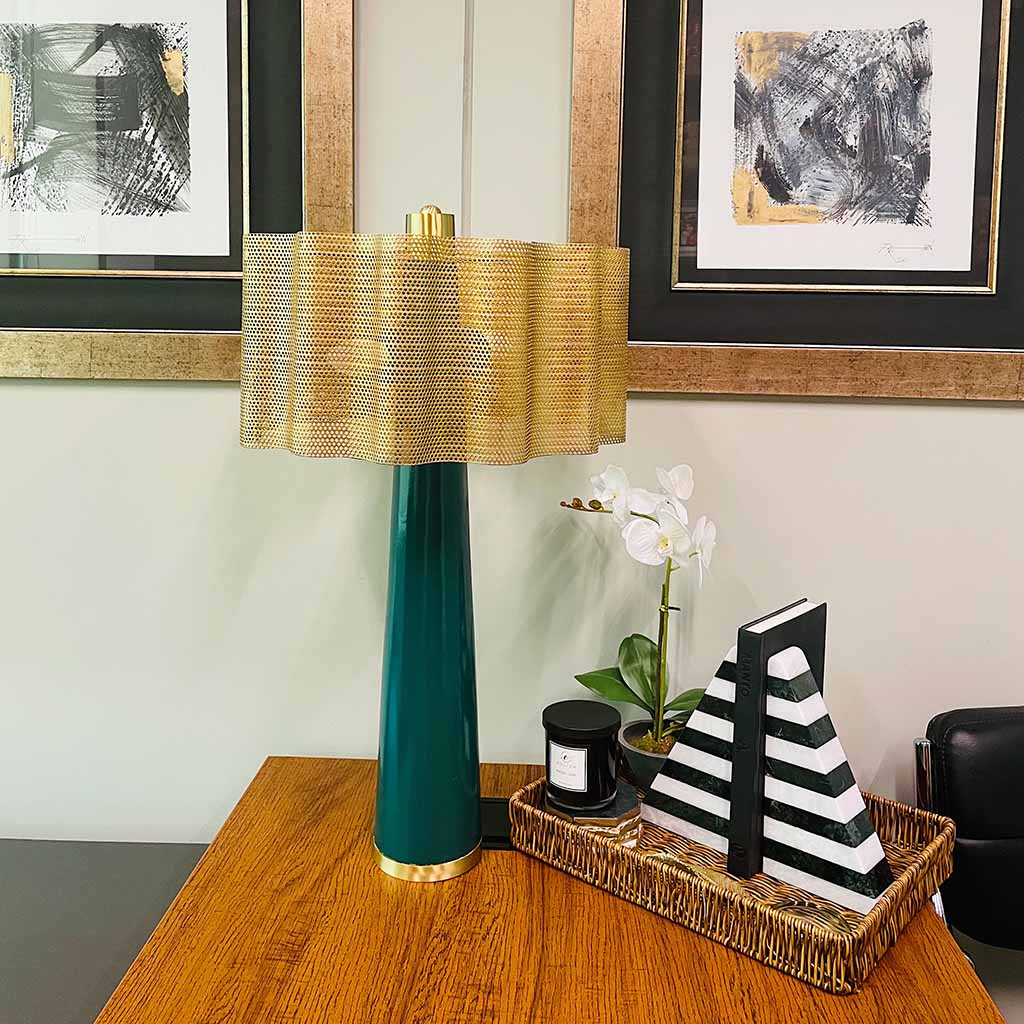
In a minimalist or neutral room, the Carta Bookends are a good example of a form that organises without shouting. Their clean triangular marble shape gives a row of books a crisp edge, and in restrained spaces that clarity is the whole point.
One Hero, a Few Supporting Players
Designers often edit a shelf around a single dominant element, then add a few quieter ones: one hero, two or three supporting players, and plenty of rest.
The hero might be a tall vase or a sculptural bookend. The supporting cast could be a stack of books, one small object, and a framed piece. Everything else stays quiet, meaning spines and open space.
The Panthera Bookends, a brass panther set on white marble, can carry the hero role on a living room shelf. Pair them with one stack and a small bowl, and let books in muted tones do the rest.
Building Height Variation
The eye travels across a shelf the way it reads a skyline. Give it tall verticals, medium-height objects, horizontal stacks, lower accents, and gaps between groups. Identical heights create monotony, while dramatic contrast everywhere creates noise. Aim for a gentle rise and fall with a few pauses.
Narrow shelves reward objects that go up rather than out. The Prata Bookends, a slim brass seahorse on black marble, add height with very little footprint, and the dark base grounds lighter books beside it.
Material and Colour: Keeping It Calm
Books already bring colour, so let the objects around them stay restrained. Marble adds cool, dense presence and quiet veining. Stone feels matte and grounded. Metal catches light in small doses, and wood warms and softens harder lines. Quieter, more edited shelves also suit where contemporary home decor Pakistan-wide is heading: fewer pieces, chosen with more care.
For anyone browsing marble bookends Pakistan has to offer, check the veining and the base as closely as the sculpture on top. White marble with a brass detail, like the Seashell Bookends, gives multi-coloured spines a pale anchor with one warm note. Even luxury bookends look best when they’re understated enough to let the books lead.
Common Shelf-Styling Mistakes
- Filling every inch
- Choosing too many tiny objects
- Making every grouping symmetrical
- Ignoring scale
- Letting too many colours compete
- Treating bookends as an afterthought
- Building too many stacks
- Adding something just because there’s a gap
- Forgetting to step back and edit
Most of these are habits, not failings. A quick phone photo is the easiest way to see what your eye has stopped noticing.
A Formula You Can Copy
Books → Anchor → Height → Accent → Empty Space
- Books: Place them first, mixing a standing run with one leaning group
- Anchor: Add bookends to define the edges of the group
- Height: Introduce one taller element and one lower stack
- Accent: Add one object, perhaps two, that has earned its place
- Empty space: Stop, step back and remove one thing
Choosing Your Pair
Treat bookends as decorative items for home that happen to do structural work. They should read as part of the arrangement, not an add-on. A note for anyone planning to buy bookends online Pakistan-wide: judge scale from the listed dimensions, and think about weight and material. When you buy decorative bookends online, picture each piece beside your own books before you decide.
Creo Living’s bookends collection includes marble and brass designs, including modern bookends for shelves that suit neutral rooms. Choosing home decor items and decoration items in a shared material is a quiet way to keep a shelf cohesive.
Browse Creo Living for high-quality gifting items, home decor, furniture, lamps, and serveware accessories. Pieces are chosen with the same restraint, so every shelf, table, and corner feels considered.
FAQs
1. How many decorative items should go on a bookshelf?
A: Fewer than you think. One to three objects per shelf, grouped rather than scattered, usually works. Narrow shelves need fewer, and deeper units can take more.
2. Should bookends match the rest of the room?
A: They should relate, not match. Echo a material or tone already nearby, such as marble in a side table or brass in a lamp.
3. Are marble bookends suitable for modern shelves?
A: Yes. Clean shapes and natural veining sit well in contemporary interiors, and the weight steadies heavy books. Choose simple forms for minimal rooms.
4. How do I make a bookshelf look styled without making it cluttered?
A: Choose one hero, group the rest, anchor with bookends, and vary the heights. Then leave visible gaps on purpose.