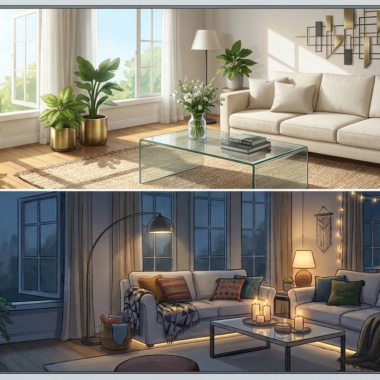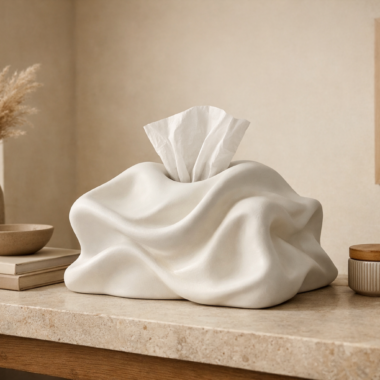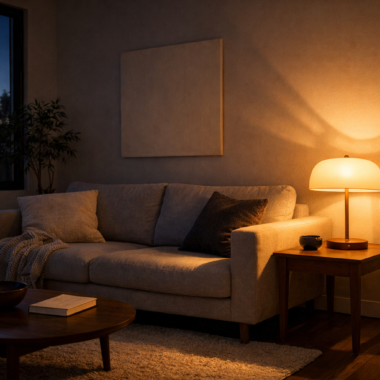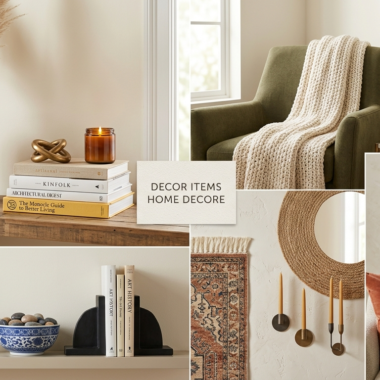



The brass bowl looked exactly right on the coffee table. It sat low, caught the lamplight, and made that corner feel finished. Then Sunday lunch arrived, the bowl moved to the dining table, and it became a small, shiny afterthought on a long stretch of tablecloth. Nothing about the bowl had changed.
The problem is not always the object. The problem is the surface. A centerpiece is not simply something attractive placed in the middle; it depends on the table’s proportions, its height, the space around it, how people move, and what the surface is used for.
The Same Object, Two Completely Different Readings
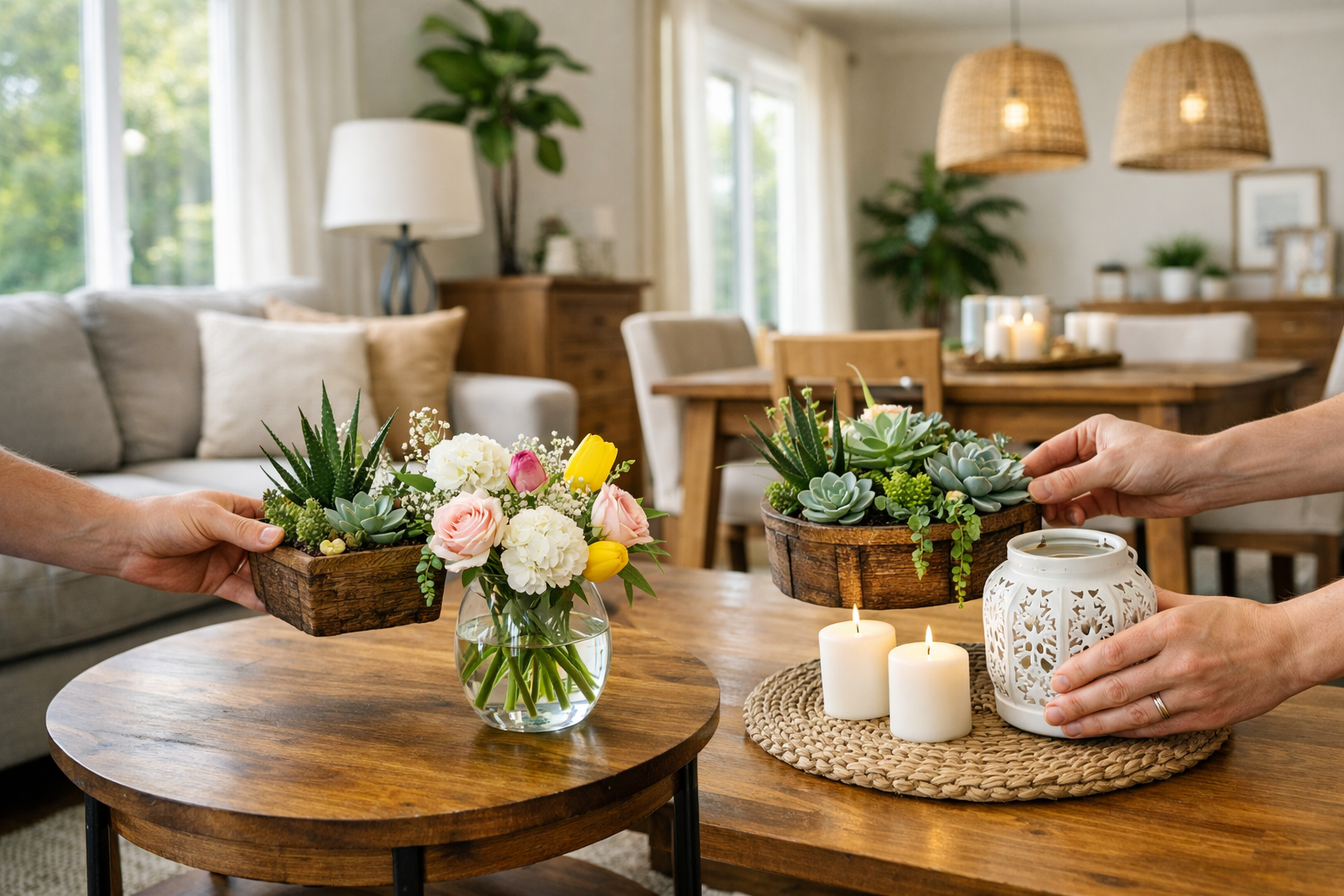
On a coffee table, an object is seen up close, from a sofa an arm’s length away. It only has to hold a small stage, so a modest piece reads as substantial. At a dining table, the same piece is seen across a wider expanse, from every seat, against plates, glasses, and food.
Scale, visual weight, height, surface area, viewing distance, function and movement all shift at once. That is why decorative items that felt generous in the living room can look timid at dinner, and why a tall, elaborate arrangement that suits a dining room can feel stiff in a lounge. You changed the table, not the brief.
Why Coffee Tables Need a Different Kind of Centerpiece
A coffee table belongs to a social space. People reach across it, set down drinks and look at it from several sides, which favours low, grouped compositions over a single tall statement.
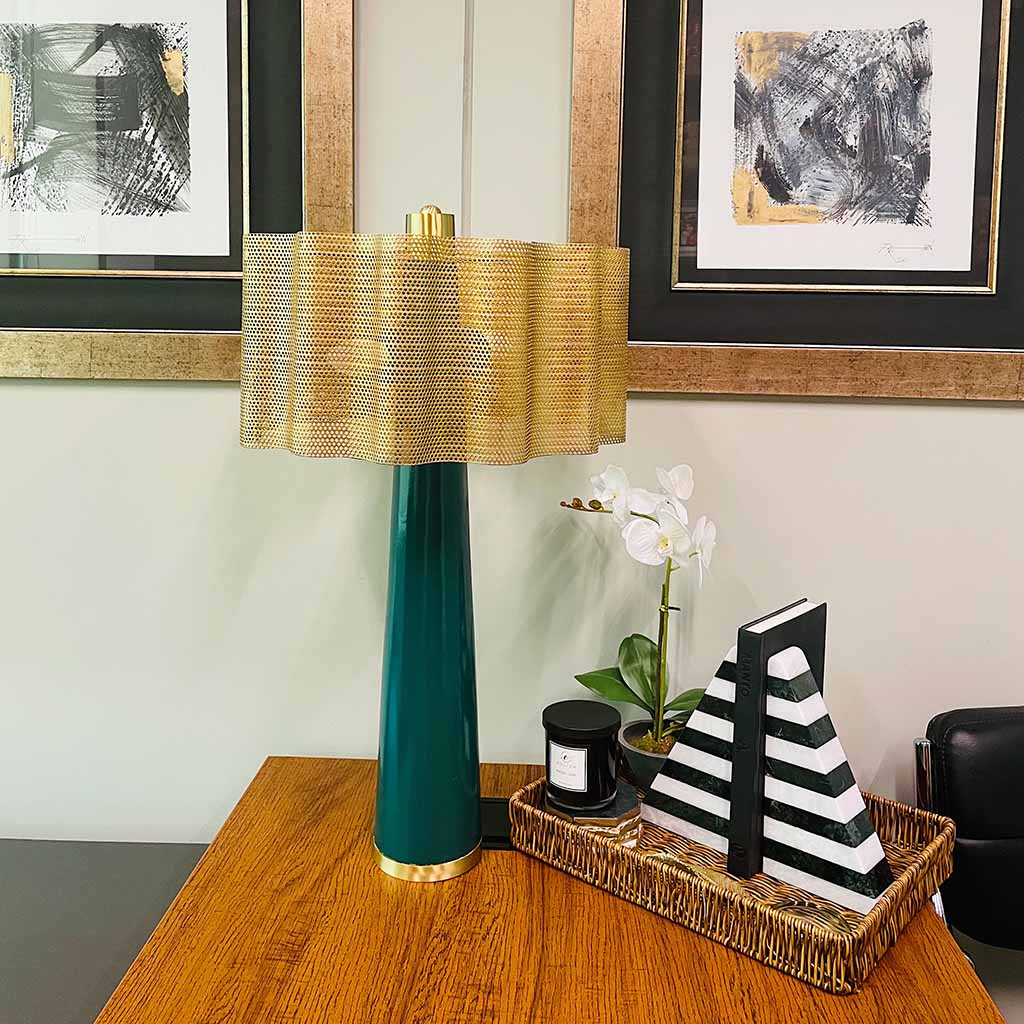
A serving tray is the quiet hero here. It turns scattered objects into one organised group and lifts away in a single move when the table is needed. A marble-and-brass piece like the Vulcano Tray, just over fifteen inches long, can carry a small bowl and a candle stand, with the Ignis Candle Stand, at 6.5 inches tall, adding height without building a wall. Leave a clear zone around the group so a cup of tea still has somewhere to land; small home accessories do their best work when the table stays usable.
Why Dining Tables Play by Different Rules
A dining table has a job: plates, glasses, shared bowls, platters, and the constant movement of serving hands. A centerpiece has to work around the act of dining, not just sit there. It needs more presence than a coffee-table group, yet it must respect sightlines and conversation. Much of what passes for home decor Pakistan inspiration online is borrowed from tables that seat four and serve one course. Tables here often carry several dishes at once, so the centre has to share.
Long tables
Think in rhythm: a low row of modest pieces along the centre line, with gaps for dishes to land.
Round tables
One contained centerpiece suits the shape, but keep it compact enough that nobody has to look around it.
Compact tables
Choose a single small anchor and leave the corners free for plates.
The Height Test: When Decoration Gets in the Way
Sit down and look at the person opposite. If either of you has to lean sideways, the object is too tall for that moment. At a dining table, height competes directly with conversation, which is why low, wide arrangements tend to succeed.
Height can work when the object is deliberately tall and narrow, when the table is large enough to carry the scale, or when the arrangement is there before the meal and can move once food arrives. On a coffee table, height should stay more controlled, because everyone handles the surface from close range. No single measurement fits every table; the sit-down test is more honest.
Scale Matters More Than You Think
Decorative items for home are usually judged alone, under shop lighting. At home, they are judged against the table, nearby furniture, ceiling height, and everything else on the surface.
Place the piece, step back to the doorway and ask whether it feels lost, dominant, crowded, disconnected or balanced. Lost needs company or a tray beneath it. Dominant needs less height or footprint. Crowded needs something removed. Disconnected needs moving onto the centre line or repeating a nearby material. As a starting point, let a dining centerpiece occupy about a third of the table’s width, and keep about a third of a coffee table clear.
Coffee Table Styling vs. Dining Table Styling
Coffee table
- Encourages layering: seen close up, varied heights reward attention.
- Benefits from grouped objects: three pieces read as one composition; scattered, clutter.
- Needs comfortable reach: an arm should reach a cup without moving a candle.
- Works well with trays and books: both anchor the arrangement and move easily.
- Should feel relaxed and lived-in: slight asymmetry is welcome.
Dining table
- Must preserve serving space: the centre is where dishes land.
- Needs clearer visual structure: one idea, like a centre line or single anchor, suits a busier surface.
- Should account for seated sightlines: it is judged from the chair, not the doorway.
- Benefits from deliberate spacing: even gaps keep it from looking accidental.
- May incorporate serveware: useful pieces can be part of the composition.
When Serveware Becomes the Centerpiece
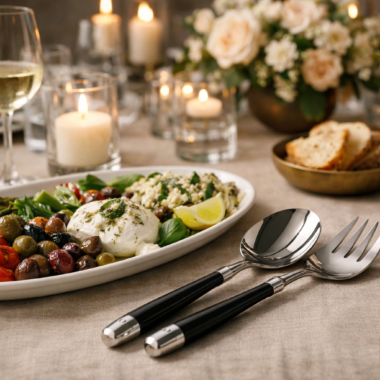
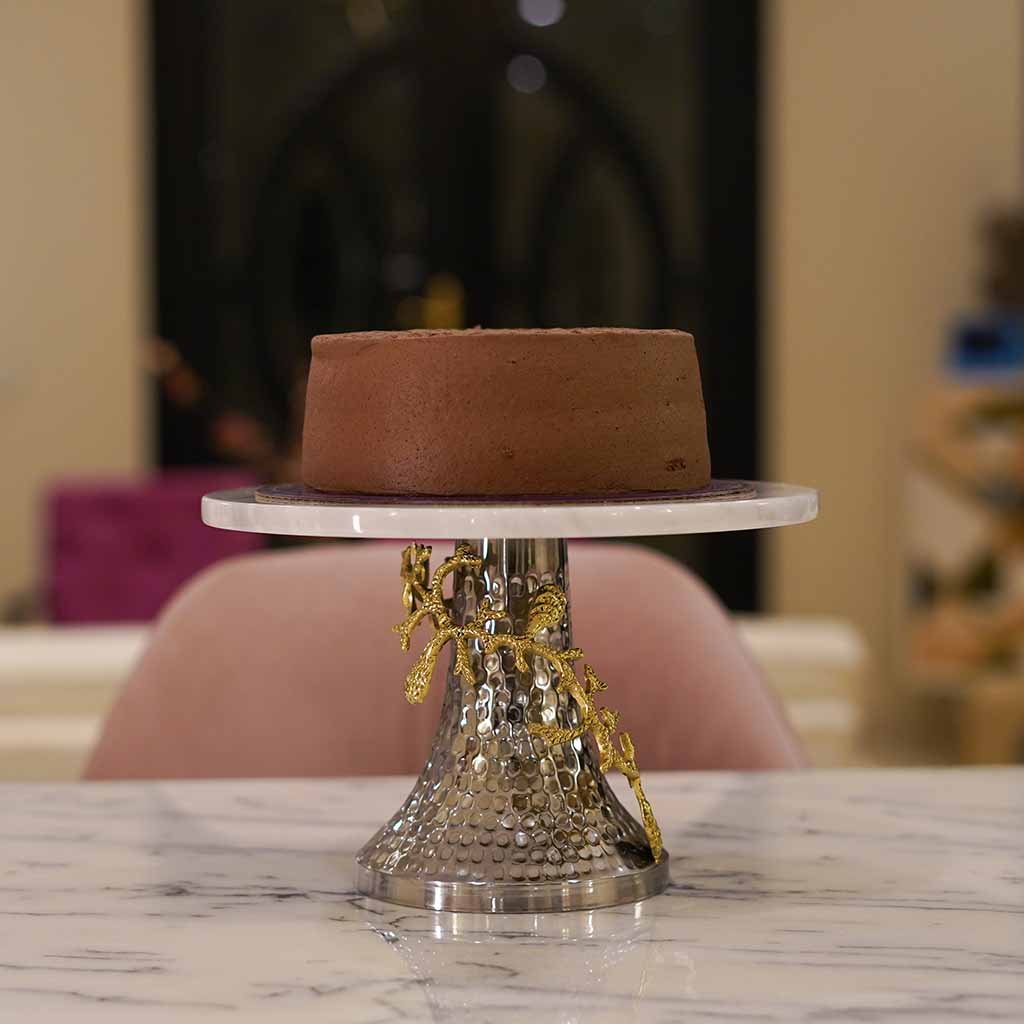
Not every dining centerpiece has to be purely decorative. Serving bowls, platters, trays, and cake stands can carry the composition while staying functional, which makes them some of the best home decor items for a dining table: they earn their place twice.
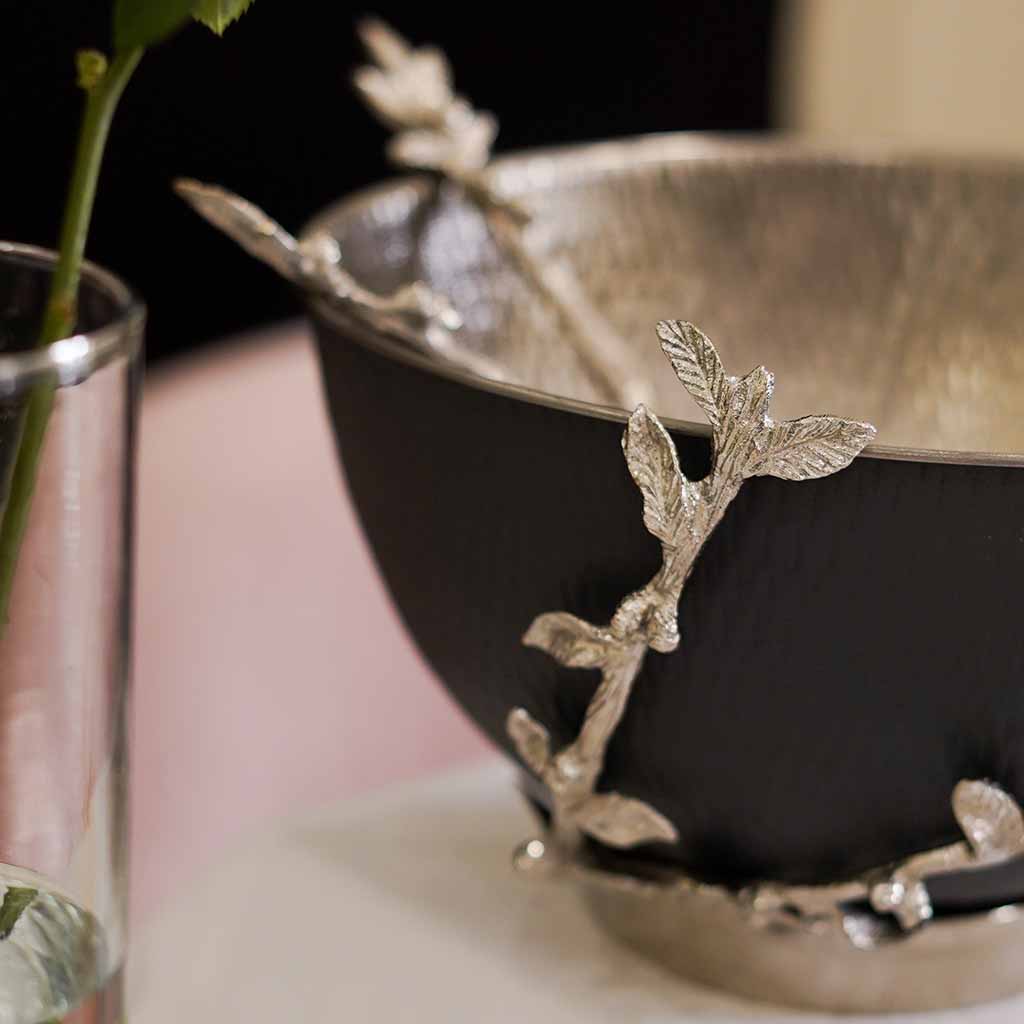
The Folum Serving Bowl, a white onyx bowl on a brass leaf base, stands about five inches tall: low enough for conversation, handsome enough to stay out between meals. The Flora Platter, a floral marble piece about fifteen inches across, can hold a cheese course at the centre, and a few Flora Flat Serving Trays in different sizes make a grouped display for appetisers along a long table. When pairing with the dinnerware Pakistan households already own, echo one finish rather than copying a pattern, so the centerpiece complements the plates, bowls and serving pieces instead of competing with them.
Style for the Occasion, Not Just the Table
Good design responds to real life, so the same table needs different answers on different days.
- Everyday family use: one low piece you can move in a second.
- Casual weekend meals: a bowl or platter that doubles as serveware.
- Formal dinners: more structure, such as candle stands in a measured line, still below eye level.
- Festive Pakistani gatherings: dishes take over the centre, so decoration retreats to the ends or a sideboard.
- Entertaining guests: style it for arrival, then simplify once the food lands.
Centerpiece Mistakes to Avoid
- Oversizing the centerpiece on a small coffee table.
- Choosing something too low for a large dining table.
- Blocking conversation with tall objects.
- Filling every inch of the surface.
- Confusing visual interest with visual clutter.
- Choosing objects without considering how the table is used.
- Treating coffee-table and dining-table styling as interchangeable.
Shop high-quality, luxurious gifting items, home decor, furniture, lamps, and serveware accessories at CREO Living. Choose pieces made for the table, the room, and the way you live, and let every surface earn its place.
FAQs
1. Can the same centerpiece work on both a coffee table and a dining table?
A: Sometimes, if it is modest in height and footprint, like a bowl or tray. Change its companions: a group of three on the coffee table may become a single anchor at dinner.
2. How tall should a dining-table centerpiece be?
A: Low enough that you can see the person opposite without leaning. Many designers treat roughly thirty centimetres as a ceiling, but let the sit-down test decide.
3. How do I style a coffee table without making it cluttered?
A: Start with a tray, add three objects at different heights, and keep about a third of the surface clear.
4. Can serving bowls or trays be used as dining-table decor?
A: Yes. Choose pieces you would happily use, keep them low, and make sure they can go straight into service.