

Most of us buy serving bowls the way we buy glasses: a set, all matching, done. It makes sense on paper. But anyone who has hosted a few dinners knows that the bowl that suits a rich curry is rarely the one that suits a salad.
The shape of a bowl decides how much sauce it holds, how much of the food you can see, and how easily guests can serve themselves. It also decides whether the food looks like an afterthought or like something you planned. Function and presentation work together, and the right bowl gets both right at once.
Depth Matters
The easiest way to choose a bowl is to start with what’s going into it.
Deep bowls suit food that needs containing:
- Curries and gravies, which should stay in the bowl and not spill onto the cloth
- Rice dishes with sauce
- Anything saucy or brothy that guests will ladle from
Wide, flatter bowls suit food that should be seen:
- Salads, where the ingredients can spread out instead of sinking into a pile
- Vegetables and dry sides
- Appetisers and anything colourful
None of this is a rigid rule. Plenty of hosts serve salad in a deep bowl, and it works beautifully. The point is that form should respond to function, and it helps to have the choice. CREO’s Flora design is a good example: the Flora Serving Deep Bowls and Flora Serving Flat Bowls share a design language but differ in proportion. You can reach for serving bowls for curries and serving bowls for salads without breaking the look of the table.
Material Matters Too
Depth is only half the decision. What the bowl is made of changes how it behaves and how it looks.
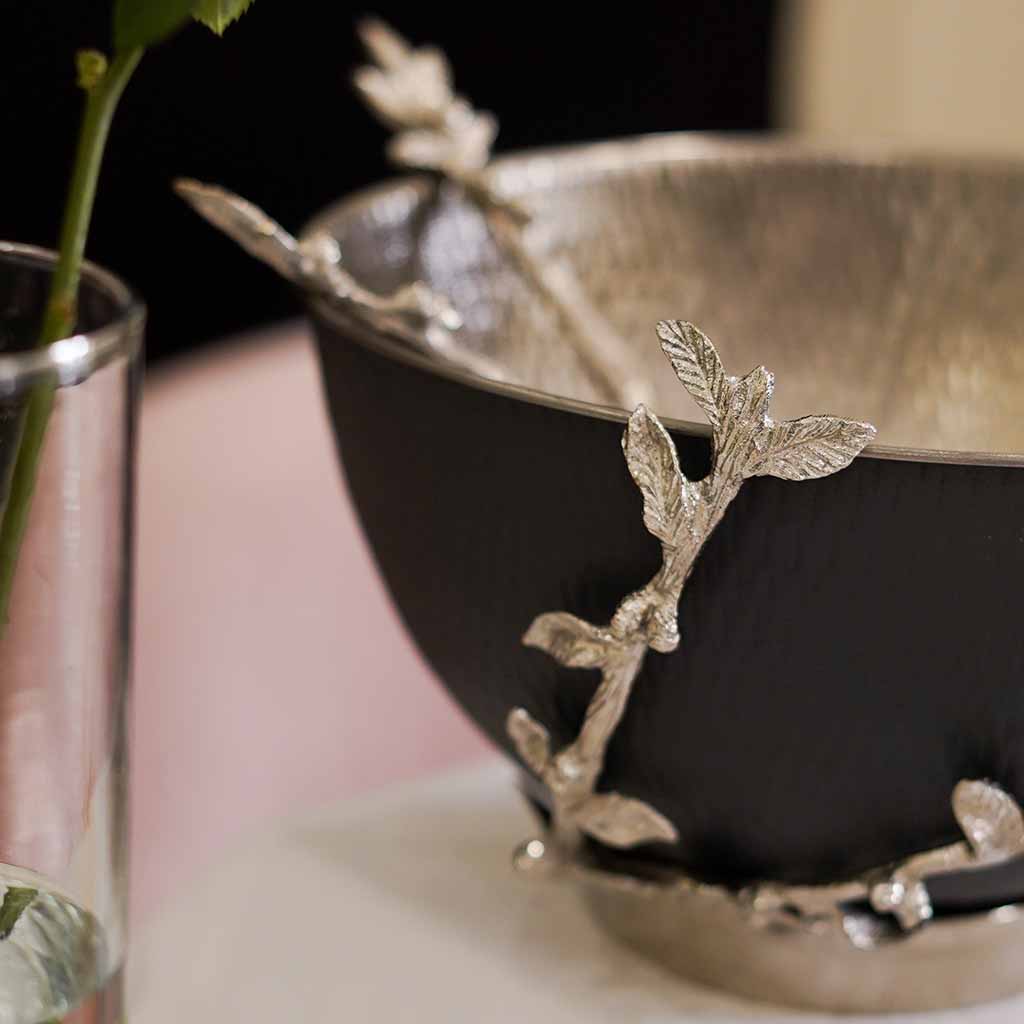
Stainless steel is the workhorse. It’s durable, easy to clean, and built for repeated use, which is what you want from the pieces you reach for every week. CREO’s stainless steel serving bowls treat that practicality as a starting point rather than a limit. The interior does the working job of holding and serving food. The base is where the design goes.
That’s the thinking behind a simple principle: function where you need it, design where you see it. The steel is the functional foundation, and the decorative base is what makes the bowl an object worth putting on the table. It’s a more considered idea than “steel is practical, so it must be plain.”
The Natural Character of Onyx
Change the material, and the bowl changes personality completely. The Lumen Onyx Serving Bowl is the clearest example. Onyx brings natural variation, so every bowl carries its own veining and tone. It looks organic and slightly different from one piece to the next, and it has a presence on the dining table that a manufactured finish rarely has.
It’s practical too. CREO describes its onyx bowls as naturally non-porous and resistant to staining, which matters when the bowl is going to hold food and not just sit on a shelf. Lumen comes in three sizes, so it’s easy to build a small serving bowl set that varies in scale but stays in one visual family.
Here the stainless steel bowls and the onyx bowls take different routes. With steel, the design lives in the base. With onyx, the material itself is the design.
Different Forms, Different Personalities
The same basic job can be done in very different ways. A few CREO designs show the range:
- Flora takes its cue from botanical forms, and its decorative base gives the bowl a more ornamental character. It suits tables where you want some softness and detail.
- Folum shows how a different form or base can give a serving bowl a distinct identity of its own, with design and everyday usability held in balance.
- Nigrum has a darker, more contemporary personality. It works well in a modern tablescape, where a deeper tone gives the food and the other pieces something to contrast against.
- Octopus is the playful, sculptural one. It suits hosts who enjoy a conversation piece, and it shows how serveware can have a sense of humour.
- Lumen, in onyx, lets the stone itself be the feature.
These are decorative serving bowls in the real sense: they earn their place on the table before anything goes in them. But they’re also bowls you can actually serve from.
Think of the Bowl as Part of the Tablescape
Once you have a few bowls, the next question is how they sit together. A table feels more considered when there’s variation in:
- Height and shape
- Diameter and depth
- Material and finish
- Decorative detail
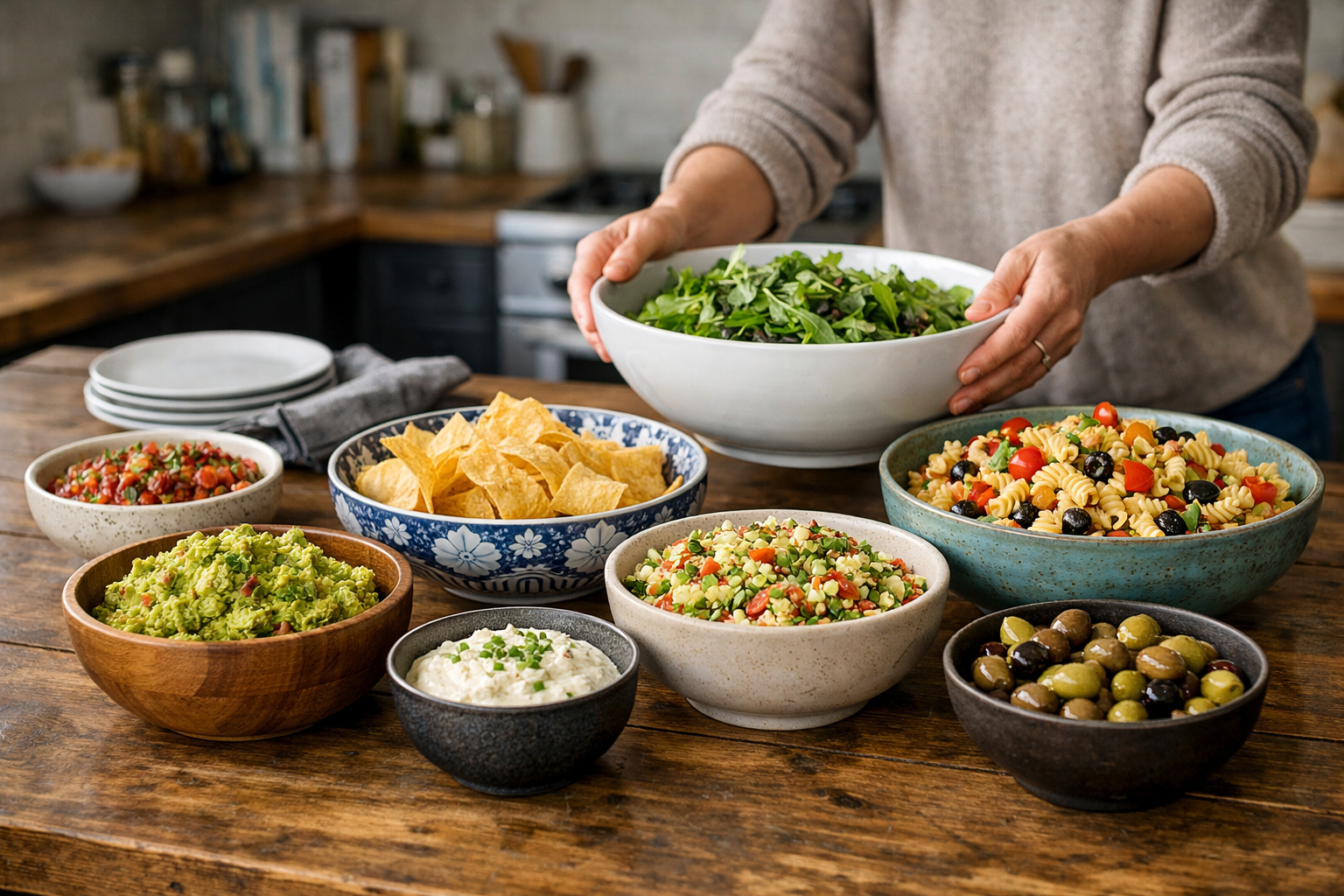
A row of identical bowls can make a table feel flat. Different bowls create a visual hierarchy: a deeper bowl for the main curry, a wider one for the salad, smaller bowls for sides, and one decorative piece that acts as the focal point. The goal isn’t to make everything match. It’s to make everything work together.
For serving bowls for dinner parties, this matters even more. Guests see the whole table at once, and the variety is part of what makes it look like someone thought about it.
Choosing the Right Serving Bowl
Before you buy, or before you set the table, ask yourself:
- What am I serving? Choose depth and shape to suit the food.
- How many people am I serving? Think about capacity and how much needs to go on the table.
- Is this for everyday use or entertaining? This affects the material and how much decorative detail makes sense.
- What does the rest of my table look like? A sculptural bowl can be the focal point; a simpler one can sit quietly beside a detailed tablescape.
- Do I want it to blend in or stand out? Colour, finish, material, and base all answer this.
Serving Bowls as Gifts
A well-designed serving bowl makes a good gift because it’s useful, it looks good, and it gets used. That makes it more meaningful than something that stays in a box. Serving bowls for gifting work for:
- Housewarmings
- Weddings, engagements, and bridal showers
- Eid
- A hostess gift when you’re invited to dinner
A beautiful gift becomes more meaningful when it’s something the recipient will actually use, and a serving bowl will turn up at their table again and again.
The Right Bowl for the Way You Serve
The best serving bowl isn’t necessarily the most decorative or the largest. It’s the one whose form, material, and design make sense for the way you serve and entertain. That’s how CREO approaches its serving bowls: as objects that sit where function and design meet, whether the design is in a base, a form, or the stone itself.
A serving bowl may begin with the simple job of holding food, but the right one can do much more. It can frame the food, complement the table and become part of the experience of gathering.
FAQs
1. How do I choose the right serving bowl?
A: Start with the food. Deep bowls suit curries and gravies, while wider, flatter bowls suit salads and dry sides. Then consider capacity, material, and how the bowl will look on your table.
2. Are stainless steel serving bowls good for everyday use?
A: Yes. Stainless steel is durable and easy to clean, which makes it well suited to bowls you use regularly. Decorative bases let it look good on the table as well.
3. Is onyx practical for serving food?
A: CREO describes its onyx bowls as naturally non-porous and stain-resistant, so they work for serving as well as display. Check the product’s care guidance before use.
4. Can serving bowls with different shapes and materials be mixed on one table?
A: Absolutely. Varying height, depth, material, and finish adds visual interest to the table. The aim is for the pieces to work together, not match exactly.