



When a Mirror Becomes Part of the Lighting
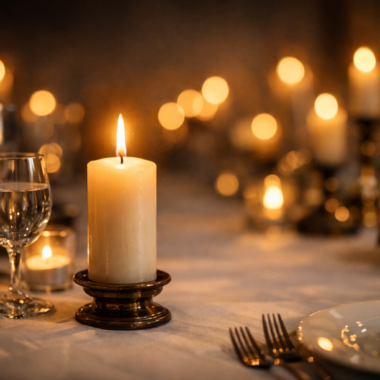
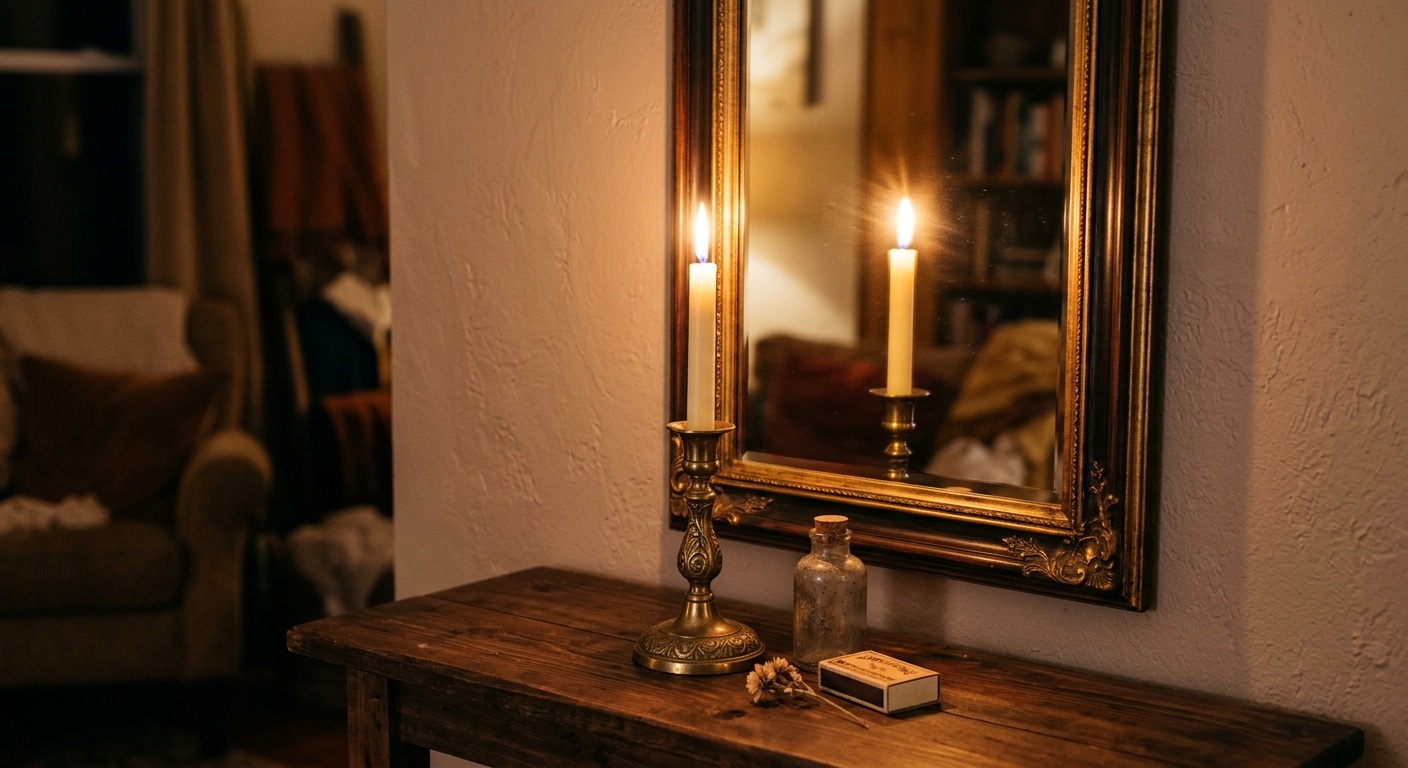
Picture a narrow console just past the front door. A single candle stand sits at its center, flame settled and steady. Behind it, a framed mirror holds a second version of that same flame, softened, slightly displaced, doubled without being duplicated. Nobody in the room could tell you exactly why the space feels warmer than one candle should make it feel. The answer isn’t more wax. It’s the mirror, quietly acting like a second light source.
A mirror doesn’t manufacture light, but it can make a room behave as though it has more of it. The flame stays exactly as bright as it always was. What changes is how many times the eye meets it, and from how many angles the warmth seems to arrive.
An Underused Styling Move
Most people reach for a mirror to solve one of three problems: a room feels small, a wall feels bare, or a hallway needs daylight. Candlelight rarely enters that conversation, which is worth reconsidering, because a flame carries real movement: it flickers, shifts height, changes tone slightly as it burns. A mirror reflects that motion, not just the light.
To be precise: the mirror redirects and repeats an existing source, the same way it would a lamp. But because a flame is warm-toned and animated rather than flat and constant, the repetition reads richer than a mirrored bulb would: a second pocket of amber light, and, with the right angle, a sense that the glow reaches deeper into the room than it actually does.
In Pakistani homes, this shows up naturally in spaces built for hosting: the entryway a guest sees first at a dawat, the dining sideboard set for a family dinner, the sitting room readied for Eid visitors. A candle stand and mirror pairing lends these rooms a considered feel without a redesign, just a sharper read on furniture that’s often already in place.
The Geometry of Reflection
The effect shifts with a few variables:
- Size: A large mirror opens a wide reflective field, catching the candle along with the furniture around it. A smaller mirror concentrates the reflection tightly around the flame, more intimate, more controlled.
- Angle: Even a few degrees of tilt changes what the glass captures. A slight downward angle brings the reflection lower into the frame; a flatter hang keeps it centered.
- Position: Moving the stand closer to the mirror sharpens and brightens the reflection; pulling it forward softens it, giving the flame more presence of its own.
- Frame Material: Brass echoes the flame’s own warmth. Dark metal sharpens contrast. Wood softens the arrangement. A frameless or minimal mirror stays quiet and contemporary, letting the candle stand carry the visual weight.
The Console Table Formula
A dependable structure: a mirror above, a candle stand at center, one smaller object beside it for balance. The mirror anchors the arrangement vertically. The candle stand supplies height, warmth, and motion. The third piece, a small bowl, a modest vase, a stacked pair of books, keeps the eye from settling on the candle alone.
A balanced console arrangement can combine:
- One substantial mirror
- One statement candle stand
- One smaller decorative object
- Deliberate negative space around all three
Treat this as a starting framework, not a fixed rule, proportions should shift with the console and the room around it.
Styling for the Table
The same logic extends to dining. Candle stands for table decor placed near a mirrored sideboard or a glass-topped surface pick up a second life in the reflection, provided the arrangement respects a few practical points: keep the flame low enough that it doesn’t cross sightlines across the table, leave real distance from the mirror for heat, and let the stand’s height suit the table’s width rather than dominate it. Where flowers or serveware share the surface, the candle stand works best as the tallest element, with everything else kept lower.
Material Matters
The stand’s material changes how the whole pairing reads:
- Marble: Marble candle stands Pakistan homeowners favor for warmer interiors tend to ground the arrangement, the cool solidity of stone against a small moving flame is a deliberate contrast, and it reflects cleanly.
- Brass: Leans into the warmth of the candlelight itself, its tone practically continuing the flame’s color into the object holding it.
- Glass: Introduces a lighter, more transparent quality.
- Dark or Polished Metal: Can go either way, adding contrast in a bright room or picking up ambient light in a dim one.
Among luxury candle stands Pakistan interiors are increasingly built around, the more successful pieces tend to favor exactly this kind of material clarity, one dominant tone, rather than several competing for attention. There’s no single correct choice, it depends on the mirror’s frame, the room’s palette, and how much visual weight the space can hold.
Beyond Mirrors
Mirrors are the clearest example, but not the only surface that responds to candlelight this way:
- Lacquered Cabinet Doors: Catch the flame as a soft highlight.
- Glass Shelving: Lets light pass through several layers at once.
- Polished Stone: Picks up subtle glints without becoming a full second image.
- Glossy Furniture: Tends to hold a flicker of light a matte surface would have absorbed.
How strong any of this is depends on the finish, the viewing angle, and how much other light is already in the room.
Avoiding Reflection Overload
This only works while it stays deliberate. Surround a candle stand with too many reflective surfaces and the room scatters light instead of concentrating it, busy rather than warm.
To keep the arrangement refined:
- Give the candle stand breathing room on its surface
- Avoid stacking multiple reflective objects in one vignette
- Let one surface, usually the mirror, act as the primary reflector
- Coordinate finishes instead of matching them exactly
The goal isn’t more shine. It’s one flame, reflected once, doing more work than it would alone.
Everyday, Not Just Occasional
None of this needs saving for formal occasions. Decorative candle stands for home use can move between an everyday console and a dressed-up dinner table without being replaced, the same piece that anchors a quiet weeknight entryway can carry a dawat or an Eid gathering just as well, simply by adjusting what sits around it.
Designer candle holders for home decor, at their best, work this way: considered enough to stand alone, adaptable enough to be restyled indefinitely. Creo Living’s candle stands, alongside its lamps, serveware, and gifting pieces, are built on that same premise: good pieces earn their place through how they relate to the room, not only how they look in isolation.
Conclusion
A single candle stand, set beside the right mirror, can carry more visual weight than a row of unreflected ones. The trick isn’t really a trick, it’s restraint, paired with an understanding of how light and reflection behave together. Get the size, angle, and material right, keep the vignette quiet, and one flame does the work of several, simply because the room can see it twice.
Good lighting is rarely about adding more of it, it’s about placing the right piece where it can be seen twice. Browse Creo Living’s candle stands, lamps, and home accessories to find the pieces worth reflecting on.
FAQs
1. Why do candle stands look better placed near a mirror?
The mirror reflects the flame itself, adding a second point of warm, moving light. This creates depth and richness a single candle, viewed alone, doesn’t produce.
2. Where should I place a candle stand in front of a mirror?
Close enough that the flame sits clearly within the frame, and low enough that the reflection isn’t cropped. On a console or table, keep it centered or slightly off to one side, depending on what shares the surface.
3. Which candle stand material works well with mirrors?
Marble grounds the arrangement with contrast against the flame; brass echoes its warmth; glass keeps things light and transparent; polished metal can go either way. The right choice depends on the mirror’s frame and the surrounding palette.
4. Can decorative candle stands be used throughout the home?
Yes, a well-chosen candle stand isn’t limited to formal entertaining. It moves between an entryway console, a dining table, and a living-room sideboard, adapting to everyday styling as easily as festive occasions.