


The Dawat Table Is a Design Problem
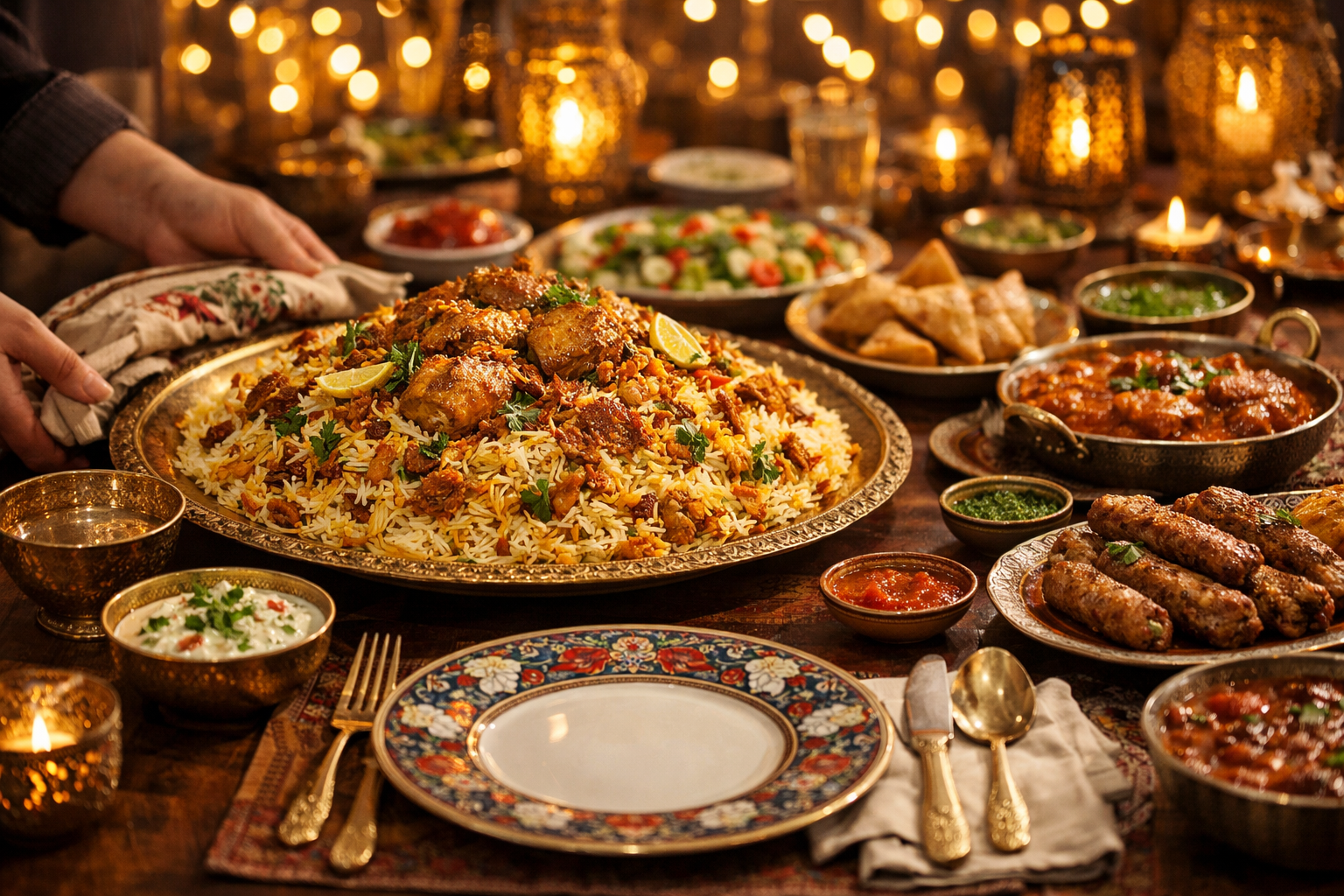
You know this table. The biryani has landed, the qorma is still steaming, the raita is wedged between the naan basket and the salad, and someone’s glass is balanced on the rim of a platter. Every dish is present. Nobody can reach anything.
A dawat table can be full without being well designed. A successful dawat table is not the one that fits the most dishes. It is the one that makes abundance feel effortless.
The shift is to see it as a temporary room within a room, with a focal point, zones, traffic patterns, working surfaces, and sightlines. That is the thinking behind good interior design, and hosts have always done it by instinct. It just helps to name the rules.
Start With the Main Dish, Not the Decoration
Begin with the biryani or pulao. It is the heaviest, hottest, and most-requested dish, guests return to it more than once, and it is served with a wide, sweeping spoon. That makes it your anchor, and an anchor needs clear space around it.
On a rectangular table, set it slightly off-centre, about a third of the way along, and away from the narrowest part of the table, so nobody has to reach over a hot handi just to pass the raita. A bowl of green chutney needs almost nothing and can tuck into any gap. Large and hot claims space; small and cool borrows it.
Build the Table in Zones
- Anchor zone: the biryani or pulao, with a hand’s width of clear table on every side.
- Main-dish zone: qorma, karahi, daal and grilled items, grouped by type. Two or three dishes per side, never a wall.
- Supporting zone: raita, chutneys, salad and pickle within arm’s reach of the rice. Small dishes support large ones; they shouldn’t compete.
- Bread and reach zone: naan and roti at both ends or both sides, so there is no queue at one spot.
- Guest zone: the part of the table that belongs to people, not food.
Where Everything Goes
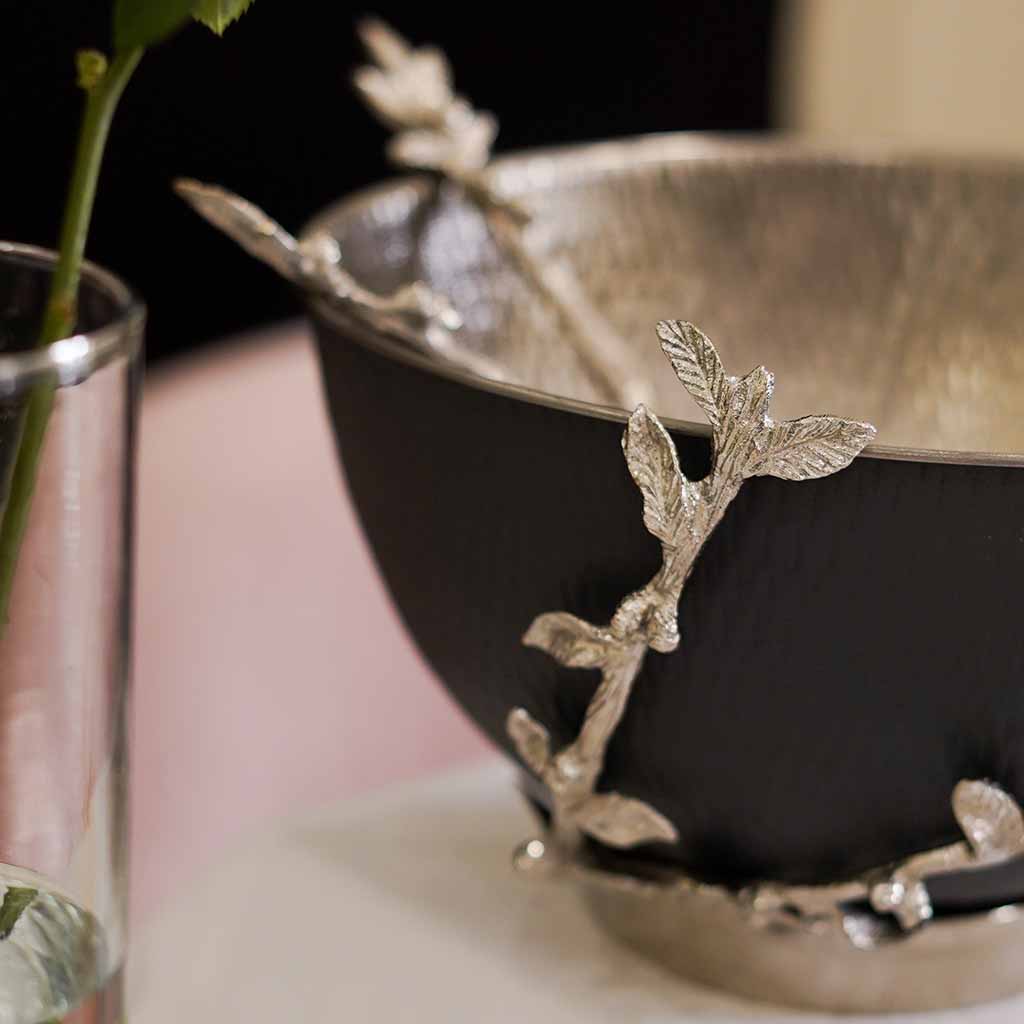
Gravies need depth, because a ladle needs somewhere to go. Place qorma and daal in deep bowls near the central axis, handles turned outward, never directly in front of a plate. The Flora Serving Deep Bowls suit this job: a stainless steel bowl in a sculpted brass base, in a medium (8 inches) and a large (10 inches, 5.5 inches high).
Raita is cool and light, so it sits beside the rice, one bowl for each side of the table. Lumen Serving Bowls in onyx come in 8, 10, and 12 inches, so raita, salad, and a sweet dish read as a family of sizes rather than three unrelated shapes.
Kebabs and bread want length, not depth. A narrow rectangle along the axis keeps them within reach of both sides. The Flora Flat Deep Serving Tray is 20.5 inches long and 10.5 inches wide, with floral handles at each end, so a line of seekh kebabs or a stack of naan travels easily from kitchen to table.
Leave Room for People
Empty space is not wasted space on a dawat table. It is working space: where a plate lands, where a hand passes the daal, where conversation survives. As a rule of thumb, each guest needs about 60 cm of table edge and 35 cm of depth for plate, glass, and cutlery. What remains belongs to the food.
The common mistakes:
- Piling everything in the centre while the edges sit empty.
- Filling every gap with decorative objects, which turns a working surface into a display shelf.
- Putting large bowls directly in front of guests.
- Leaving narrow channels between dishes. Keep a hand’s width, 10 to 15 cm, so spoons can move.
- Letting platters overlap plates.
- Adding tall centrepieces. Keep everything below seated eye level. Layering is useful; blocking is not.
Design for the Shape of the Table
Rectangular
Draw an imaginary line down the middle and place heavy pieces along it, alternating weights: rice, something light, a gravy. Mirror the supporting dishes on both sides so each side has its own raita and salad.
Round
The danger is a crowded centre. Keep the middle for one wide, low anchor and set everything else in the gaps between settings, like numbers on a clock face, so each dish sits between two guests, not in front of one.
Smaller dining table
When the arithmetic stops working, move dishes. A console, sideboard, or kitchen island can hold dessert, the second round of naan, and the drinks. Not every dish has to live on the dining table, and this is the most useful rule here.
When the Buffet Should Take Some of the Load
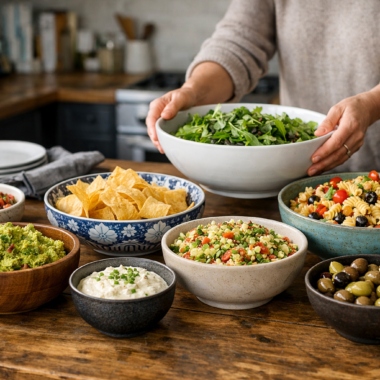
Family-style keeps everything on the table, and guests serve one another. It is warm and sociable, and works best for six to eight people. A hybrid arrangement keeps the biryani and main gravies on the table and moves heavy, oversized, or frequently refilled dishes to a nearby surface, which calms the table and makes larger gatherings far easier.
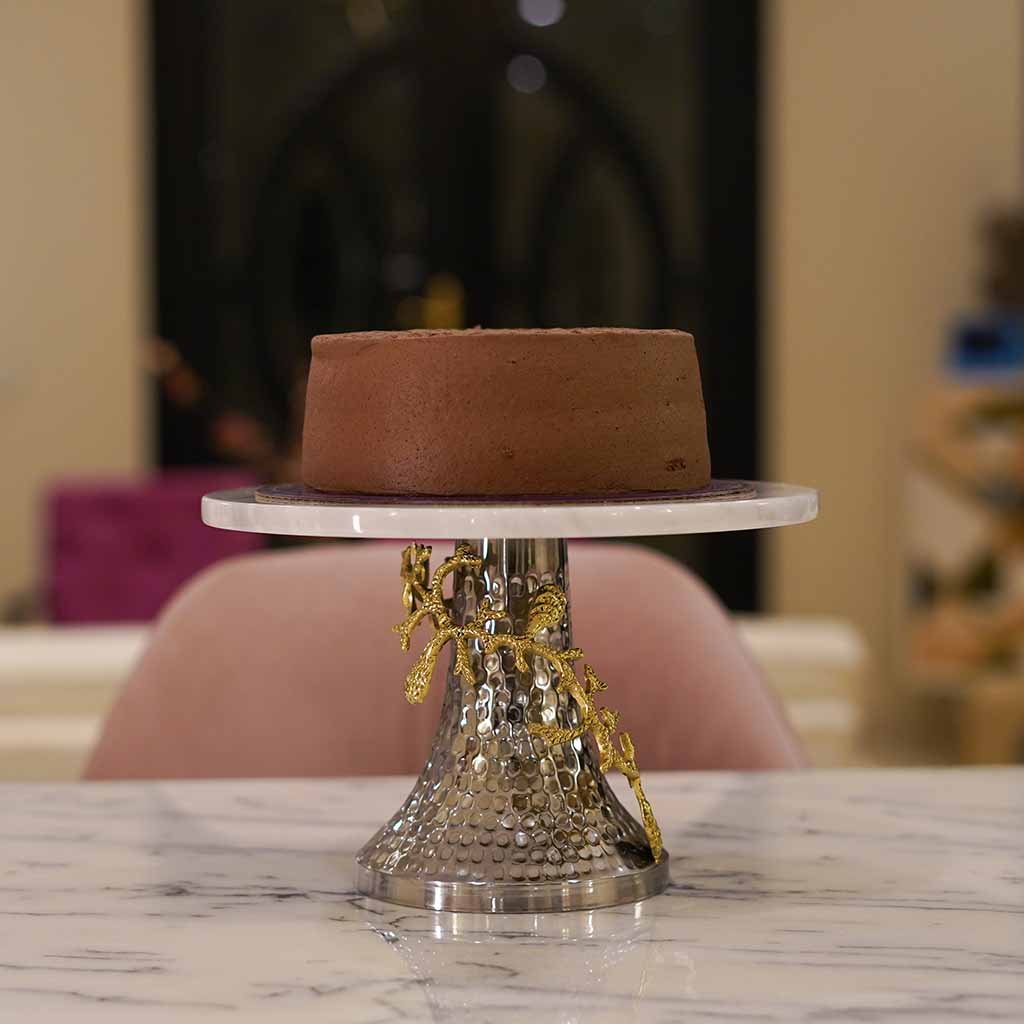
Give a sideboard about a metre of clear floor in front, and keep it out of doorways. Pieces that build upward suit it. The Flora 2 Tier Serving Platter stacks two marble tiers in a 10-inch footprint, handy for sweets, while the Flora Platter, a low 15-inch floral marble disc, suits mithai or cold starters.
Make the Serveware Do Some of the Design Work
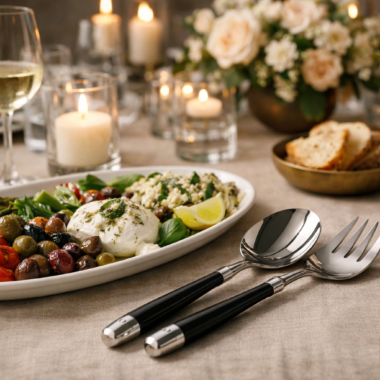
Serving pieces behave like small architecture. A low platter is a floor, a deep bowl is a plinth, a two-tier stand is a column, and their silhouettes and materials set the character of the whole table.
You don’t need everything to match; you need to repeat one thing. The dinnerware Pakistan hosts bring out for guests is usually a matched set, and serveware needn’t copy it, only share one quality with it, such as a metal tone. The Flora pieces share botanical detailing in chrome and brass, which is why a bowl, a tray and a platter read as a group.
Good serveware is also among the most useful home decor items you can own: it works hard on the night, then stands on a console all week, which earns it a place in any home decor Pakistan hosts invest in. Browse serveware, serving platters, serving bowls, and serving trays by asking what each of your serving dishes does for the meal, and for the table.
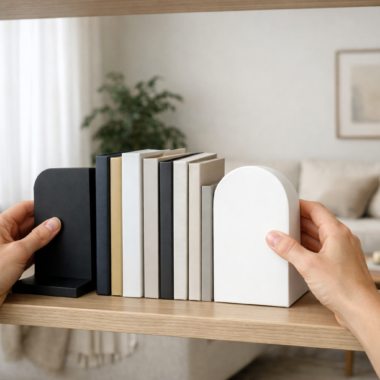
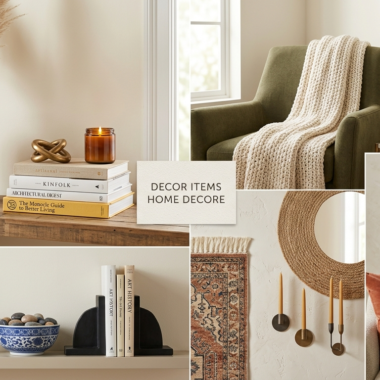
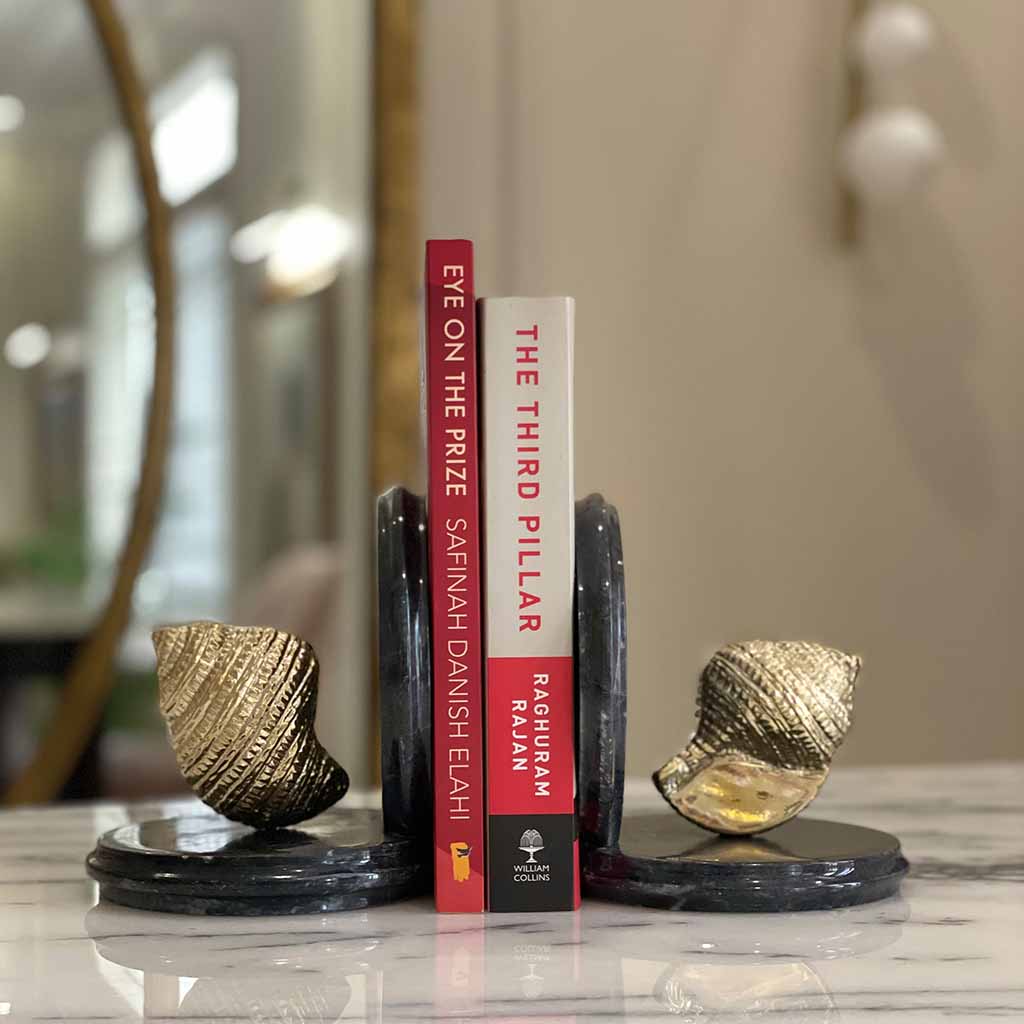
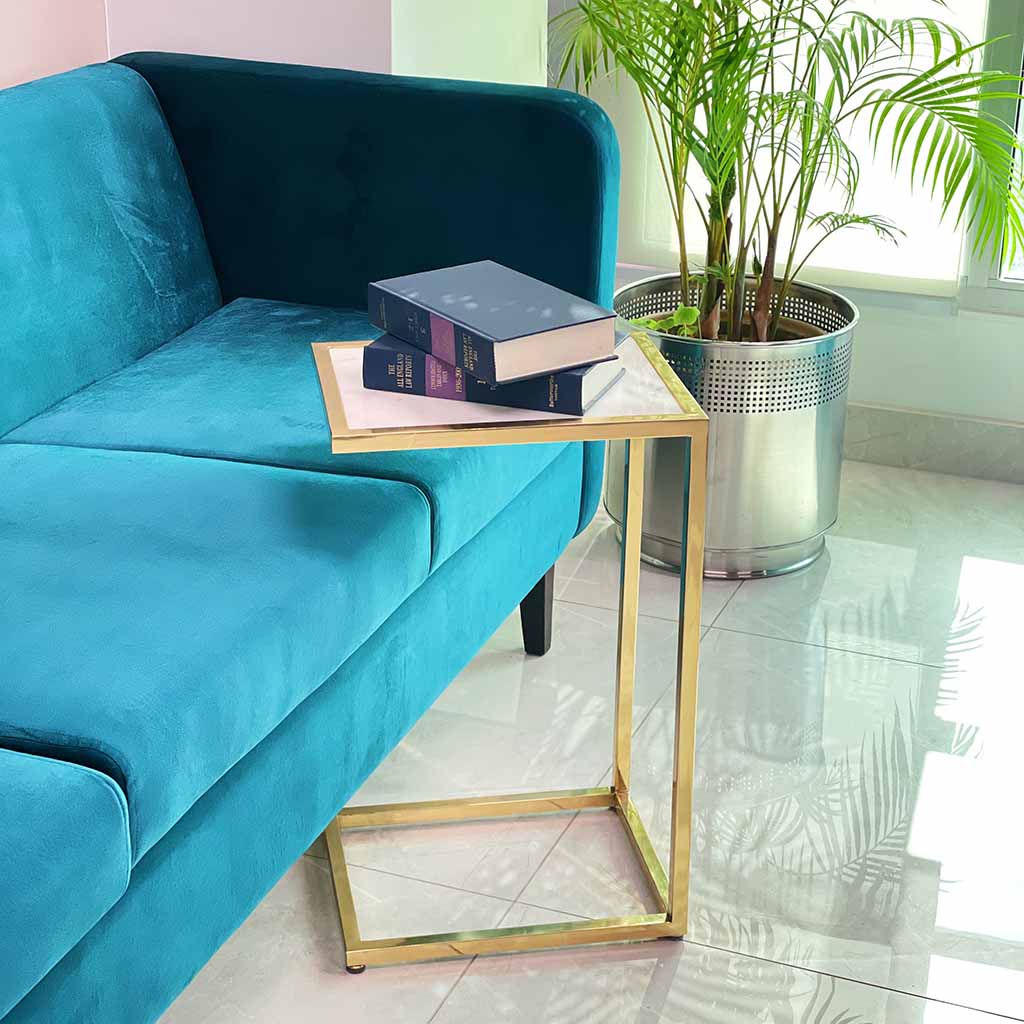
Once the table is cleared, the adjacent console deserves its own moment. A pair of bookends holding a short stack of books turns a surface that was a buffet an hour ago back into part of the living room.
The Final Five-Minute Table Edit
- Remove anything that does not serve the meal.
- Check that every dish is reachable without stretching across a person.
- Move oversized dishes off the table if necessary.
- Leave visible breathing room.
- Rest each serving spoon on the side nearest the person who will use it.
- Sit at two or three seats and check the sightlines.
Find high-quality, luxurious gifting pieces, home décor, furniture, lamps, and serveware accessories at CREO, chosen for homes that host well. Set a table and a home that makes every dawat feel effortless.
FAQs
1. Where should biryani be placed on a dawat table?
A: Slightly off-centre on the central axis, away from the narrow ends, with clear space on every side, so guests can reach it without leaning over anything else.
2. How do you keep a Pakistani dinner table from looking overcrowded?
A: Group dishes by type, leave a hand’s width between them, and drop decoration that doesn’t help the meal. If it still feels full, move dessert, drinks, and spare bread elsewhere.
3. Should every serving dish be placed on the dining table?
A: No. Heavy, oversized, or frequently refilled dishes work better on a sideboard or console.
4. How can serving bowls and platters make a table look more coordinated?
A: Repeat one element, such as a metal finish, a material, or a rounded shape, and vary the sizes. Pieces from one collection in different forms read as a set.