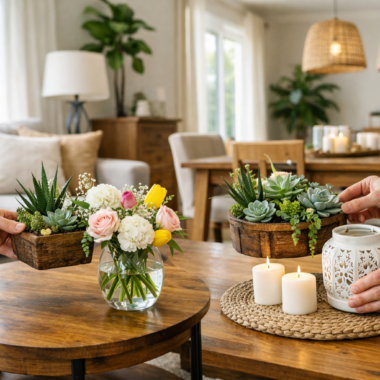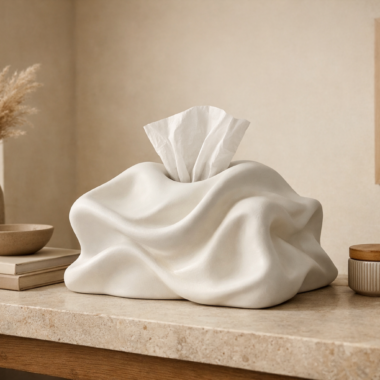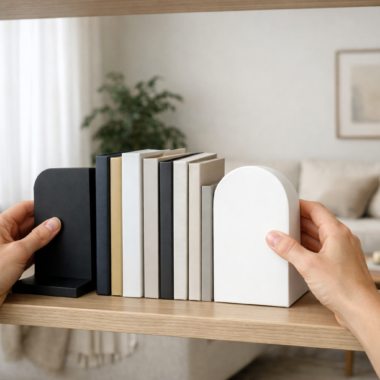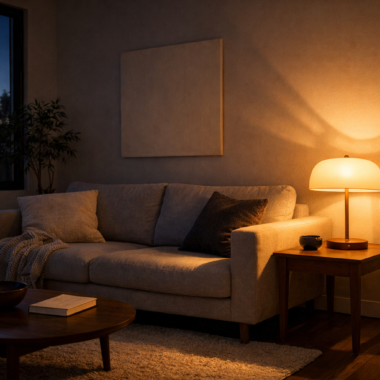



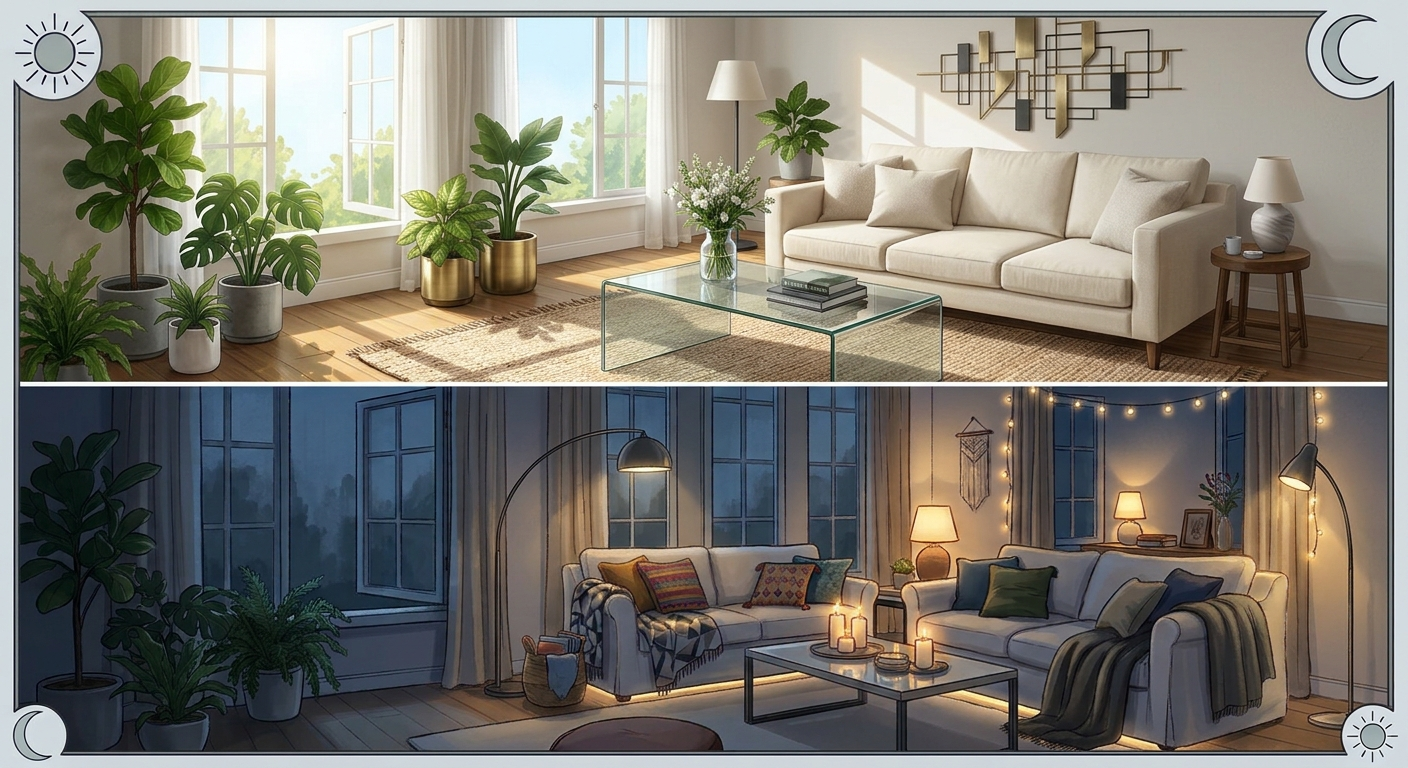
At two in the afternoon, the living room does everything you hoped it would. The marble on the console looks clean, the brass picks up a thin line of sun, and the bowl on the coffee table seems placed by someone with taste. By nine, the same room has gone quiet in the wrong way. One ceiling light flattens everything into an even wash, the console starts to look like a shelf, and the objects you chose so carefully stop speaking to each other. Nothing moved. Only the light did.
That is the part most styling advice skips. A room is not judged at its brightest moment; it is lived in from morning through evening, and good styling is about how the room behaves across all of those hours.
The Same Room Tells a Different Story After Sunset
Daylight is a generous stylist. It arrives from a direction, so every object gets a lit side and a shaded side, and that soft gradient is what makes a room feel layered. Where windows are large, strong afternoon sun can also bleach pale surfaces and throw sharp shadows, which looks dramatic but means daylight is doing much of the styling for you.
After dark, that help leaves. A single overhead fitting lights everything from above at the same strength, so shadows drop straight down, glossy surfaces turn into glare, and the contrast that gave objects their shape collapses. The fix is rarely a brighter bulb. It is a few smaller sources at different heights, so the eye has somewhere to travel.
Read Your Materials Through the Light
Natural stone
By day, light reveals stone: the grey threads in white marble, the pitted warmth of travertine. In warm evening light the same surface deepens and the piece feels heavier and more grounded. A tapered white marble column inside a brass cage, as on the Omnia table lamp, shows both moods: cool and architectural at noon, richer and calmer once lit.
Brass
Warm light is brass’s best friend. At around 2700K the golden quality comes forward; under a cooler bulb the same metal turns paler and sharper, more steel than gold.
Lacquered and polished surfaces
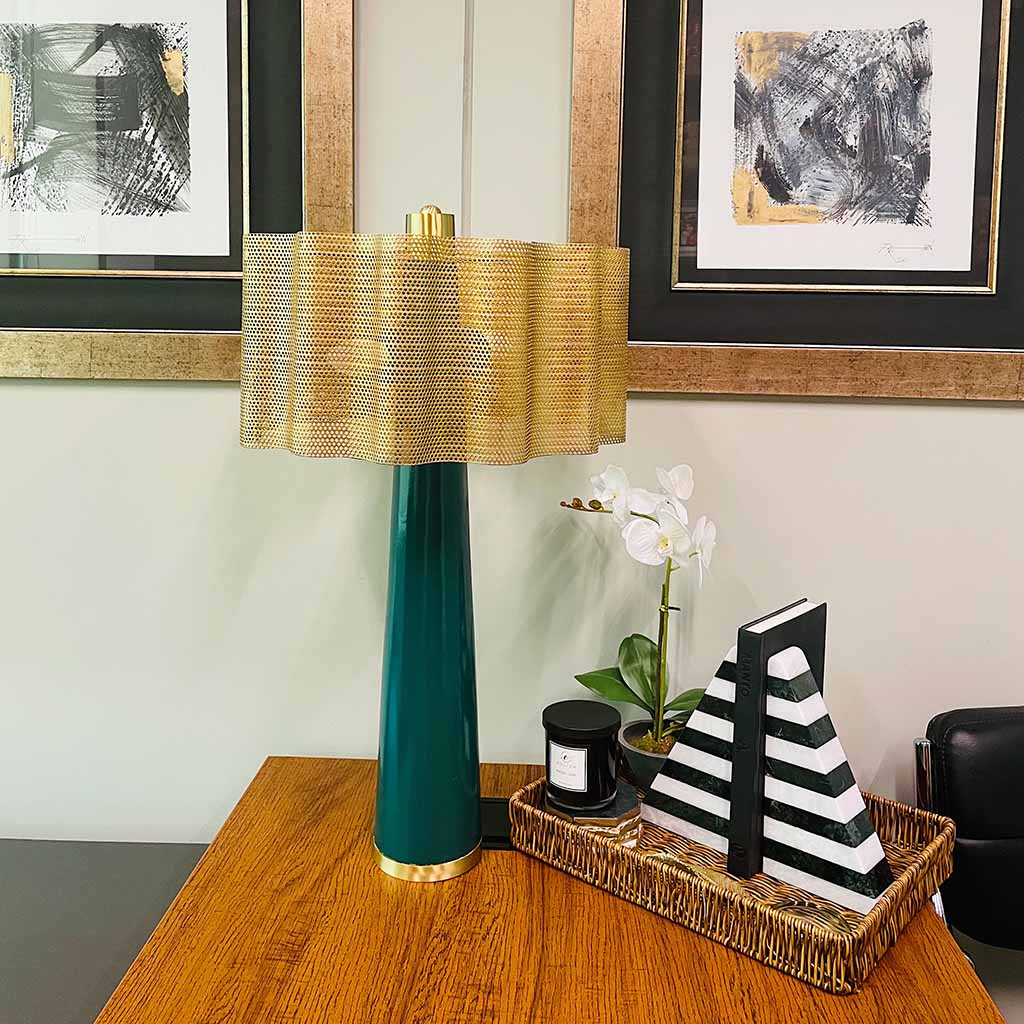
Glossy finishes reflect the light source itself. Under a bare overhead bulb, a high-gloss surface returns a hard white hotspot; lit from the side through a shade, it gives a long, soft highlight that reads as depth. The high-gloss teal body of the Nox table lamp is a good test case: it behaves very differently beside a lamp than under a harsh ceiling spot.
Glass, ceramic, wood and textiles
Glass nearly vanishes on a bright windowsill but glints by candlelight. Matte ceramic holds steady in any light, wood warms in lamplight, and textured fabric looks richer in side light than under an overhead one.
Why Lamp Placement Matters More Than Having More Lamps
Add lamps without thinking about where the light lands and you get a brighter room, not a better one.
Light objects from the side, not from above. Overhead light flattens form. Light from beside an object, at about the height of its middle, draws out curve, ridge and texture.
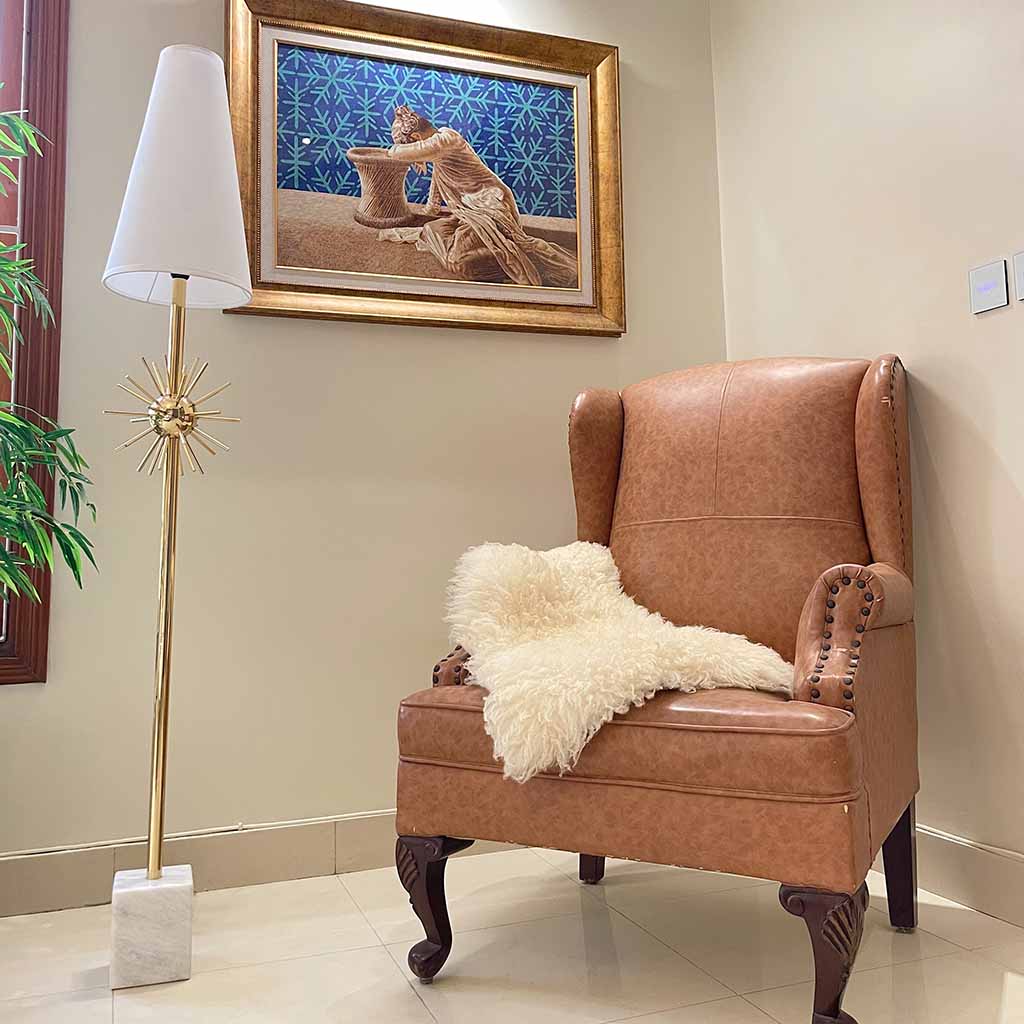
Put lamps where you actually look. A lamp at the end of a console or beside a sofa becomes a visual anchor and gives nearby decorative items for home a reason to be arranged around it. A pair of table lamps frames a console like brackets, while a taller floor lamp beside an armchair adds a second, higher layer.
Let some areas stay dim. A softly shadowed corner makes the lit one look deliberate. Aim for three levels after dark: something low like a candle, something medium like a table lamp, something higher like a floor lamp.
Try this: if a lamp sits dead centre on a console, slide it 25 cm toward your grouping of objects. The tray beside it gains a bright edge, the ceramic gets a shaded side and looks three-dimensional, and the wall behind picks up a gradient instead of a flat glow.
The Accessories That Work in Daylight and at Night
Objects that behave well in any light tend to share a few traits:
- Interesting texture. Hammered, veined or unevenly glazed surfaces catch light from any angle.
- Moderate reflectivity. Satin and hammered finishes beat mirror-bright ones, which invite glare.
- A strong silhouette. Simple shapes still read when detail disappears into shadow.
- Subtle colour variation. Tonal shifts, like cream and gold ribbons in onyx, stay interesting as light changes.
- Enough visual weight. Pieces with mass hold their presence after dark.
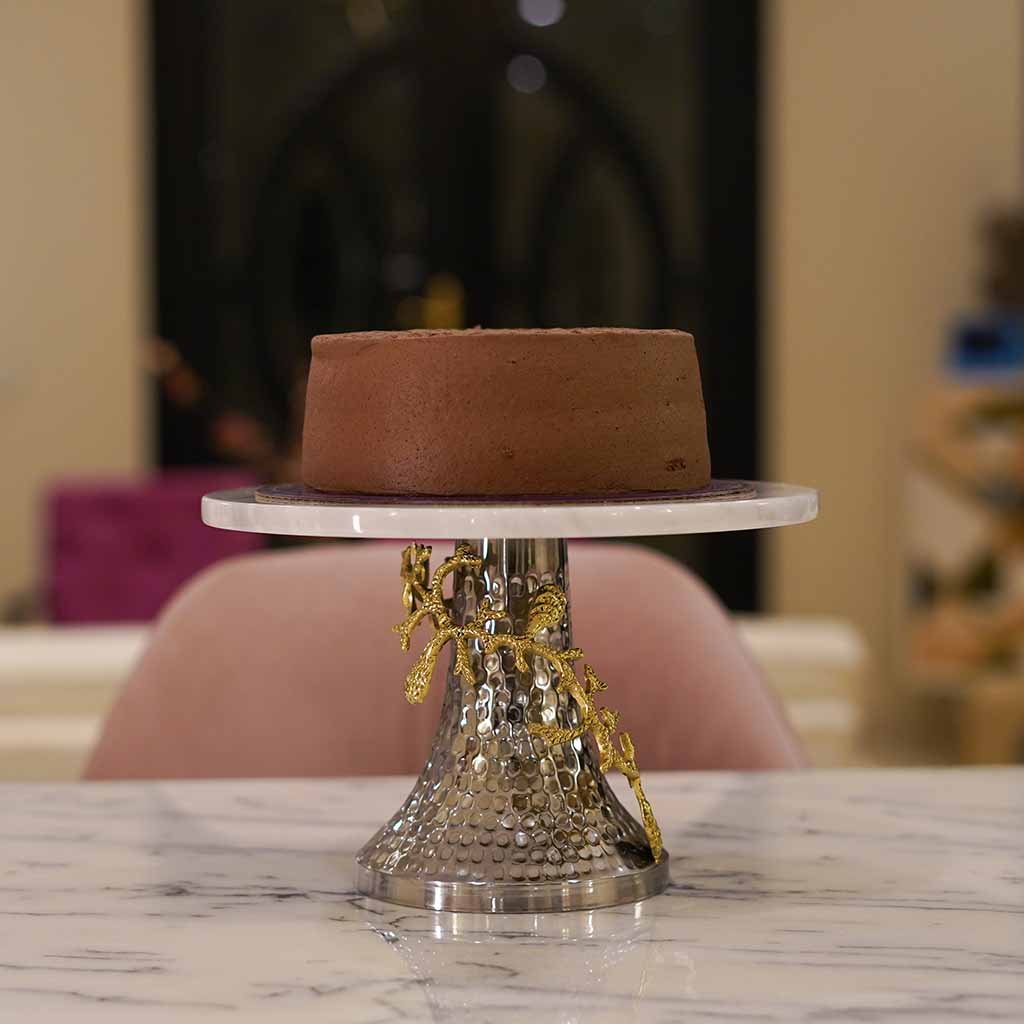
The Flora Flat Serving Tray is a good example. Its hammered stainless steel breaks reflections into many small highlights, so as a serving tray on a coffee table it shimmers by day and glints softly by lamplight instead of throwing back a single glare.
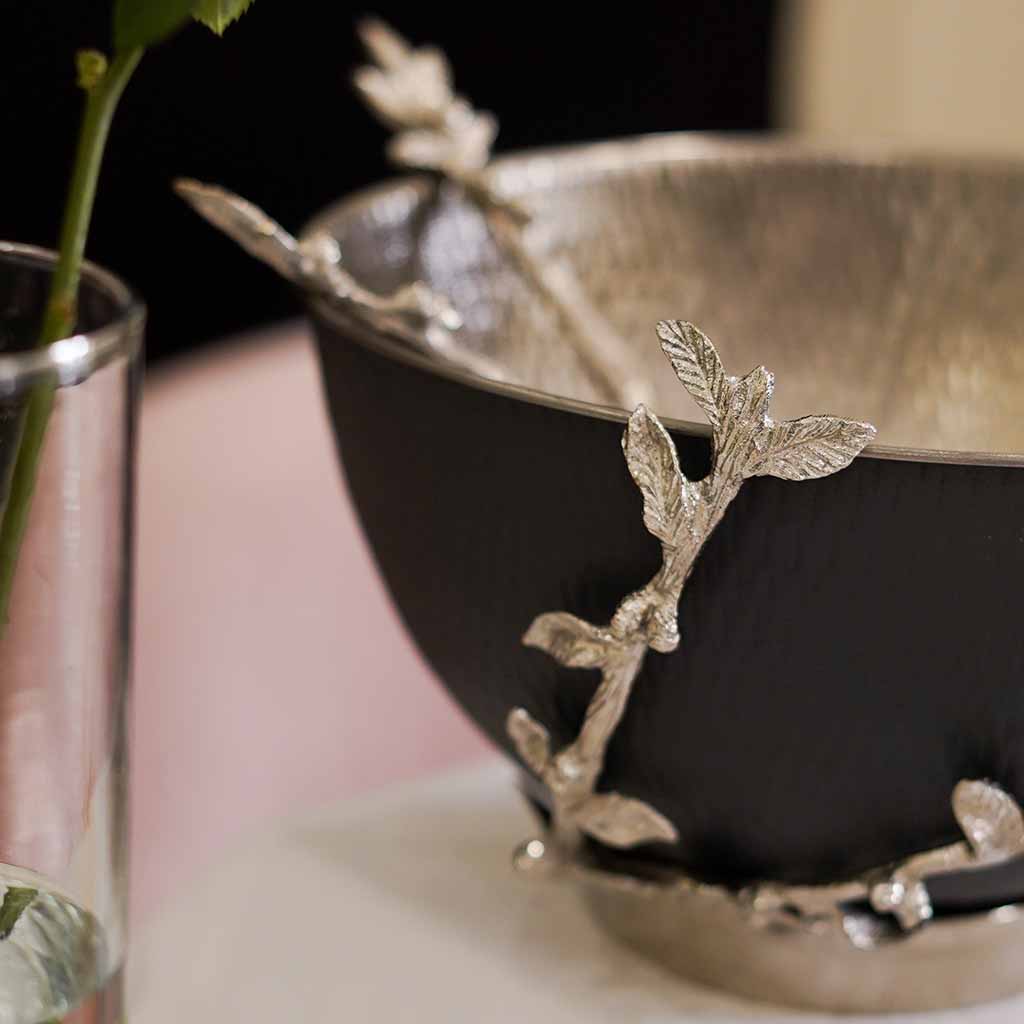
Bowls can do similar work. The Lumen range, in semi-translucent onyx with a brass starfish on the rim, makes a good case for serving bowls as small sculptures on a console when they are not holding food.
The opposite: mirror-polished finishes can be spectacular in sun and harsh under a bare bulb, and very pale, matte objects against a pale wall tend to disappear once contrast drops after sunset. They simply need a lamp’s help or a darker backdrop.
Much of the home decor Pakistan buys is chosen in strong daylight and then used most after dark, when guests arrive. Test each piece twice: once at three in the afternoon and once at nine in the evening.
Small Changes That Make a Big Difference
You do not need to move a sofa. Most decoration items already in your home can do more with ten minutes of adjustment.
Small changes worth trying tonight:
- Move a table lamp closer to a decorative grouping, and slightly to one side, so objects are lit across rather than from above.
- Raise a bowl on a stack of books, or lower a tall piece, so its best surface sits at or just below the lamp’s glow.
- Add a candle stand at the low end of a console so the flame sits below eye level. A slender marble stand like the Mira candle stand, in travertine or black marble, also adds a vertical line.
- Turn a tray a few degrees until its rim or handles catch the side light, and move glossy pieces out of the direct line of a bare bulb.
- Group objects in odd numbers at different heights so lamplight can cast shadow between them, and add one stone or ceramic piece with real texture to a surface that feels flat after dark.
- Leave a hand’s width of empty space around the object the lamp is meant to highlight.
- Light a wall, not only an object: a perforated shade, like the one on the Nox, scatters a soft lattice of light across nearby surfaces.
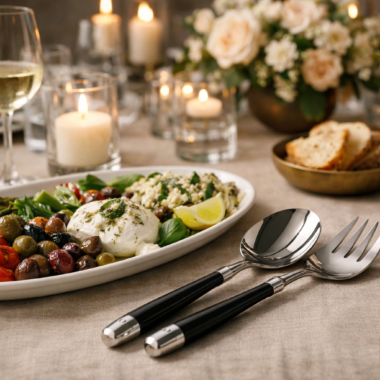
Evening hosting is the real test of dinnerware Pakistan households layer with trays, bowls and candles on one table, because that table is lit by lamps rather than the sun. Check it at the hour guests will see it.
Small home accessories like candle stands and a well-chosen serveware piece do the work the ceiling light cannot.
Style for noon alone and you will have a good photograph. Style for the whole day and you will have a room that feels right whenever you walk into it.
Shop CREO Living for high-quality, luxurious gifting items, home decor, furniture, lamps and serveware accessories. Choose pieces that look as good at nine in the evening as they do at noon.
FAQs
1. What light temperature works best for decorative objects?
A: Warm white, around 2700K to 3000K, flatters most materials: brass reads golden, stone deepens, and wood warms. Cooler bulbs suit desks and kitchen counters but can make brass look thin in living spaces.
2. How can I make a room look better at night without changing the furniture?
A: Move a table lamp beside a styled grouping, add a candle stand at a lower height, and switch off the overhead light when you can. Two or three low, warm sources do more than one bright ceiling fitting.
3. Should lamps match the main ceiling light?
A: Not in style, but in warmth. Keep every bulb in a room within the same colour temperature, and use dimmers, or the lamps alone, in the evening.
4. Which materials or accessories work best in both daylight and artificial light?
A: Among home decor items, look for textured, moderately reflective materials: veined stone, hammered metal, onyx, matte ceramic, and wood. A strong silhouette and some weight help too.