

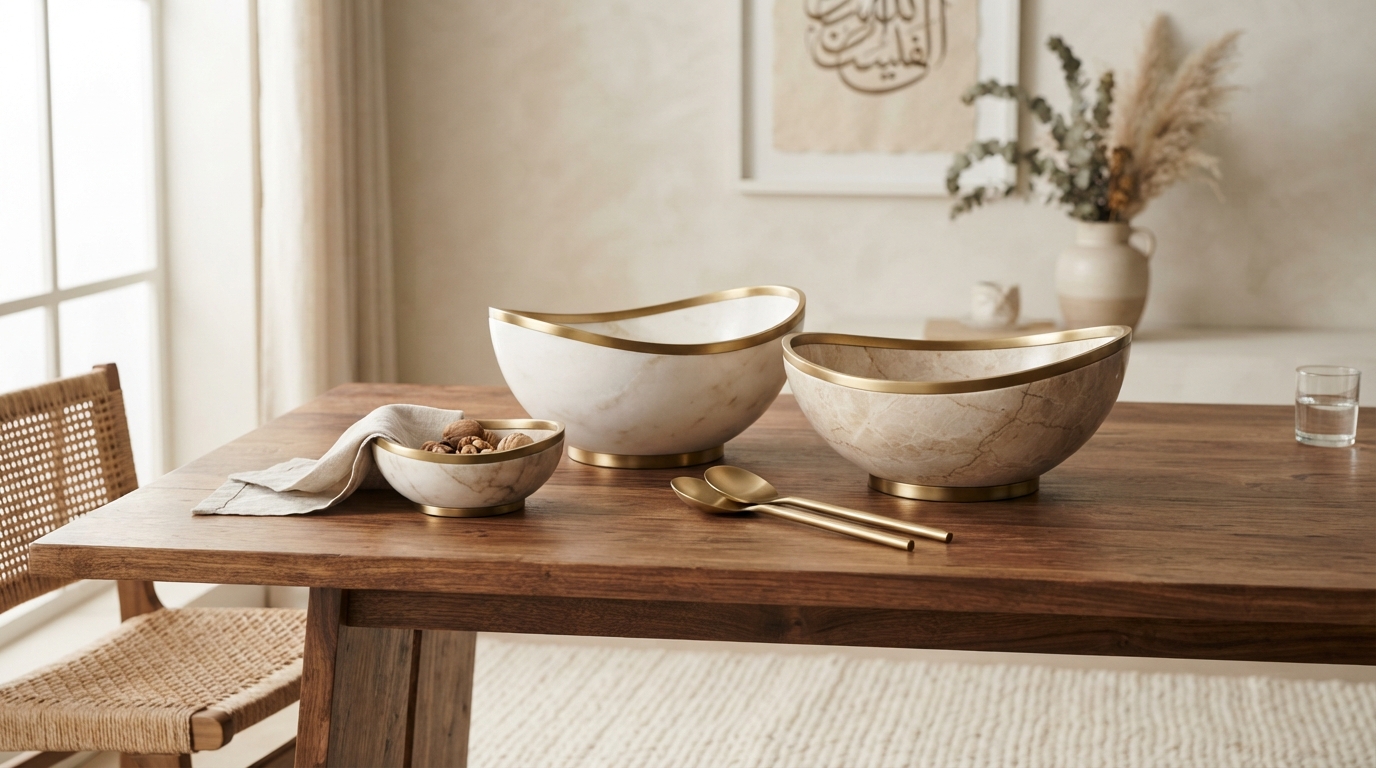
A serving bowl does two jobs at once. It holds the food, and it sets the tone for the table around it. Too small, and the salad crowds the rim. Too deep, and the raita disappears. Too elaborate, and it competes with everything else you have laid out. Knowing how to choose a serving bowl comes down to three decisions: design, depth, and details. This guide follows the video’s three themes, then adds a size guide and the mistakes worth avoiding.
Design: shape, material and finish
Material and finish
Serving bowl design starts with material, because material decides how a bowl sits beside your dinnerware. Stone brings natural variation, so no two onyx bowls share the same veining. Metal adds a cooler, more architectural note. A matte finish reads quietly next to glossy plates, while a polished one catches the light. Whichever you choose, the material should earn its place: a bowl chosen for how it looks and how it works will outlast one chosen on trend alone.
The Lumen Serving Bowls show what stone can do: round onyx bowls with a brass starfish on the rim, in small, medium, and large. The Octopus Serving Bowl is bolder, with a sculpted octopus reaching over the rim of a stone bowl. At CREO, we think a serving bowl should still look right when it is empty, because between meals it may well stay on a console or sideboard.
Shape and your table
A rounded, simple form works with almost any table. A bowl with a sculptural accent behaves more like a centrepiece, so give it room. Work from what you already own:
- Plain or neutral dinnerware: a textured or sculptural bowl adds interest without a clash.
- Patterned plates: choose a quieter finish and let the plates lead.
- Gold or brass details: repeat that metal in the bowl’s accent.
- A minimal modern table: one bowl with a clear form is enough.
Depth: shallow versus deep
Depth decides what a bowl can hold and how the food looks in it.
- Deep bowls suit dishes with sauce or volume: curries, daal, rice and salads that need tossing.
- Shallow bowls suit food that looks best spread out: chaat, fruit, flatbreads and layered salads.
- Small bowls suit dry fruit, nuts, chutneys and individual desserts.
A quick test: if the dish needs scooping, go deeper. If it needs showing, go shallower. On a dawat table, where rice, salan and salad often share the spread, a mix of one deep and one shallow bowl usually serves better than three of the same.
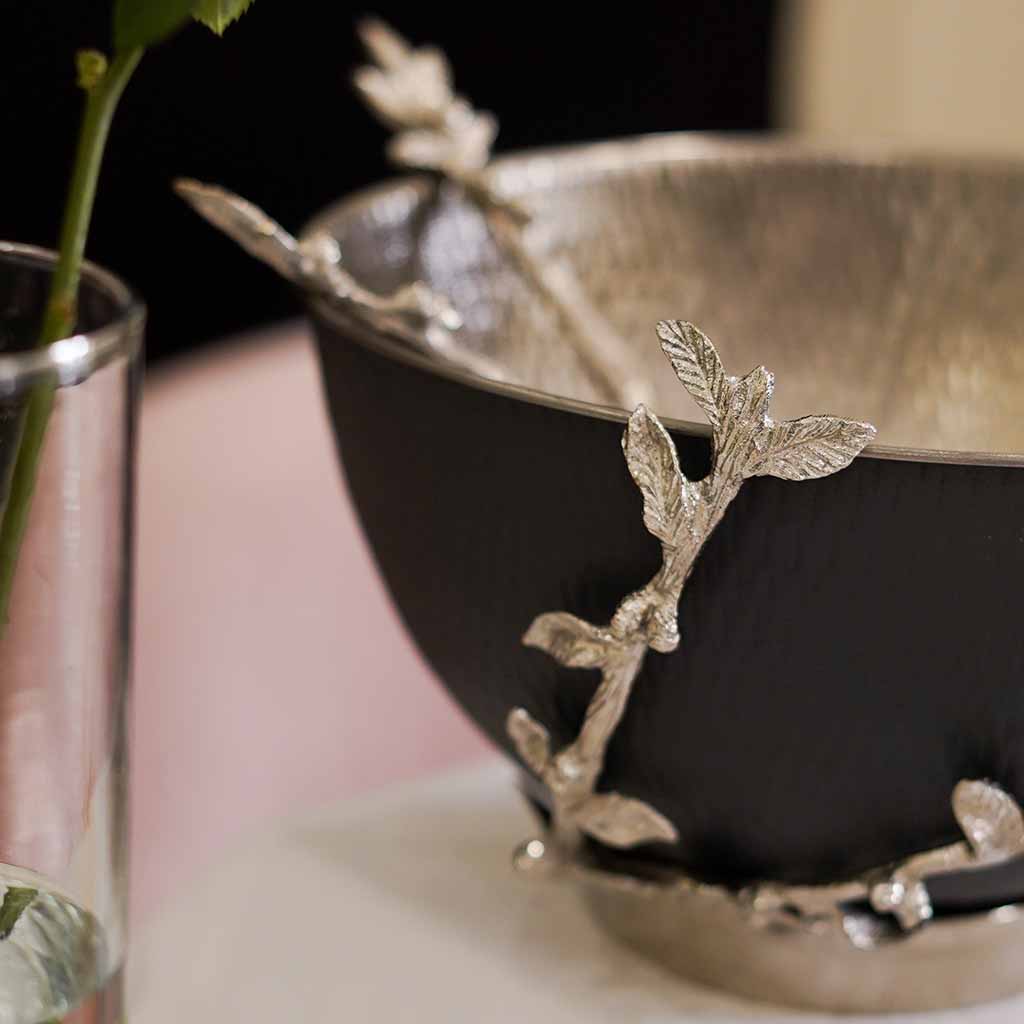
The Flora Serving Deep Bowls pair a stainless steel bowl with a chrome-finished brass base shaped like branches, and suit a colourful salad. The Flora Serving Flat Bowls go wide instead, in four sizes, and suit flatbreads or a tomato salad.
Details that make a bowl easier to use
- Rim: a defined rim gives serving spoons somewhere to rest.
- Handles and lids: most serving bowls skip both. Lids help with rice and warm dishes, less so with salads you want guests to see.
- Weight: stone and metal feel substantial. A heavier bowl sits steadily, though it may need two hands when full.
- Cleaning and stacking: plain bowls nest easily, while sculptural ones need their own shelf. The Flora bases detach from the steel bowl, which the product pages describe as making cleaning easier.
None of these details is difficult to check, but each one affects whether a bowl is a pleasure to use or something you reach past at the table.
Serving bowl sizes: a simple guide
If you are comparing serveware Pakistan has on offer, size decides whether a bowl gets used or stays in the cabinet. The table pairs the listed diameters of the bowls above with the dishes each size suits. Guest numbers are a rule of thumb, since the right size also depends on how many dishes share the table.
| Diameter | Bowls | Suits | Serves roughly |
| 8 in | Lumen Small, Flora Deep Medium | Dry fruit, nuts, chutney, dessert portions | 2 to 4 |
| 10 in | Lumen Medium, Flora Deep Large, Octopus | Salads, raita, fruit, sweet dishes | 4 to 6 |
| 12 in | Lumen Large, Flora Flat Medium | Large salads, chaat, flatbreads | 6 to 8 |
| 14 to 16 in | Flora Flat Large and Extra Large | Fruit, bread, shared spreads | 8 or more |
Diameters come from each product page, which also lists heights.
Common mistakes to avoid
Most serving bowl problems come down to a few avoidable choices:
- Choosing too small. A bowl filled to the brim makes serving messy. If unsure, go up one size.
- Matching everything. Several sculptural bowls compete. Pick one hero and keep the others plain.
- Forgetting the table. A 16-inch bowl on a compact table leaves no room for plates. Measure first.
- Skipping the material check for hot food. Stone and coated finishes may not suit food straight from the stove. Confirm with the maker before serving hot dishes.
Styling tip: let one bowl anchor the table
Start with the bowl you want guests to notice, then build around it. A deep bowl adds height and a flat one adds width, so pairing both keeps a table from looking flat. Repeat one metal, brass or chrome, in your serving spoons and napkin rings, and leave open space around the bowl. The best tables leave room for conversation. If you are building the table around a single bowl, choose the bowl first and let the plates, linen, and candles follow its finish.
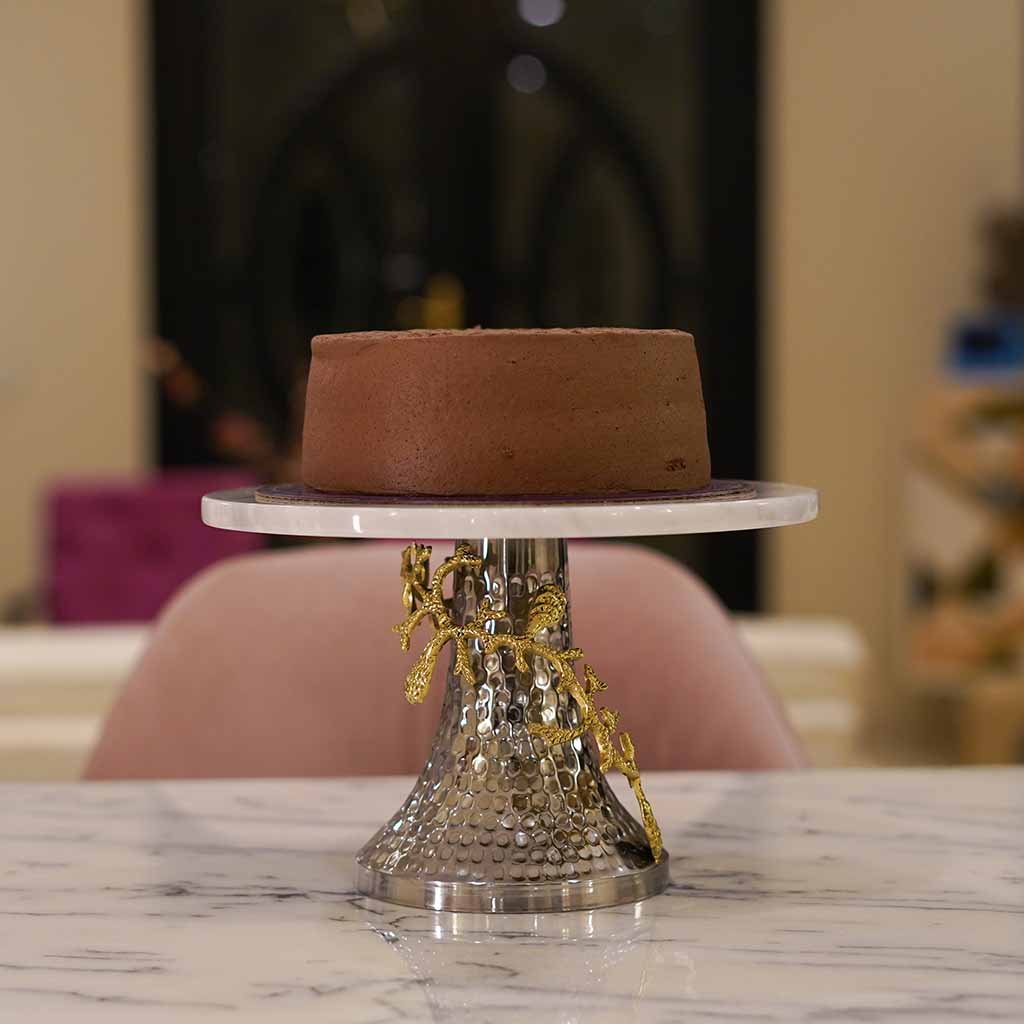
To complete the table, look at related CREO pieces: serving utensils such as the Nepa Salad Spoon Set, and cake stands and platters for dessert.
Choosing with confidence
Start with the dish, then decide on depth, then check the details. A bowl that fits the food, the table, and the guests will usually look more considered than one chosen on looks alone. Browse the CREO serving bowl collection and find the piece that suits your table.
FAQs
1. What size serving bowl do I need for six guests?
A: A 10-inch or 12-inch bowl is a comfortable starting point for a salad or side dish. If several dishes share the table, choose the 10-inch size. If the bowl holds the main dish, go larger.
2. Should I choose a deep or a shallow serving bowl?
A: Choose by dish. Deep bowls suit curries, daal, rice, and salads that need tossing. Shallow bowls suit chaat, fruit and flatbreads, which look best spread out.
3. What serving bowls work best on a dining table?
A: The best bowl fits the dish, the table and the number of guests. Look for a size that prevents spills, a finish that suits your dinnerware, and a form that is easy to lift when full.