

The Cognitive Cost of Clutter
Every object on your desk issues a command to your brain. A tangle of cables whispers “unfinished.” A mismatched mug and stray charger murmur “disorder.” Neuroscience confirms what design instinct already knows: visual clutter competes for the limited attentional resources needed for deep, focused work. Each unrelated shape becomes a small tax on concentration, and by midday, that tax compounds into genuine mental fatigue.
A curated desk works in the opposite direction. When every object shares a coherent visual language, your eyes stop scanning for problems and settle into calm, sustained focus. This is the quiet power of intentional design: not decoration for its own sake, but a functional tool for cognitive clarity, one that the home office deserves, since it is where discipline and inspiration must coexist in the same square metre.
The Art of Cohesion: The Unsung Design Heroes
Some of the most transformative desk objects are the ones nobody notices, until they’re gone. Chief among them is the humble tissue box holder. Left in its cardboard packaging, a tissue box is a jarring intrusion of commercial branding into an otherwise considered space. Concealed within an elegant tissue box cover, that same object becomes a quiet architectural note, echoing the material story of everything around it.
This is the essence of cohesive styling: giving the ordinary, unavoidable items of daily life a proper home that respects the room. A well-chosen tissue box cover doesn’t announce itself; it simply removes visual friction, the way a tailored blazer removes the friction of an ill-fitting shirt. For professionals furnishing a home office in Pakistan, sourcing a decorative tissue box holder Pakistan shoppers trust for craftsmanship and durability is an easy, high-impact upgrade, one small object correcting an entire desk’s visual rhythm.
Building the Perfect Desk Vignette
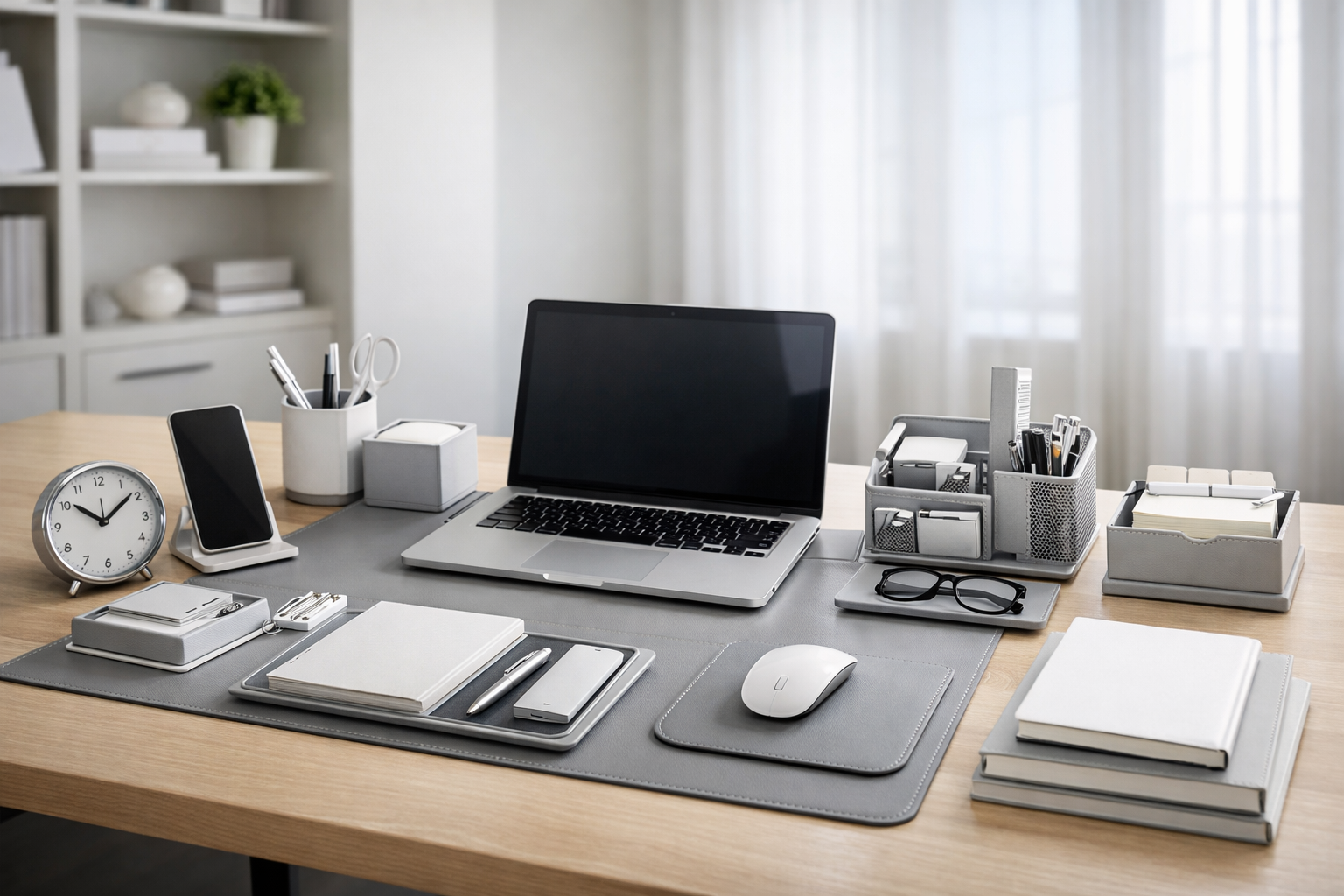
Great desk styling follows the principles of a well-composed still life: intentional grouping, varied height, and a shared material thread. Use this framework as a starting point:
- Anchor the vignette. Choose one substantial piece, the tissue box cover or a marble tray, where the eye lands first.
- Introduce height variation. Pair the anchor with a taller pen cup or stacked leather notebooks so the arrangement reads as a landscape, not a flat row.
- Balance visual weight. A dense piece like a decorative tissue box holder Pakistan enthusiasts favour for its heft, should be offset by something lighter, like a woven paper tray or brass letter holder.
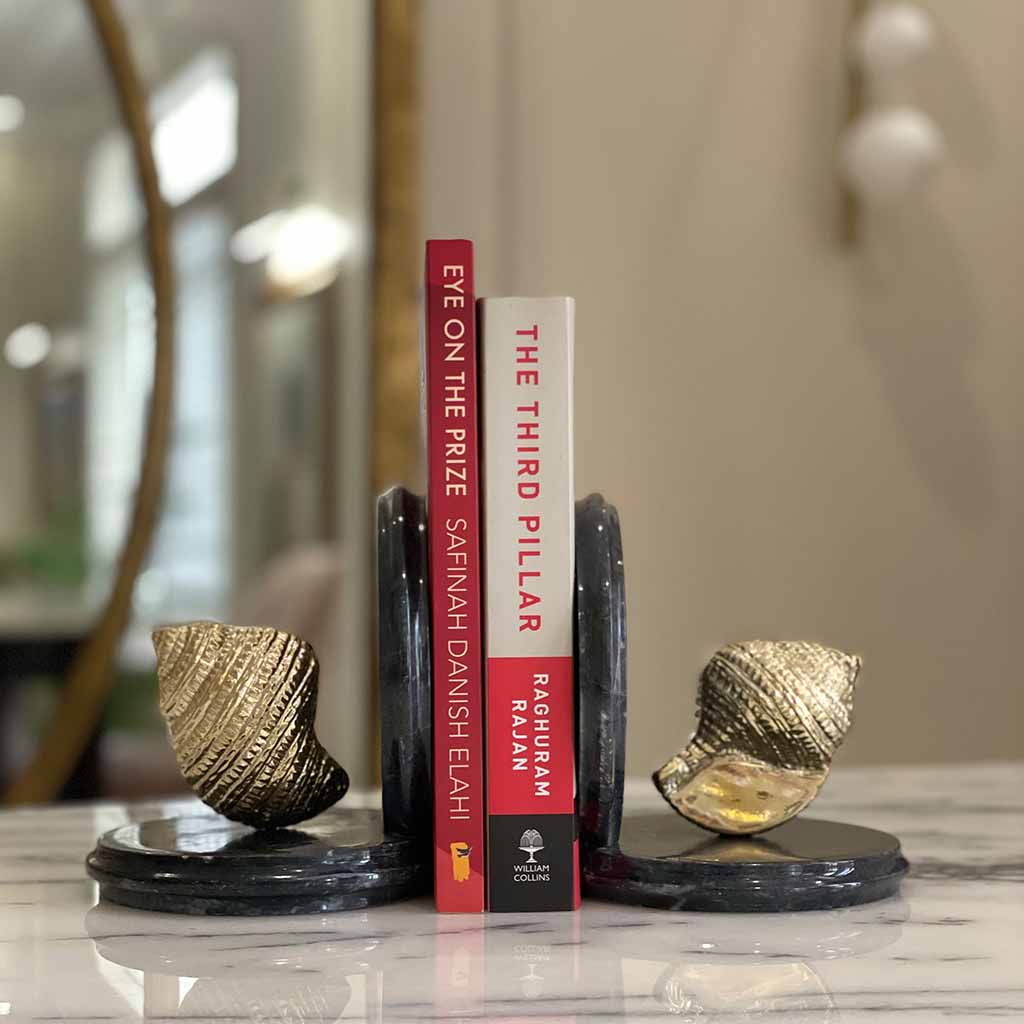
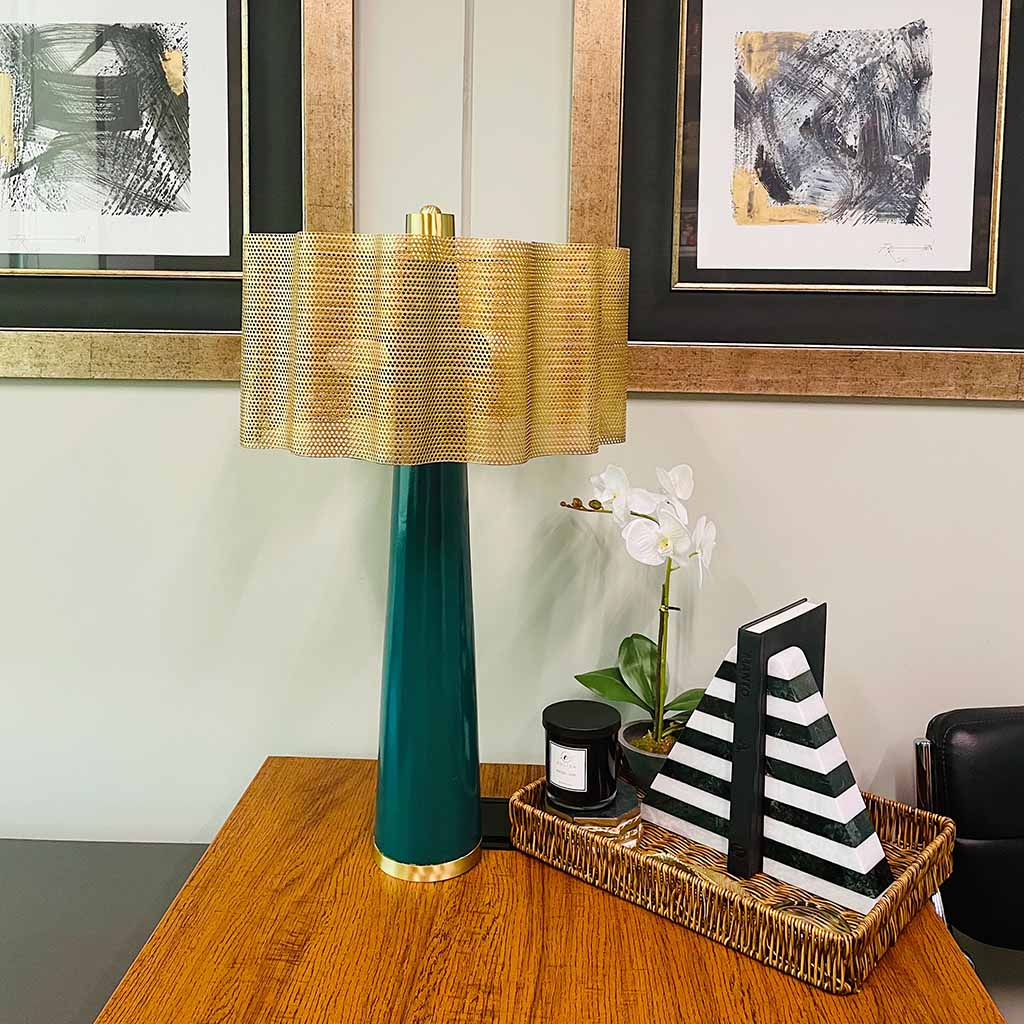
- Repeat, don’t match. Echo one material, brass, cognac leather, veined marble, across two or three objects. Repetition creates cohesion; uniformity creates monotony.
- Leave breathing room. Negative space allows each piece to read as intentional rather than incidental.
Material Selection for the Professional Home Office
Material is not a cosmetic afterthought, it shapes how a workspace feels to sit in all day.
Warm Wood & Leather
Organic textures like walnut, oak, and full-grain leather bring warmth and tactile comfort. They soften the sterility of screens and cables, and their natural grain gives the eye somewhere calm to rest during long stretches of focused work. A leather-wrapped notebook or wooden pen tray anchors the desk in something human.
Sleek Metal & Brass
Where wood and leather soothe, brass and metal sharpen. Clean lines and reflective surfaces bring structural modernism, signalling precision and momentum. Metal accents, a brass letter opener, a chrome-edged tray, work best in small doses, framing softer materials rather than overwhelming them.
Natural Stone & Marble
Nothing communicates permanence and quiet, lasting authority like stone. The weight of a genuine marble tissue box cover Pakistan buyers increasingly seek for executive desks, does more than conceal a tissue box, it grounds the surface with a gravitas that lighter materials cannot achieve. Pair a luxury tissue box cover Pakistan professionals invest in with a matching marble coaster, and the desk begins to feel less like a workstation and more like a considered interior moment. The coolness of stone underhand has a subtle, centring effect during high-pressure calls.
Functional Minimalism vs. Sterile Emptiness
Minimalism is often misread as absence, but the most successful desks are edited, not empty. A bare surface offers nothing for the mind to settle on and can feel clinical rather than calm, the workspace equivalent of a room with no artwork.
The sweet spot is functional minimalism: every object present earns its place through use, beauty, or both.
- Choose textured accents, ribbed ceramic, hammered metal, veined marble, over flat, glossy plastics.
- Limit your palette to two or three materials so the desk reads as composed, not chaotic.
- Let one object carry personality, a sculptural tissue box holder, a monogrammed tray, while the rest stays supportive.
- Rotate seasonal items sparingly, so the core vignette stays a stable, focus-friendly anchor.
When done well, this balance produces a desk that feels alive without being loud, disciplined enough for deep work, and warm enough to enjoy all day.
Unveil the pieces that turn a desk into a considered space, from marble trays to gifting essentials, Creo Living’s collection is built for those who see beauty in detail. Shop home decor, lamps, and serveware crafted to elevate every corner of your home.
FAQs
1. What is the easiest first step to a cohesive desk setup?
A: Start with the tissue box, often the most disruptive object on any desk. Swapping it for a coordinated cover instantly elevates the surrounding pieces.
2. How do I clean a marble tissue box cover without damaging it?
A: Wipe with a soft, damp microfiber cloth and pH-neutral cleaner. Avoid vinegar, citrus, or abrasive products, which can etch natural stone.
3. Can I mix marble, wood, and brass on the same desk?
A: Yes, mixed materials add depth as long as one finish, often brass or leather, repeats across two pieces.
4. How many decorative accessories are too many for a small desk?
A: As a rule, keep to three to five coordinated pieces. Beyond that, even beautiful objects begin to compete rather than complement.