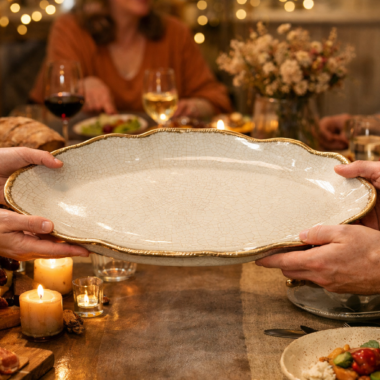


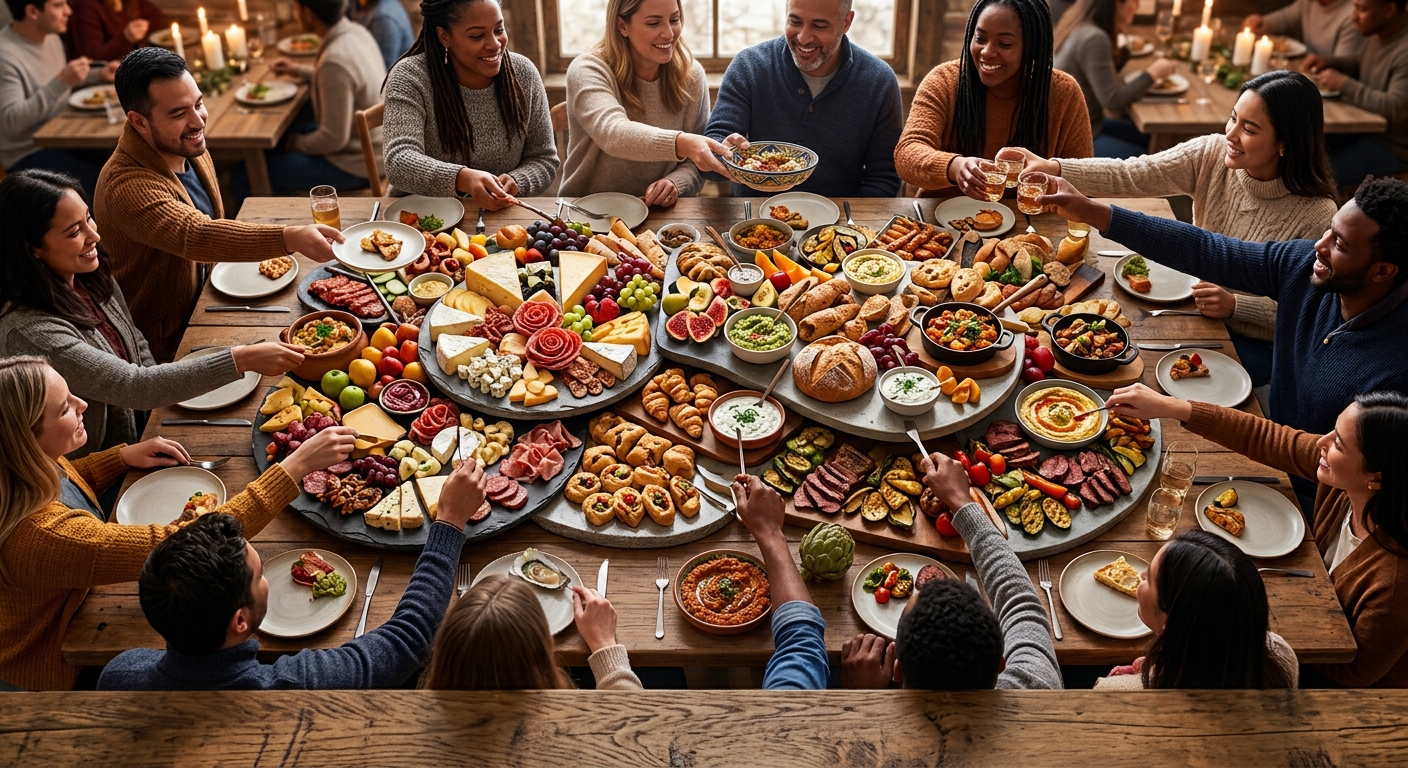
A hand reaches across the table, fingers hovering for a second before settling on the serving spoon. Someone slides the platter an inch closer to a guest who has been eyeing it since it arrived. A grandmother nudges the last piece toward her grandson without a word. The conversation, which had drifted toward something else entirely, curves back toward the dish sitting at the centre of the table, what’s in it, who made it, whether there’s more in the kitchen. Nobody planned this small choreography. The platter simply made it happen.
It’s easy to think of a serving platter as a container, something that holds food until it reaches a plate. But watch a table for a few minutes and a different picture emerges. The platter is doing social work. It is the object around which hands move, eyes land, and conversation loops back again and again. Long after the food itself has been distributed, the platter often remains the visual and emotional centre of the gathering.
The Platter as a Social Centre
An individually plated meal is complete the moment it’s set down. Each guest has their portion, and the meal proceeds along mostly private lines, a conversation between courses, not through them. A shared platter behaves differently. It stays in play. It gets passed, refilled from, offered, and returned to. It gives a table a single point everyone can look toward, comment on, and reach for, which means the food itself becomes part of the conversation rather than a backdrop to it.
This is worth noticing, because it suggests that the most social object on a table may not be the chairs people sit in or even the food they eat, but the surface that puts that food into shared space. A platter turns eating into something slightly collective, even among people who barely know each other.
Why Shared Food Feels Different
There’s a real difference between “here is your plate” and “take some from here.” The first is a completed gesture, considerate, but closed. The second is an invitation that keeps unfolding: someone has to choose, reach, maybe offer the last piece to another guest first. That small hesitation, that little exchange, is where a shared table often feels warmer than a formally plated one.
This doesn’t make communal serving inherently better, a plated dinner has its own elegance and rhythm, and suits certain occasions perfectly. But a platter changes the tempo. At a weekend lunch, an Eid gathering, or a table full of houseguests, that changed tempo often means more movement, more conversation, and more of the small generosities, passing, offering, insisting someone take a little more, that make a meal feel unhurried.
The Visual Generosity of a Well-Loaded Platter
A platter arranged with care communicates something before anyone tastes a bite: there is enough here, take what you like, stay a little longer. This isn’t about excess. A platter piled carelessly high can look chaotic rather than generous. What reads as abundance is usually about colour, layering, and thoughtful use of space, herbs against a stone surface, varied textures next to one another, portions distributed so the eye has somewhere to travel. A modestly filled platter, composed well, can feel just as welcoming as an overflowing one.
The Architecture of Placement
Where a platter sits changes how a table behaves.
- Central placement makes food equally reachable and keeps conversation oriented around the middle of the table.
- Off-centre placement suits smaller tables, multiple dishes, or a main course that needs its own space without crowding sightlines.
- Frequently shared dishes should stay within easy reach of most guests, not tucked behind a centrepiece.
- Serving utensils need a natural resting place, close enough to grab without disrupting the arrangement.
- The centre of the table works best as a social zone, not a spot filled entirely with décor.
A platter that looks beautiful but forces guests to stretch awkwardly has lost the plot. Function and appearance need to sit at the same table.
Pakistani Hospitality and the Resonance of Shared Serving
Shared serving has deep resonance in many Pakistani entertaining traditions, food placed at the centre of a gathering, dishes passed rather than portioned, guests encouraged to take more than they think they should. This isn’t a rule followed identically in every household; families, regions, and generations vary in how formally or casually food moves around a table. But the underlying instinct, that hosting means generosity, and generosity often shows itself through shared food, runs through a great deal of Pakistani entertaining, from an ordinary Sunday lunch to a full Eid spread.
Contemporary luxury serveware doesn’t replace this instinct. At its best, it gives it a new visual language, a way of presenting an old habit of sharing with fresh materials and cleaner lines, without asking anyone to change how they actually host.
When Design Meets Hospitality
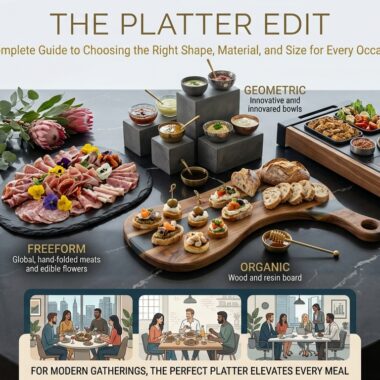
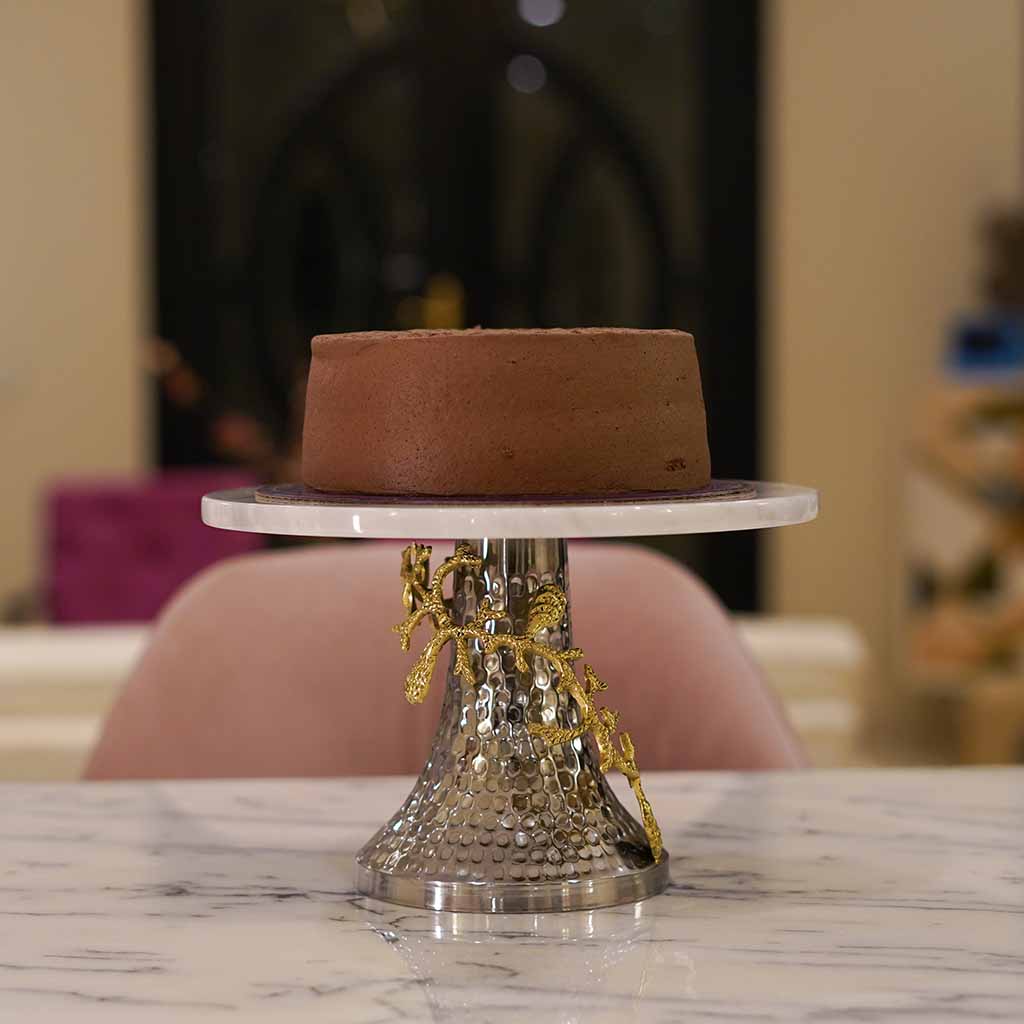
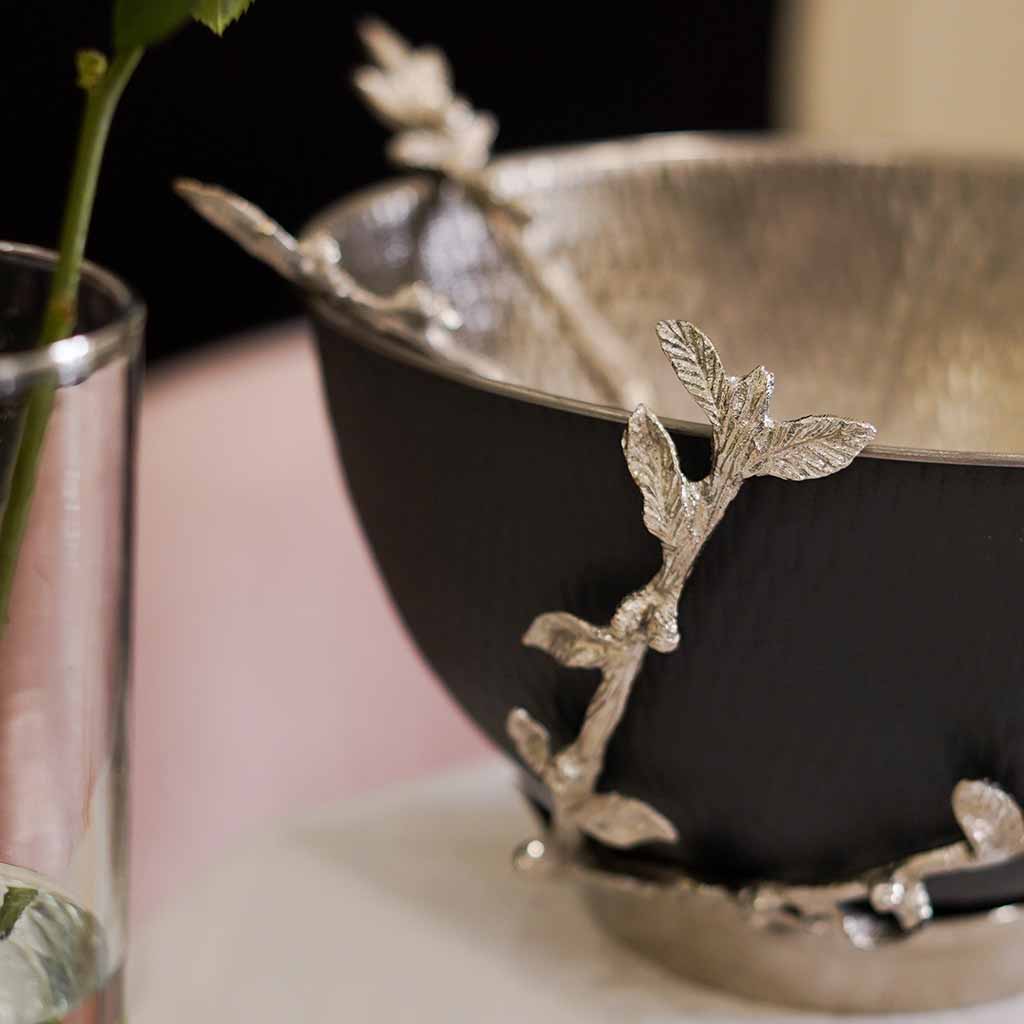
The material of a platter shapes the character of a table as much as its shape or size. Marble holds a quiet coolness. Onyx catches light unpredictably. Brass-accented edges warm up a stone surface. Stainless steel keeps things clean and modern. None of this changes what the platter is for, but it changes how the table feels, and a table’s feeling is part of hospitality too.
Serving Utensils and the Ritual of Sharing
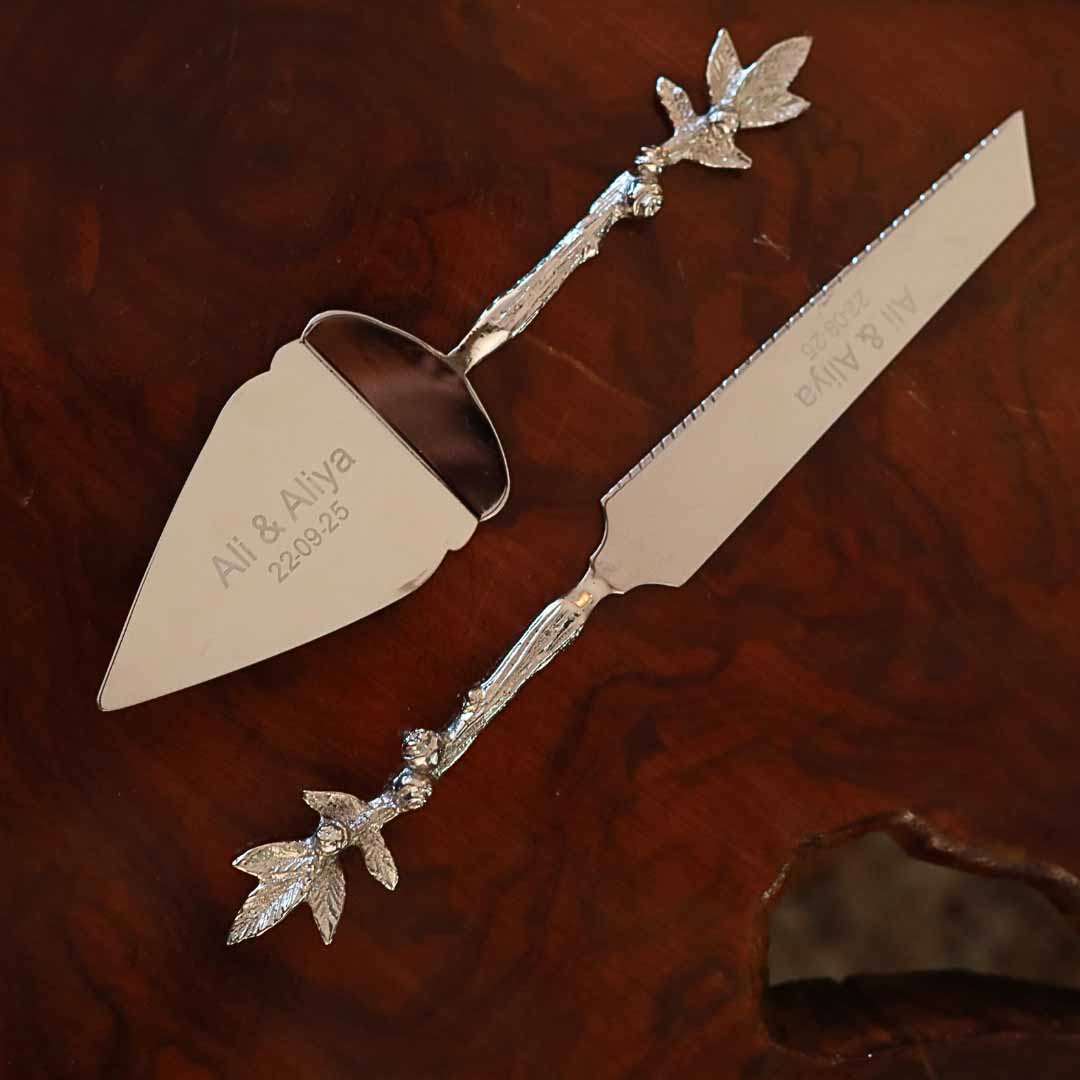
The utensils used to serve from a platter are part of this same ritual. A well-balanced spoon or a tong that grips food cleanly makes communal serving graceful instead of fumbling, and designer serving utensils for dining can complement a platter’s material and finish so the whole tablescape feels considered rather than assembled from spare pieces. For anyone building a table setting, it’s worth thinking of the two together. Increasingly, people buy serving utensils online in Pakistan alongside their platters, so they choose the pieces as a set rather than as afterthoughts.
This is where Creo Living Pakistan fits naturally. The brand exists for people who see their home objects, serveware, lamps, furniture, and gifting pieces as part of how a space feels, not just how it functions. Readers looking to buy serving platters online in Pakistan, or browsing stylish serving platters for sale in Pakistan for an upcoming gathering, will find pieces designed with exactly this idea in mind: objects that serve, but also gather people in.
Bring people together with objects built for gathering.
Find serveware, décor, and gifting pieces made for hosting well at Creo Living.
FAQs
1. Why are serving platters important for communal dining?
A: They give a table a shared focal point, encouraging guests to interact with the food and each other rather than staying within their own plates.
2. Where should a serving platter be placed on a dining table?
A: Central placement works well for accessibility and conversation, while off-centre placement suits smaller tables or when several dishes need their own space.
3. How can a platter make entertaining feel more welcoming?
A: A thoughtfully arranged platter signals generosity and ease, inviting guests to serve themselves and linger at the table a little longer.
4. How do I choose a serving platter for Pakistani-style gatherings?
A: Look for a size that suits family-style portions, a material that pairs well with your existing table settings, and a shape that allows easy passing and sharing.