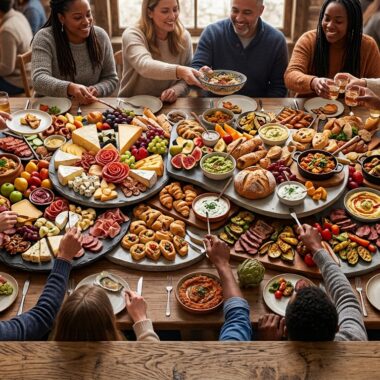


A bridal shower is never really about the food alone, it’s about the conversation that happens over it, the photos that get taken beside it, and the small, personal details that make a celebration feel considered rather than thrown together. Somewhere in the middle of all that sits the table: the buffet spread, the dessert corner, the spot where guests gather with a plate in hand and linger a little longer than they meant to.
Done well, that table becomes one of the visual centres of the whole event. Done carelessly, it’s just a surface holding food. The difference usually isn’t more decoration, it’s a little more intention. And that’s where the right serveware quietly does a lot of the work, turning a nice spread into a table that looks celebratory, feels effortless to use, and photographs beautifully without anyone having fussed over it for hours.
Start with a Direction, Not a Shopping List
Before buying a single garland or flower stem, decide on one visual direction for the table. Soft and sophisticated. Contemporary and minimal. Romantic and floral. Classic white-and-metallic. Garden-inspired. Modern feminine. Pick one, and let it guide everything else.
This matters because most bridal shower tables don’t fail from a lack of decoration, they fail from too many competing ideas fighting for attention. A cohesive look doesn’t need to come from disposable event props. It can come from the combination of serveware, linens, flowers, and food working in the same visual language, which is a far more reusable and better-looking approach.
Let Serving Bowls Anchor the Spread
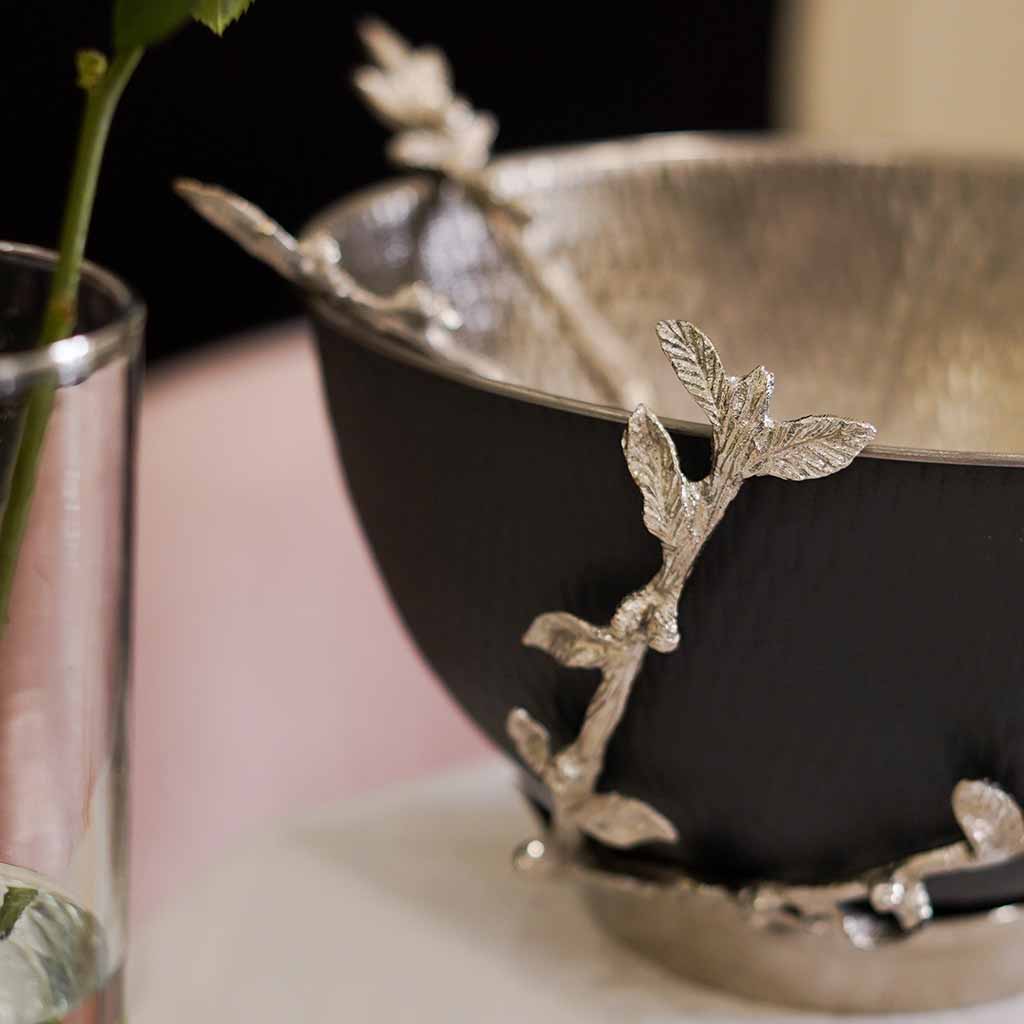
Serving bowls are the workhorses of any tablescape, and CREO’s range makes them just as much a styling tool as a functional one. Fresh fruit, pasta, chips, dips, nuts, salads, small desserts, bowls hold all of it, but their real value on a bridal shower table is compositional. Different sizes create height, hierarchy, and grouping.
A few pairings that work well together:
- Deep bowls for pasta or salad, paired with shallow ones for chips or nuts
- Small bowls for dips clustered around a larger centrepiece bowl
- A mix of bowl heights so the table doesn’t read as flat
Grouped this way, bowls stop looking like scattered serving dishes and start reading as a deliberate arrangement, one that still gets refilled and used all afternoon.
A Cake Stand Is Not Only for Cake
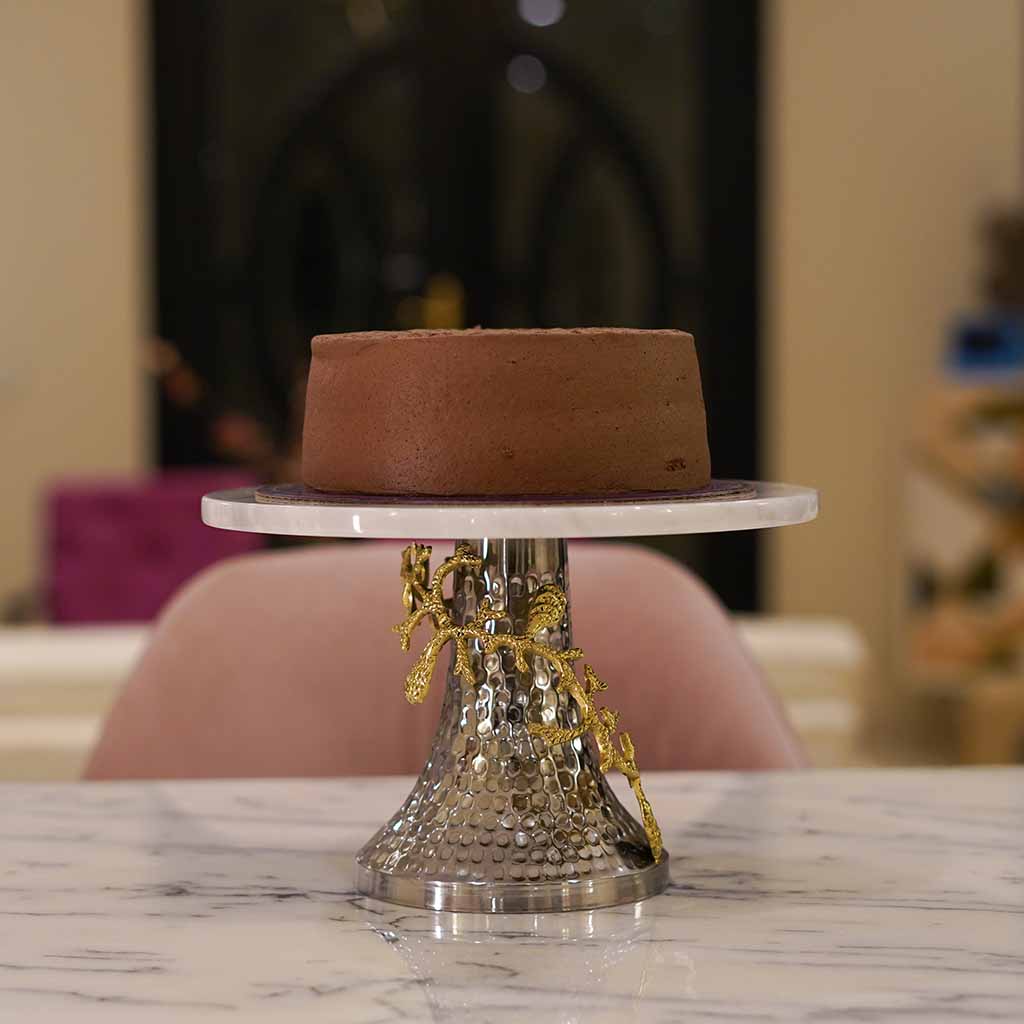
This is where a table can go from pleasant to genuinely striking. An elevated cake stand does more than hold the bridal shower cake, it gives the entire table a focal point. Cupcakes, macarons, mini pastries, cookies, donuts, even sandwiches and canapés all benefit from being lifted a few inches above everything else.
The principle is simple: one elevated piece creates hierarchy on what would otherwise be a flat surface. The eye goes there first, food becomes more visible, and the table instantly feels more considered. You don’t need three tiered stands competing for attention, one, placed well, does the job.
Build in Height and Layering
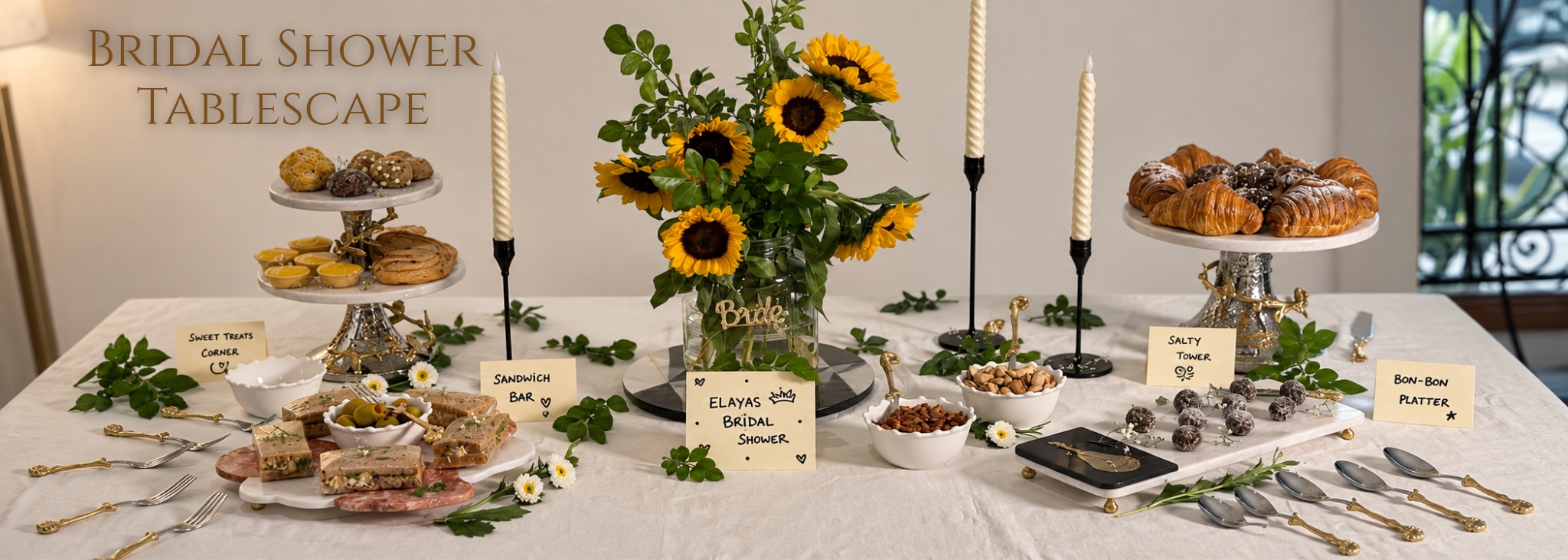
Once you’ve got one elevated piece, think about the table in terms of levels rather than a single plane. Taller stands and tiered serveware toward the centre or back, with lower bowls and platters around them. This layering does two things at once: it makes the table look more dynamic in photographs, and it makes it easier for guests to actually see what’s on offer, rather than scanning a uniform row of dishes.
Platters for the Bigger Picture
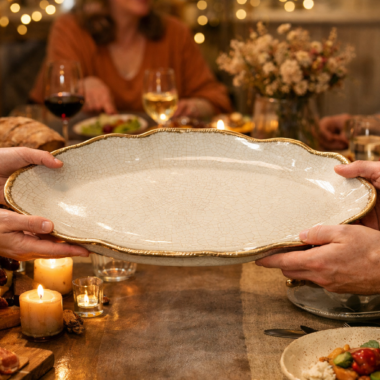
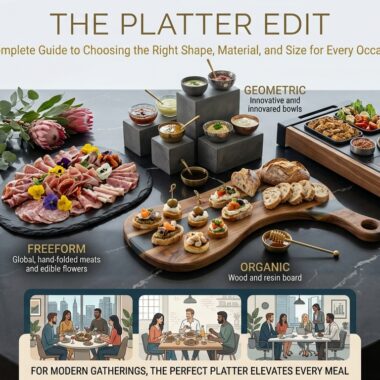
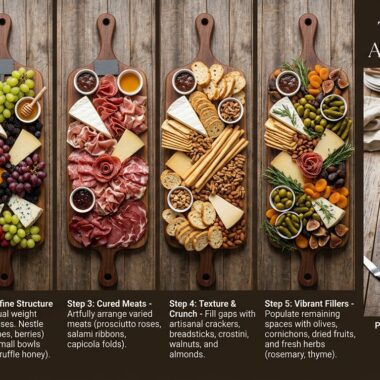
For sandwiches, charcuterie, cheese, pastries, or fruit, platters take over where bowls leave off. The one styling mistake worth avoiding here is filling every inch of the platter. Food presentation almost always improves with negative space, grouping similar items, leaving deliberate gaps, and letting the platter itself be part of the visual rather than a hidden base layer buried under food. A half-full platter arranged with intention looks more sophisticated than an overloaded one.
Utensils Are the Practical Bridge
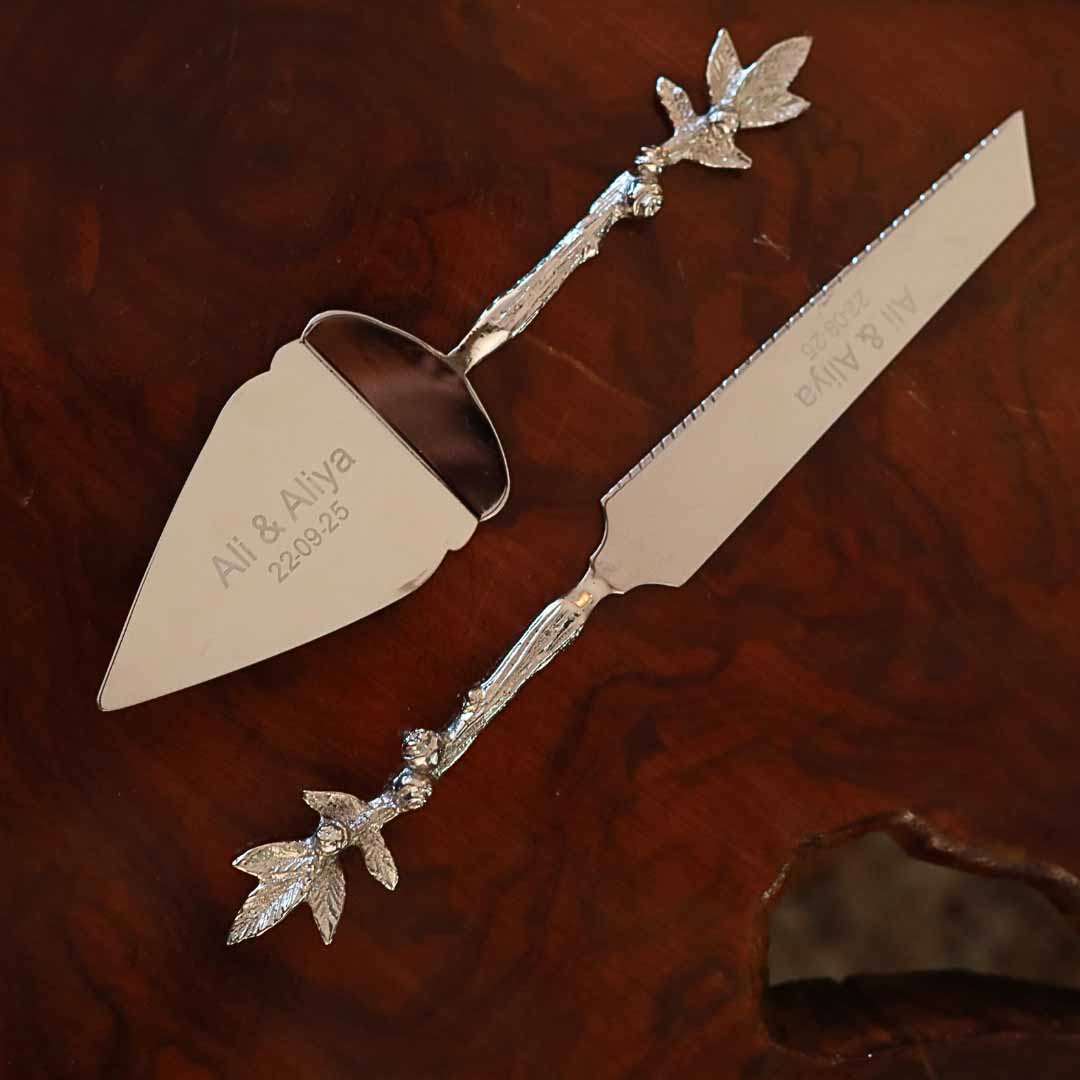
Beautiful serveware still has to function for a room full of guests serving themselves. Salad servers for salads, spoons for rice or pasta, tongs for pastries and finger foods, a spatula for cake, matching the utensil to the dish keeps serving areas neat and takes the guesswork out of the table.
Coordinate, Don’t Match
A cohesive table doesn’t require identical pieces. Mix bowls, platters, cake stands, and tiered serveware, letting cohesion come from shared materials, finishes, or neutral tones rather than uniformity. CREO pieces can act as the visual anchors, while flowers, linens, and glassware bring in colour and texture. The result feels put-together without feeling overly matched.
Menu First, Serveware Second
Before choosing pieces, decide the menu. Which dishes need bowls, which need platters, which benefit from elevation, which need tongs versus spoons. Planning in this order keeps the table from looking beautiful in photos but falling apart the moment guests start serving themselves.
Flowers That Support, Not Compete
Keep centrepieces low enough for conversation across the table, let flowers frame the serveware rather than block the food, and coordinate their colours with the linens. Neutral or metallic serveware is a good balance against softer floral tones.
Design for the Camera, Too
Elevated displays, repeated shapes, negative space, and clean colour coordination all photograph better than a table crammed edge to edge. None of this requires the table to look staged, it just means thinking about both the guest’s eye level and the camera’s.
Keep It Easy to Navigate
Frequently reached dishes should stay within easy reach, utensils should sit beside their dish, and there should be enough space between pieces that no one has to reach over a tall stand. A beautiful table should make hosting easier, not harder.
One Hero Moment
Every table benefits from a single primary focal point, the cake, a three-tier dessert display, or one standout platter, with everything else supporting it. Too many hero pieces cancel each other out.
Beyond the Main Table
The same design language can extend to a welcome drinks station, a dessert table, or a gift table, tying the whole event together rather than treating the main buffet as the only styled surface.
Life After the Bridal Shower
The best argument for investing in real serveware is that it doesn’t end with the event. The same pieces return for Eid gatherings, family dinners, birthdays, and everyday entertaining; a bridal shower becomes one occasion in the piece’s life, not the reason it was bought.
Wrap Up
A successful bridal shower table isn’t the result of excessive decoration. It comes from a clear visual direction, thoughtful food presentation, varied height, coordinated pieces, and enough breathing room for guests to move through it comfortably. CREO serveware bridges presentation and practicality, pieces that don’t just work for one afternoon, but return for every gathering after.
Let your next celebration begin with pieces built to be part of many more. Find them where thoughtful design meets everyday living.
FAQs
1. How do I create height on a bridal shower table?
A: Use a cake stand or tiered serveware as your tallest piece, positioned centrally or toward the back, with lower bowls and platters arranged around it. This layering adds visual depth and makes food easier to see.
2. What foods work well on serving platters and cake stands?
A: Platters suit sandwiches, charcuterie, cheese, and fruit; cake stands work beautifully for cupcakes, macarons, pastries, and cookies. Leave breathing room rather than filling every surface.
3. How can I make a bridal shower table look cohesive without matching every piece?
A: Repeat materials, finishes, or neutral tones across different serveware shapes instead of buying identical sets. Cohesion comes from a shared visual language, not uniformity.
4. Can CREO serveware be reused after the bridal shower?
A: Yes, pieces like serving bowls, platters, and cake stands are designed for everyday entertaining, not single-use events, so they carry over easily into future dinners and celebrations.