
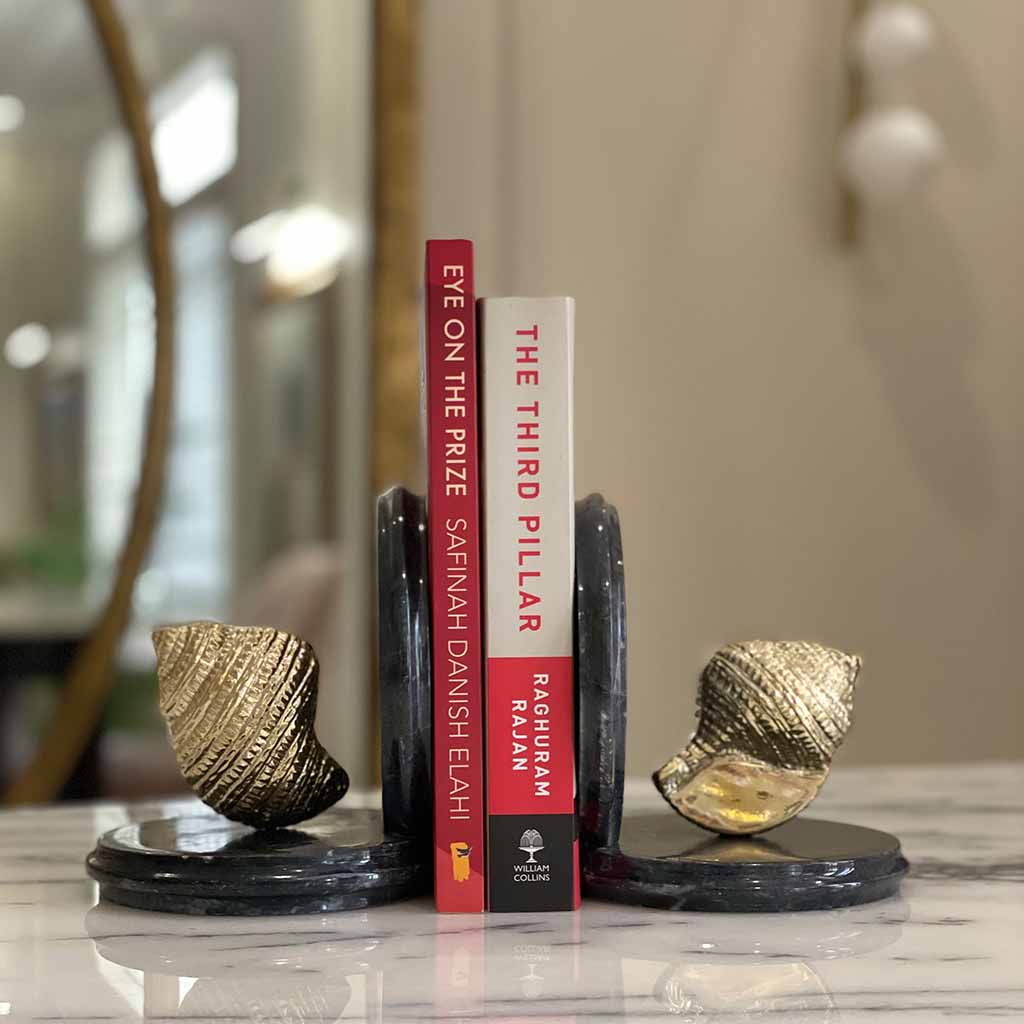

There was a time when a bookend was an apology, a squat, forgettable wedge of metal shoved to the end of a shelf, tasked only with keeping paperbacks from toppling. That era is over. Today’s collectors treat these objects as micro-sculptures, small enough to hold in two hands yet weighty enough to anchor an entire vignette. A well-chosen pair of luxury bookends now competes for attention with the artwork above the mantel, not the paperback spines beside it. This shift mirrors a broader move in interior design: the refusal to let any surface go undesigned. Shelving, once purely storage, has become a curated gallery wall laid on its side. Ask any Lahore or Karachi homeowner assembling a living room library today, and you’ll find the bookend treated less like hardware and more like an heirloom, chosen for silhouette, material, and the story it tells before a single book is placed beside it.
Placement Beyond the Bookshelf
The most exciting development in bookend styling is geographic: these objects have escaped the shelf entirely. Designers now treat them as freestanding sculptural anchors wherever a surface needs gravitas.
- Entryway Consoles: A brief stack of oversized art monoliths, propped between substantial bookends, sets the tone the moment guests cross the threshold. Paired with a catchall tray, the console instantly reads as curated rather than cluttered.
- Executive Desks: On a desk, bookends double as standalone sculptural weights. Beside a stack of leather notebooks or alone at the desk’s edge, they bring an unmistakable sense of authority to a workspace that might otherwise feel purely transactional.
- Fireplace Mantels: Along an architectural ledge, bookends can frame a run of photography or stand solo beside a single striking canvas, becoming the visual full stop at the end of a mantel’s composition.
Materiality and Visual Personality
Material dictates not just how a bookend looks, but how the room around it feels.
- Warm Metals & Brass: Brass and aged bronze bring modernist elegance, catching low light and throwing it back in warm, reflective brilliance. These finishes suit rooms that lean tailored and high-gloss.
- Ceramic & Resin: Ceramic and resin forms introduce organic silhouettes and tactile, matte textures. Their bold shapes soften a room’s edges and pair beautifully with linen and unlacquered wood.
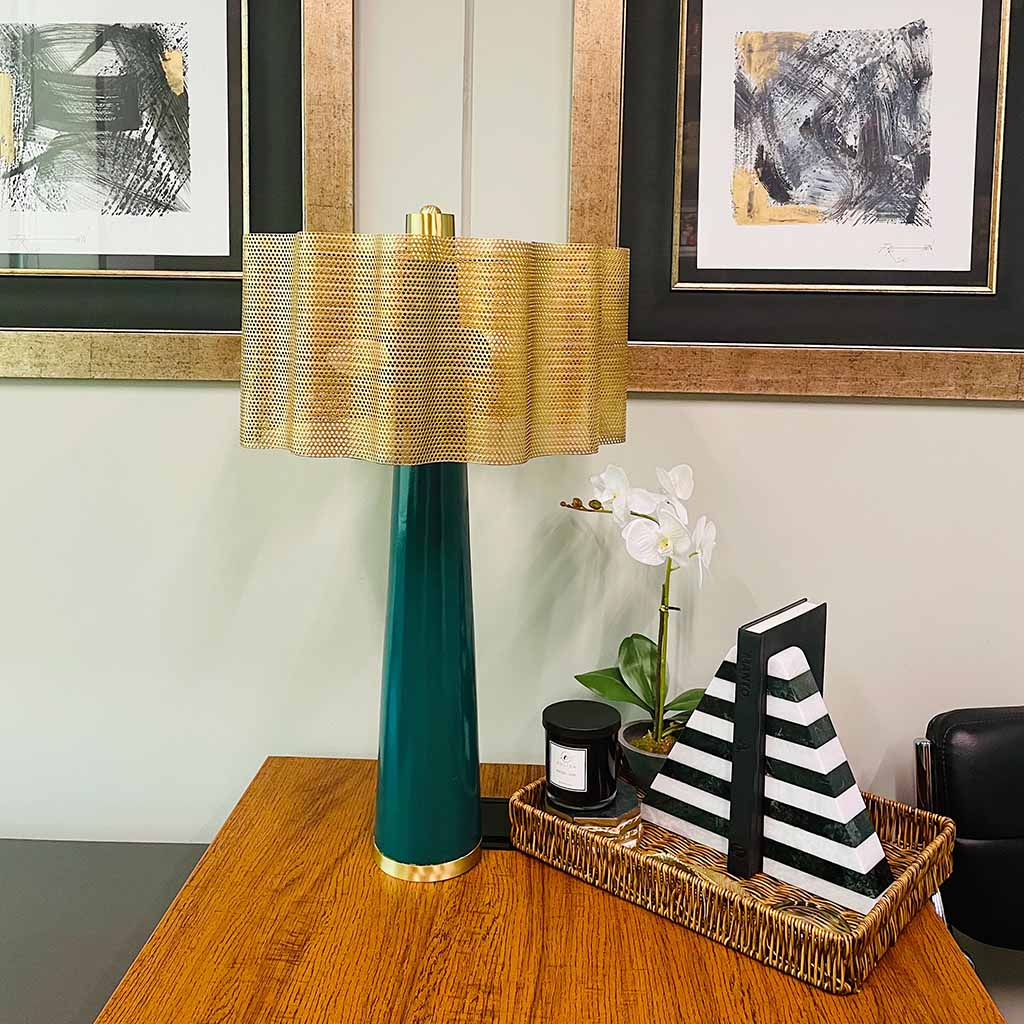
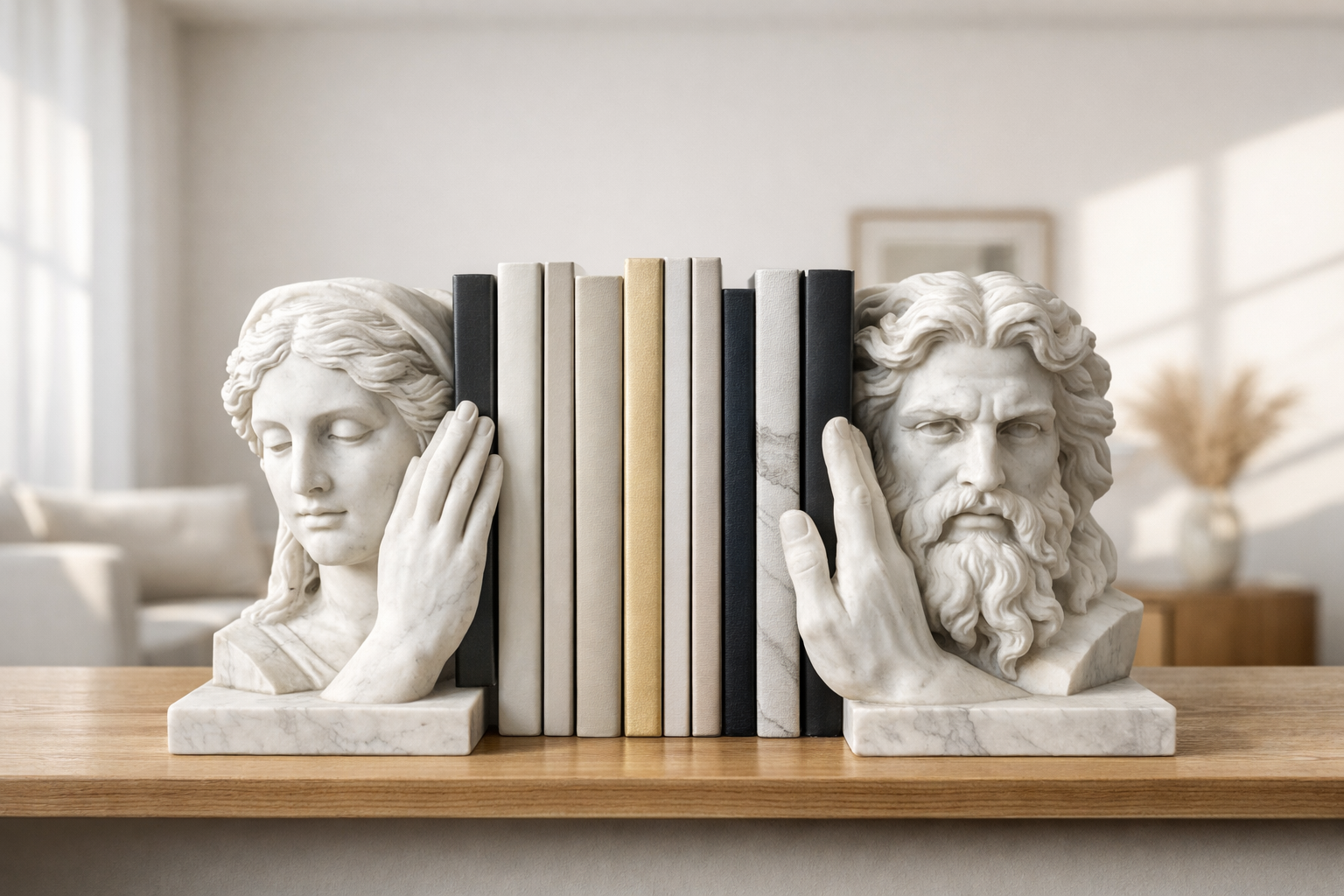
- Natural Stone: Nothing communicates permanence quite like stone. Choosing raw or polished marble bookends Pakistan collectors increasingly favor injects genuine architectural weight into a shelf, organic veining, cool tactility, and the unmistakable sense that the piece was carved, not molded. Marble remains the definitive material for anyone building a space meant to feel timeless rather than trend-driven.
Paired Symmetry vs. The Solo Statement
There are two schools of thought in bookend styling, and both are correct depending on the room’s ambition.
Traditional pairing relies on symmetry, two matched forms flanking a tight row of hardbacks, creating visual balance and formal polish. This approach suits libraries, studies, and any space where order is the desired mood.
The solo statement takes the opposite stance. A single, high-impact sculptural bookend, placed away from books altogether, becomes an independent art object in its own right. This is where modern bookends for shelves prove their versatility: the same silhouette that once flanked a novel can stand alone atop a console, doing the work of a small bronze sculpture.
Consider the following when deciding between the two approaches:
- Room formality: Symmetrical pairs suit formal, traditional interiors; solo pieces suit eclectic, gallery-style rooms.
- Existing collection density: A shelf already rich with objects benefits from a solo anchor rather than a competing pair.
- Desired focal point: If the bookend itself should be the star, let it stand alone; if it should support a curated stack of books, pair it.
Whichever direction a room calls for, integrating genuine luxury bookends adds a layer of bespoke polish, whether they’re flanking a run of leather-bound volumes or commanding a shelf entirely on their own.
Sourcing Fine Objects: The Buyer’s Perspective
For collectors ready to buy bookends online Pakistan or buy decorative bookends online, a few considerations separate a lasting investment from a disappointment.
- Weight Distribution: A genuinely functional bookend must carry sufficient heft to resist toppling under a full row of hardcovers. Lift the piece before purchasing, or check listed weight specifications, anything suspiciously light is likely hollow or resin-filled rather than solid material.
- Surface Protection: Stone and metal pieces should include felt, cork, or rubberized bases to prevent scratching on wood shelving, marble consoles, or lacquered desks. This small detail protects both the furniture beneath and the bookend’s own finish over time.
- Scale Proportion: Measure the surface before ordering. Oversized bookends overwhelm a narrow floating shelf, while undersized pairs disappear on a deep console. As a rule, bookends should occupy roughly a third of the shelf’s depth for balance.
Approached with real intention, bookends stop functioning as an afterthought and start operating as the quiet, confident centerpiece of a considered room.
Shop Creo Living’s curated collection of luxury bookends, serveware, lamps, and gifting pieces to elevate every corner of your home. Choose objects built for beauty and permanence, and let your shelves become the room’s quiet focal point.
FAQs
1. How heavy should a bookend be to actually hold books upright?
A: Look for pieces weighing at least one to two kilograms per bookend, particularly if styling a full row of hardcovers. Marble and solid brass naturally provide the most reliable resistance to tipping.
2. Will stone or metal bookends scratch my shelving?
A: They can, unless protected. Always check for a felt, cork, or rubberized base pad before purchase, and consider adding a self-adhesive pad if the piece arrives without one.
3. Can I mix materials, like pairing a marble bookend with a ceramic one?
A: Intentional mixing works beautifully when a shared color palette or tonal family ties the pieces together, but avoid pairing dramatically different weights, as mismatched heft disrupts visual balance.
4. Do bookends need to match in a single display?
A: Not always. Matched pairs suit formal, symmetrical shelving, while a single sculptural piece can stand alone as an art object without a partner at all.