




The Architectural Anchor of the Room
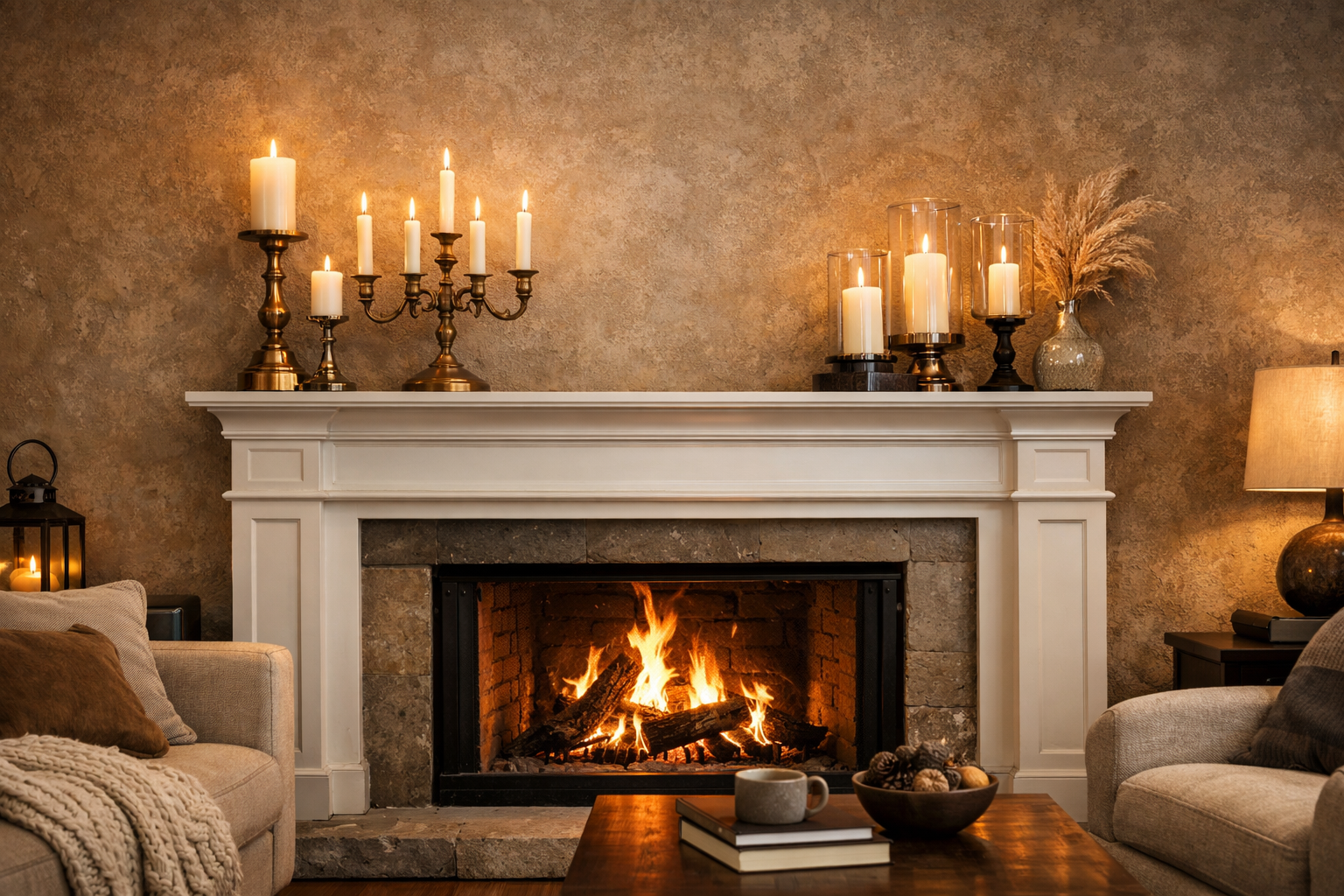
Every living room has a point the eye returns to before it settles anywhere else. In most homes, that point is the fireplace mantel or the feature wall behind it, the one architectural element the rest of the furniture arranges itself around. It’s where conversation gathers and where a room either reads as considered or feels like it’s still waiting to be finished.
Left untouched, that surface is just brick, stone, or plaster, structural, static, silent. What changes it into a display worth returning to is deliberate lighting and decor. Candle stands for table decor do this job better than almost any other accessory, because they animate the surface rather than simply sitting on it. A flame against stone catches shadow and movement a framed print alone never will, turning fixed architecture into something that shifts subtly through the evening.
Asymmetrical Balance: Rethinking Symmetrical Staging
The instinct with any mantel is to centre everything, a mirror in the middle, matching candlesticks flanking it, mirrored on both sides. It’s tidy, and it’s also the fastest way to make a beautiful mantel feel static and stiff.
Asymmetry does more work. Anchor the display around one central object, artwork, a mirror, or a sculptural form, but let it sit off-centre rather than dead middle. Then build around it unevenly:
- Place a taller candle stand on the heavier side of the composition, opposite the artwork’s visual weight, so the two sides balance without mirroring
- Offset a second, shorter stand slightly forward of the first, breaking the flat plane of the mantel shelf
- Leave one section genuinely empty, negative space reads as intentional restraint, not an unfinished job
Designer candle holders for home decor suit this staging well because their sculptural forms hold visual weight on their own; you don’t need a matching pair for one side to feel resolved. The result is a mantel with organic movement, arranged by instinct rather than by ruler.
Height Hierarchy: Floor-Standing vs. Tabletop Displays
A mantel doesn’t end at the shelf. The most architecturally considered displays treat the entire vertical span, hearth to shelf to wall, as one continuous composition, layered by scale.
Floor-Standing Candle Holders
At the base, tall floor-standing stands flanking the hearth ground the fireplace’s architectural footprint. They give the eye a starting point before it travels upward, and their scale prevents the display above from feeling like it’s floating in isolation. One on each side, roughly matched in height but not necessarily in form, keeps the base stable without tipping into rigid symmetry.
Tabletop Clusters
On the shelf itself, shorter stands do the finer work. Stagger two or three tabletop candle stands at varying heights, working from the central object outward, so the display steps down gradually rather than dropping off abruptly. Decorative candle stands for home mantels perform best in a size range that stays well below the central artwork or mirror, tall enough to register, short enough to defer to whatever anchors the wall above.
Together, floor and tabletop pieces create a hierarchy: grounded weight below, finer detail above, and a flame’s worth of movement at every level in between.
Seasonal Transitions: Adaptable Styling
A well-chosen mantel display shouldn’t need reinventing every few months. The strongest approach treats the candle stands as a permanent foundation and everything else as a light seasonal edit.
For everyday, understated luxury, let the stands stand largely alone, with clean lines, a considered material palette, and minimal additional styling. When the season calls for more:
- Tuck seasonal greenery or dried botanicals into the gaps between stands, rather than replacing any of the hardware itself
- Add small brass trinkets or bowls near the base of the taller pieces for texture without overwhelming the composition
- Swap candle colours or wax tones seasonally, warm amber for winter, soft ivory for spring, while keeping the stands themselves constant
This protects the investment in the pieces themselves. The mantel evolves throughout the year; the underlying architecture of the display, built on genuinely good stands, never has to be rebuilt from scratch.
Material Cohesion: Harmonizing with Room Aesthetics
The mantel display only succeeds if it speaks the same material language as the room around it. A cool, pale piece against a dark wood mantel reads as more dramatic than warm brass against the same surface, neither is wrong, but the choice should be deliberate.
Marble candle stands Pakistan homeowners favour tend to pair beautifully with dark walnut or ebonised wood mantels, where the contrast in tone and temperature does the visual work without extra ornamentation. Against warmer upholstery and richer textiles, brass or aged bronze reads as the more natural extension of the room’s palette. For those furnishing with a cooler, more architectural aesthetic in mind, luxury candle stands Pakistan sourcing in polished stone or matte black metal holds that restraint consistently across a room.
The strongest interiors echo this material choice beyond the mantel itself, a matching stone tone on the coffee table, or the same brass finish repeated in door hardware or a console lamp. These small, repeated details make a room feel resolved rather than assembled piece by piece.
Let your mantel do the work a truly considered room deserves. Creo Living’s collection of gifting pieces, home décor, furniture, lamps, and serveware gives every wall and shelf the refined foundation to become the room’s true focal point.
FAQs
1. How close can a candle stand safely sit to a working fireplace?
A: Keep any lit candle at least a foot from an active flame or hot surface, and never directly beneath the mantel shelf where heat rises. Floor-standing pieces should sit well clear of the hearth’s edge.
2. How many candle stands are ideal for a standard mantel shelf?
A: Three to five pieces, staggered in height, generally read as full without crowding. Beyond that, the composition starts competing with the central object anchoring the display.
3. What’s the best way to clean brass or marble mantel pieces over time?
A: Dust brass regularly with a soft, dry cloth and avoid abrasive cleaners that strip its patina. For marble, a damp cloth with mild soap works well, avoid acidic cleaners, which can etch the surface permanently.
4. Should candle stands match the mantel’s existing hardware finish?
A: Not necessarily matching, but complementary. A slight tonal echo, brass stands near brass fixtures, reads as intentional, while an exact match everywhere can feel overly coordinated rather than curated.