

The Visual Appetite and First Impressions
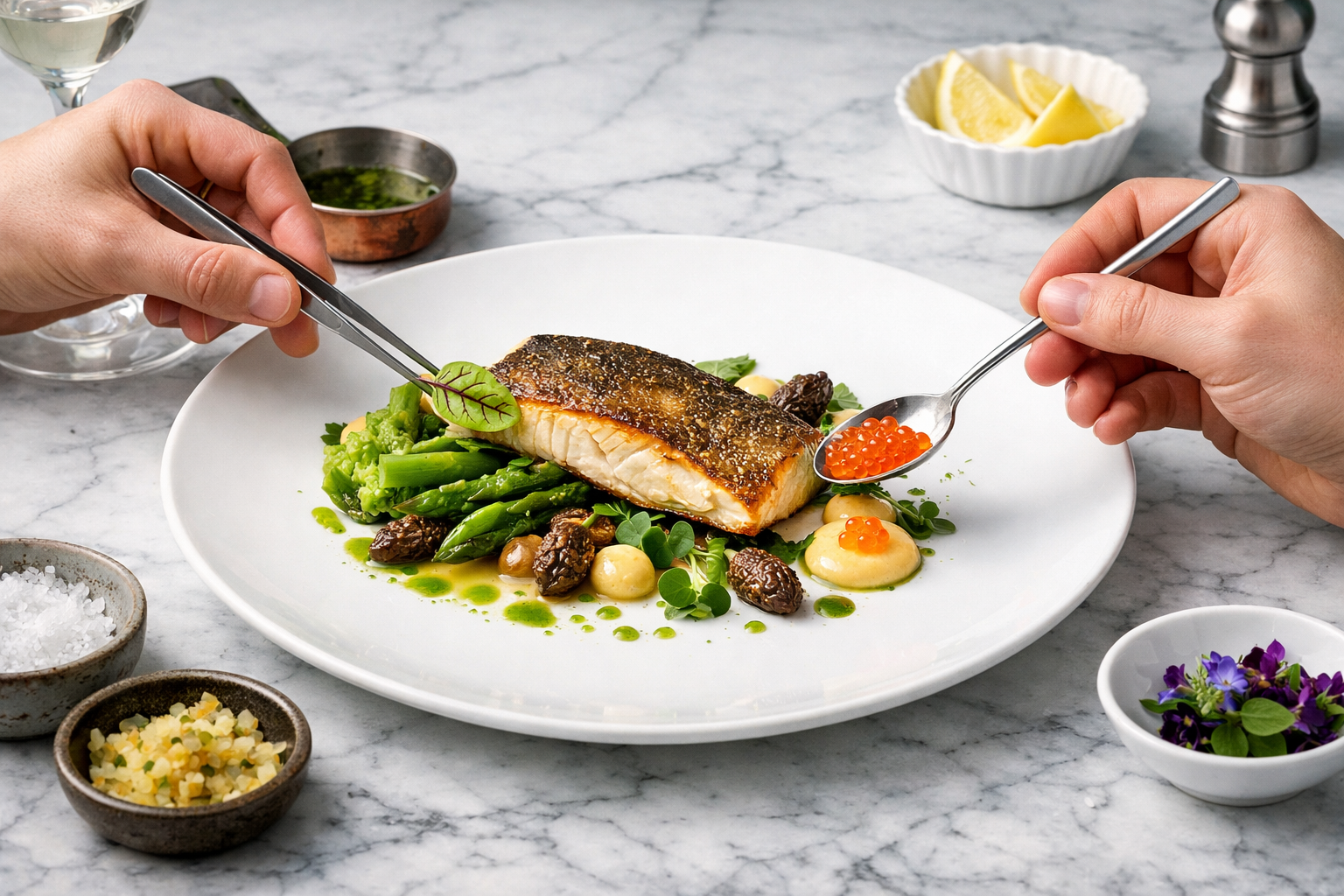
Long before a guest lifts a fork, they have already formed an opinion of the meal in front of them. The eye eats first, assessing weight, texture, and intention within a fraction of a second. A biryani served in a battered aluminium pot reads as ordinary. The same biryani, spooned from a hand-finished brass vessel onto a well-set plate, reads as an occasion.
This is the quiet power of serving accessories. They do not alter a dish’s flavour, yet they alter how that flavour is anticipated and remembered. Two identical curries, prepared with equal care, can produce entirely different impressions of a host’s skill purely on the strength of what carries them to the table. Presentation is not a decorative afterthought, it is the frame that tells guests how much value to assign to what sits inside it.
Material Resonance: Plastic Utensils vs. Handcrafted Accessories
Material speaks before a single word is exchanged. A thin plastic ladle, however functional, communicates convenience and little else. Dip it into a slow-cooked nihari or a velvety daal, and the contrast between the richness of the dish and the flimsiness of the tool undercuts everything the cook has achieved.
Handcrafted accessories work in the opposite direction. A carved stone server, a polished brass spoon, or a substantial metallic ladle carries heft, literal and psychological. The resistance of real material in the hand, the cool weight of stone or the warm sheen of brass, signals that thought went into the meal well before it reached the table.
Premium serving accessories function as more than utensils. They act as a quiet form of hospitality shorthand:
- Weight communicates care. A heavier piece suggests the host chose it deliberately, not as an afterthought.
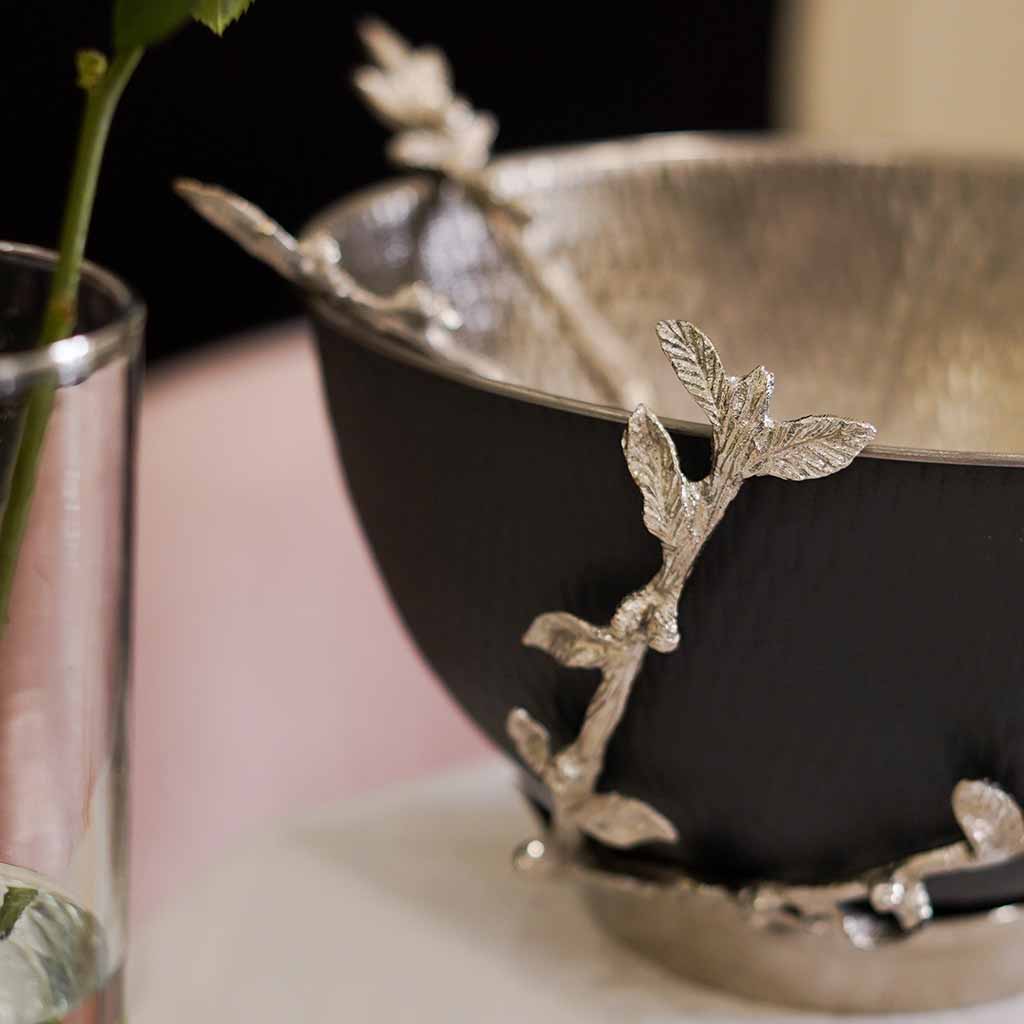
- Finish communicates craft. Hand-hammered or artisanal textures imply a story behind the object.
- Material communicates respect. Offering guests food through fine materials signals that they are worth the extra consideration.
In Pakistani homes, where hosting is often a measure of familial pride, this signalling carries real cultural weight.
Scale and Proportion: Matching Accessories to Serving Vessels
Even the finest individual piece can undermine a table if its proportions clash with what surrounds it. Scale is not a minor styling detail, it is the grammar that makes a table read as intentional rather than assembled. A few proportion principles worth internalising:
- Deep with deep. Substantial, weighted ladles and spoons belong with generously sized ceramic or brass serving bowls. A slender utensil in a deep bowl looks lost; a heavy one in a shallow dish looks clumsy.
- Flat with flat. Wide, low servers are built for canapés, kebabs, and appetisers, and they perform best on a broad, flat serving tray where guests can survey the spread at a glance.
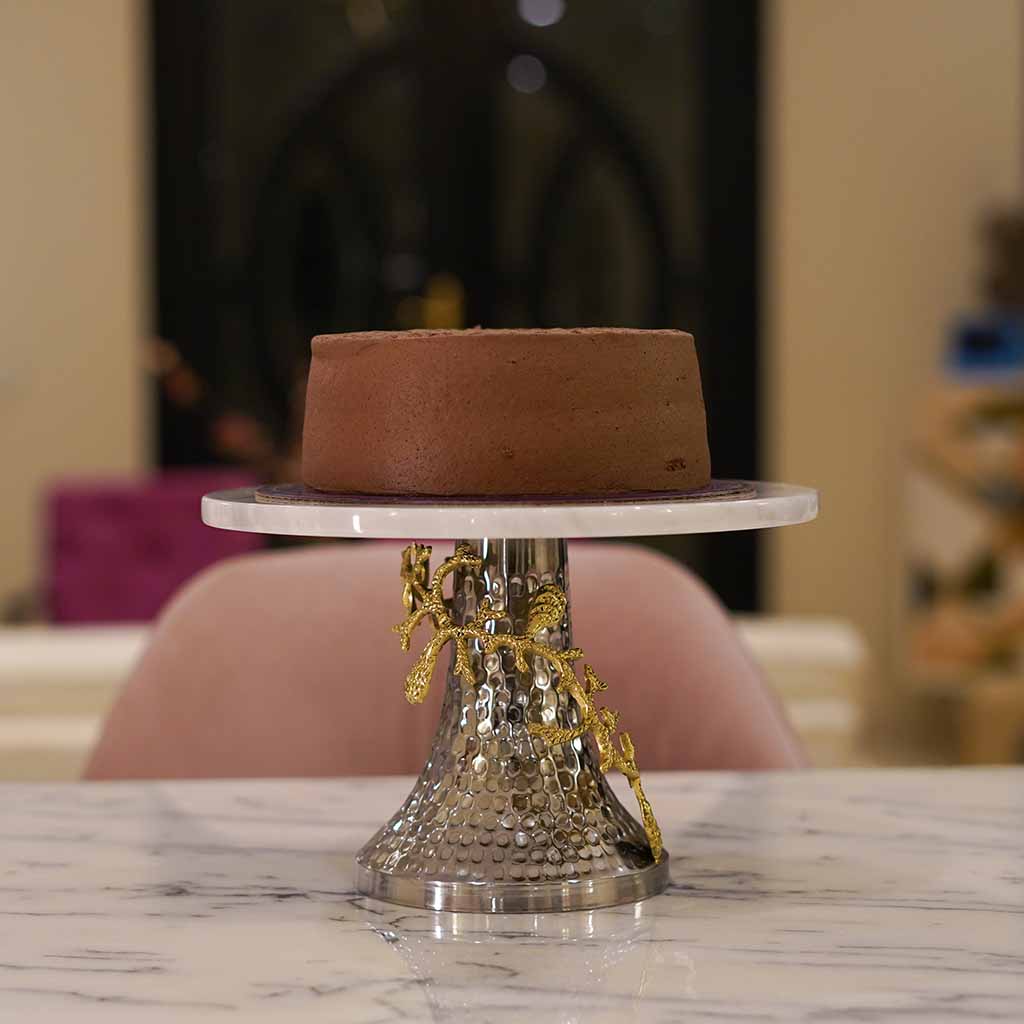
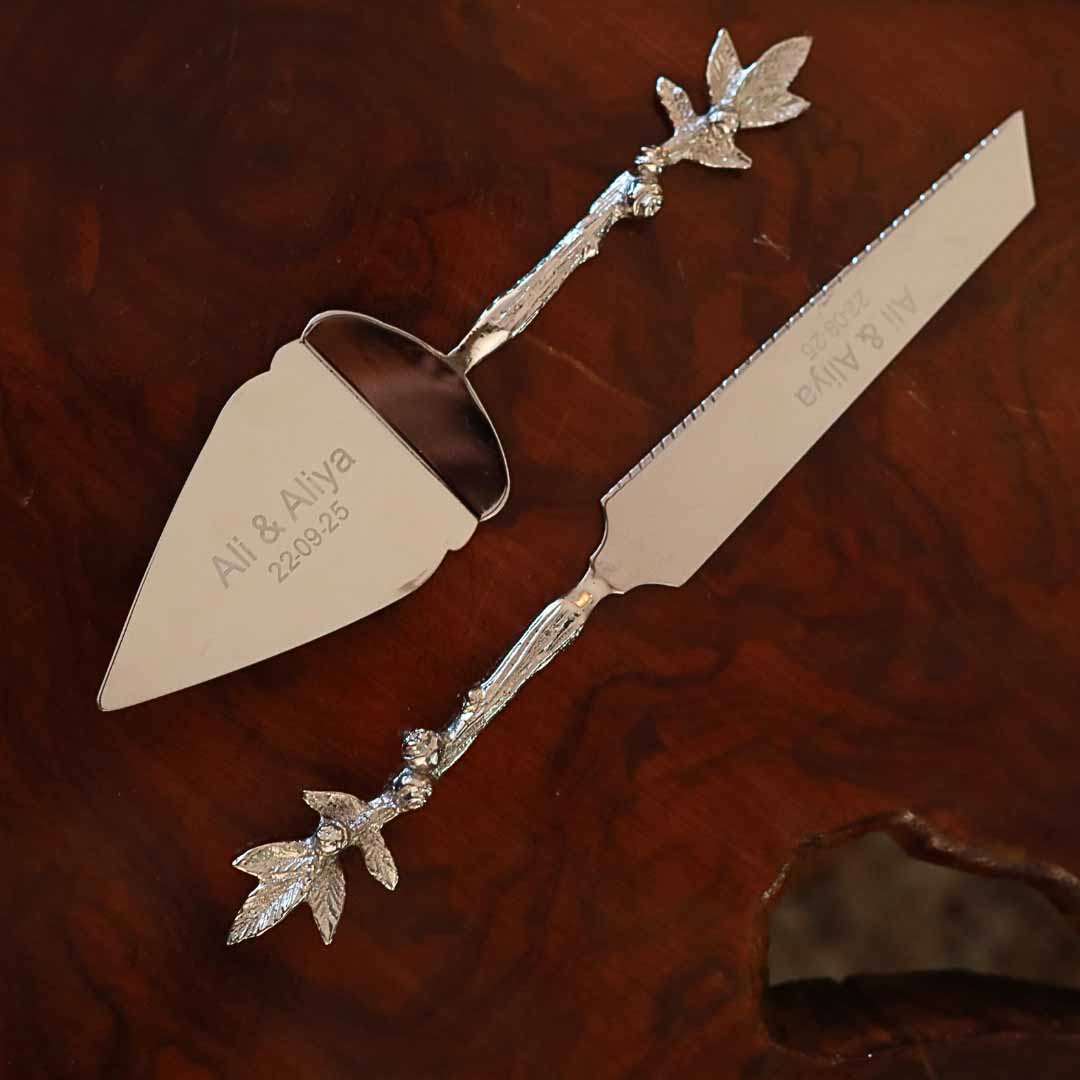
- Delicate with delicate. A refined cake server, with its narrow blade and light handle, needs a statement cake stand Pakistan hosts feature at tea gatherings, so the dessert course feels curated rather than incidental.
Getting proportion right is less about matching sets and more about matching intention. A rustic clay serving bowl paired with an ornate silver spoon fights itself; the same bowl paired with a similarly textured wooden or brass server extends the story it is already telling.
The Complete Tablescape: Cohesion from Centrepiece to Serving Spoon
A truly resolved table is not built dish by dish, it is built as a single composition. The centrepiece, the linens, the plates, and the smallest serving spoon should all speak one design language, warm and rustic, minimal and modern, or richly ornamental.
This is where dinnerware Pakistan hosts choose for formal occasions earns its place: not as an isolated purchase, but as one instrument in a coordinated set. A gold-rimmed plate paired with a mismatched steel serving spoon breaks the visual rhythm the moment a guest looks down. A table built around one material story, brushed brass, aged stone, or warm ceramic, holds together no matter how many courses arrive.
Sourcing from a considered designer serveware online Pakistan collection makes this cohesion far easier to achieve than piecing a table together from unrelated finds. When trays, bowls, servers, and stands come from one aesthetic family, the metallic warmth, glaze tones, and textures naturally echo one another across every course.
Curation Framework: The Host’s Presentation Guide
Before the next gathering, it helps to audit a table the way a stylist would. Four questions cover most of what separates an assembled table from a considered one:
- Weight: Does each utensil feel substantial enough for the dish it serves, without becoming impractical to lift?
- Finish harmony: Do the metals, glazes, and textures across the table belong to the same family, or are they competing?
- Scale balance: Is every server proportioned to its vessel, deep with deep, flat with flat, delicate with delicate?
- Ergonomics: Can a guest use the piece comfortably, or does its beauty come at the cost of function?
A table that answers all four well rarely needs an explanation. Guests simply feel the evening was well thought out.
Bring this same intention home with Creo Living’s collection of serveware, dinnerware, and gifting pieces built for hosts who notice the details. Whatever the occasion, a table styled with purpose leaves an impression long after the last course is cleared.
FAQs
1. How do I know what size serving utensil suits my dishes?
A: Match the utensil’s depth and breadth to the vessel it serves. Deep curries and daals call for a ladle with real bowl capacity; flat appetisers do better with a broad, shallow server that lifts food cleanly without crowding the plate.
2. What is the best way to clean delicate metallic or hand-finished serveware?
A: Hand-wash brass, stone, and hand-finished pieces with a mild, non-abrasive detergent, dry them immediately to prevent water spotting, and store them separately from harder metals that could scratch the finish.
3. Should all my serving accessories match exactly?
A: Not literally, but they should share a material or tonal thread. A cohesive palette of warm metals or complementary glazes reads as intentional, while an exact matched set can sometimes feel less personal.
4. Is there a presentation etiquette hosts should follow at Pakistani gatherings?
A: Yes, serving pieces are typically placed to the right of each dish, heavier or communal items are positioned within easy reach of guests, and dessert accessories are brought out only once the main course has been cleared, keeping each course visually distinct.