

Most people choose a plant first and find a pot for it second. This is, quietly, the reason so many beautifully designed rooms feel slightly off: a tall, architectural snake plant crammed into a vessel two sizes too small, a sprawling monstera balanced improbably in a narrow cylinder, a trailing plant positioned three feet from the only natural light source in the room. The choices seem minor in isolation. Collectively, they undermine everything else the space is trying to say.
Indoor greenery, at its most considered, functions as living architecture. The right plant in the right vessel in the right location controls sightlines, introduces organic texture into hard-edged modern interiors, and softens acoustics in ways that no rug or curtain can replicate. Getting it right is not complicated, but it does require treating the selection of indoor planters with the same deliberate intention you would bring to any other design decision in your home.
The Proportions Playbook: Scale, Material, and What the Room Actually Needs
Before selecting any vessel, the first question is not aesthetic, it is spatial. How large is the room? Where does the natural light fall? What is the floor material, and how does moisture interact with it? What mood is the space designed to hold?
The table below maps room function against the ideal planter profile, giving you a decision framework before you begin browsing.
| Room | Ideal Scale | Material Direction | Vessel Form | Drainage Priority |
| Grand Living Room | Floor-standing, 60–100 cm tall | Textured stone, polished brass, matte ceramic | Sculptural cylinder, wide tapered bowl | High, internal liner essential |
| Open Kitchen | Compact to medium, 15–35 cm | Glazed ceramic, stainless steel, geometric metal | Bowl profile, geometric pyramid, hanging vessel | Medium, sealed base preferred |
| Master Bedroom | Small to medium, 12–45 cm | Soft terracotta, white ceramic, brushed brass | Rounded low pot, slim tall cylinder | Medium, saucer with felt pad |
| Home Office | Medium, 20–50 cm | Concrete, matte black metal, natural stone | Structured geometric, clean cylinder | Medium, liner or sealed base |
| Entry Hall | Statement floor-standing, 70–120 cm | Hand-carved marble, burnished metal, stone composite | Tall fluted cylinder, wide architectural urn | High, waterproof liner critical |
On material behaviour: Unglazed terracotta breathes, which is excellent for plant health but draws moisture outward, keep it away from wooden console tables without a protective saucer beneath. Polished brass and marble vessels are non-porous but heavy; position them before filling. Geometric metal forms, pyramid profiles, open lattice bowls, and angular hanging vessels work best in rooms with strong architectural lines, where their structure reads as a design echo rather than a visual interruption.
Drainage, simplified: The most elegant solution for premium indoor planters is a concealed internal plastic liner, fitted flush inside the decorative outer vessel. It protects your flooring and furniture entirely, leaves the aesthetic of the outer pot undisturbed, and makes watering without paranoia genuinely possible.
Room-by-Room Curation
The Living Room: Scale and Drama
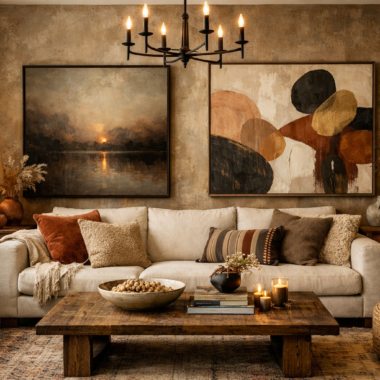
The living room is where the proportional mistakes are most visible and most consequential. A small pot on the floor beside a full-height sofa reads as forgotten rather than designed. This is the space where indoor planters earn their authority, or fail to.
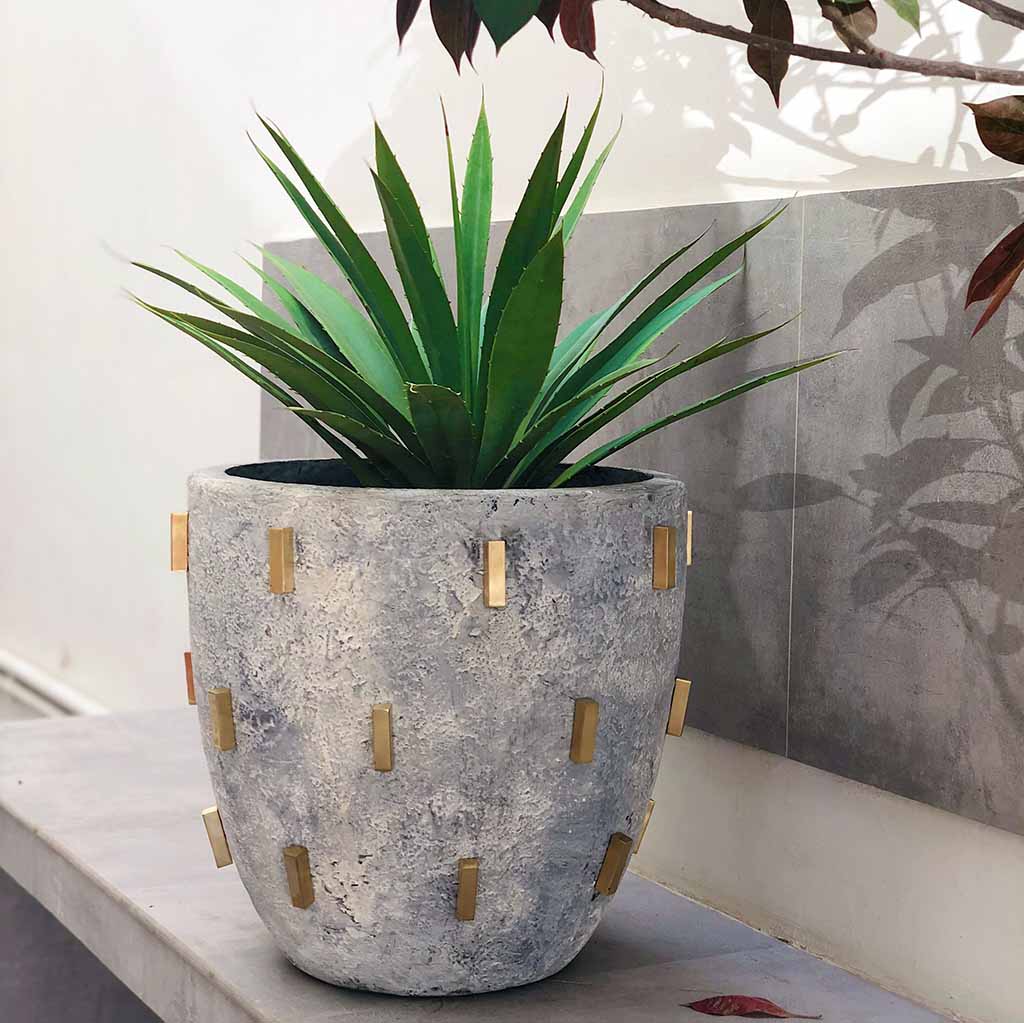
Designer’s Choice: A sculptural floor-standing cylinder in hand-finished dark stone or textured matte ceramic, standing between 75 and 100 cm, planted with a fiddle leaf fig or a kentia palm. Position it to one side of the largest window, where it intercepts the light and casts a leaf-shadow pattern across the adjacent wall in the afternoon. Flank with a second, shorter vessel in a contrasting material, brushed brass or a pale organic ceramic, to create a compositional pair that avoids exact symmetry.
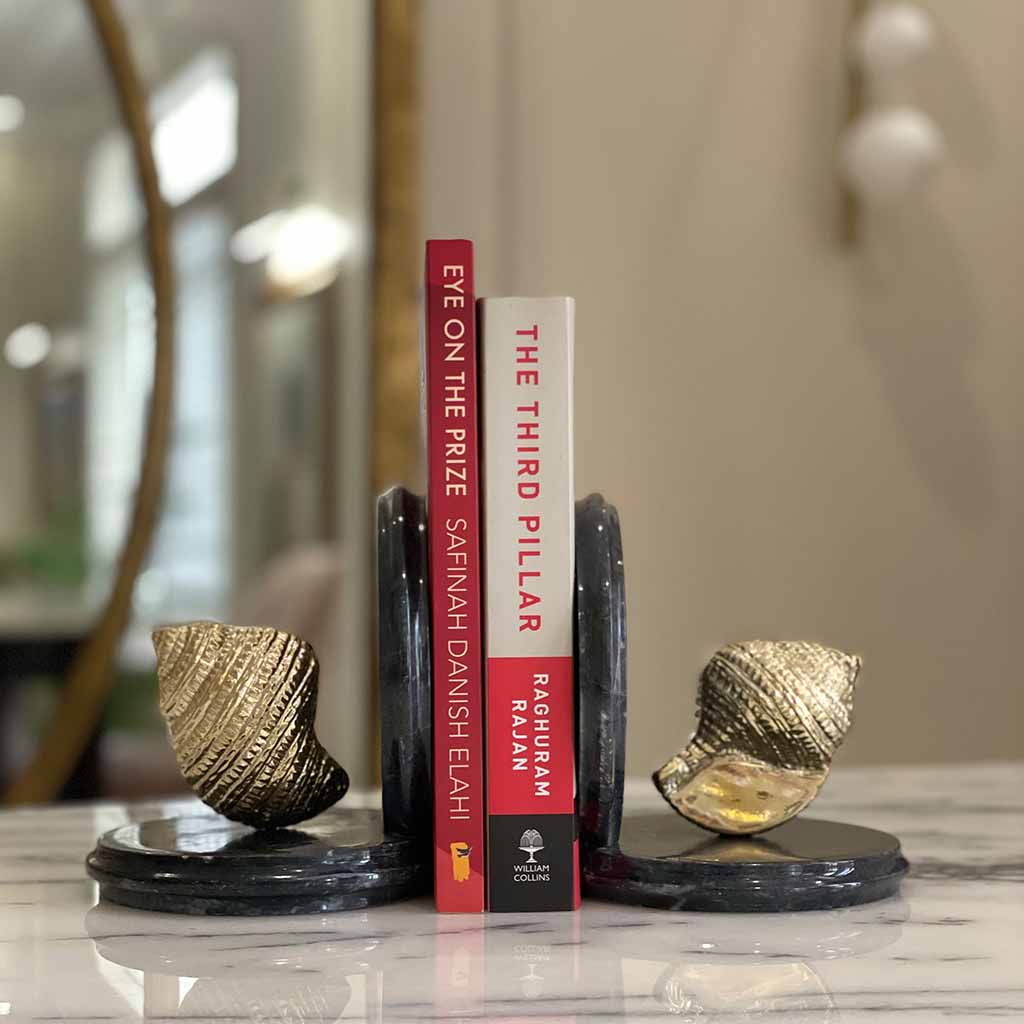
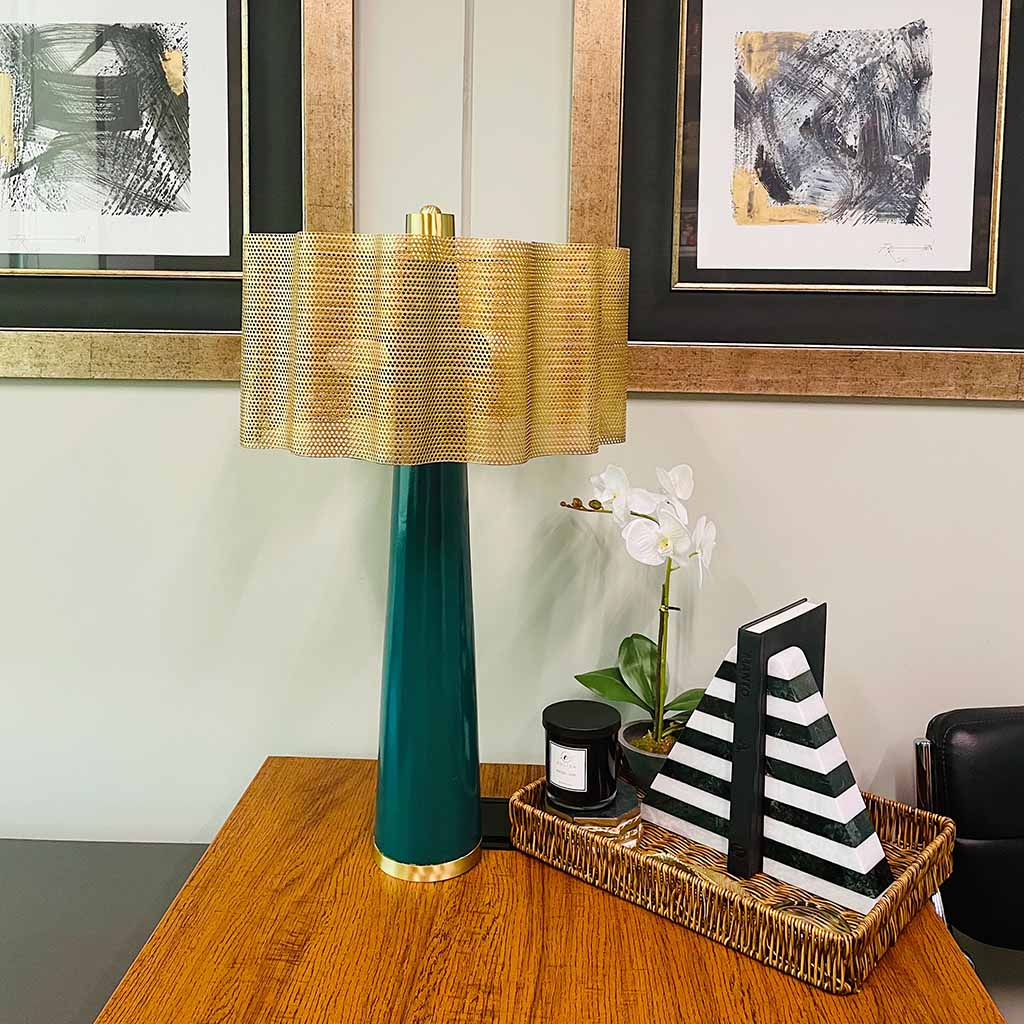
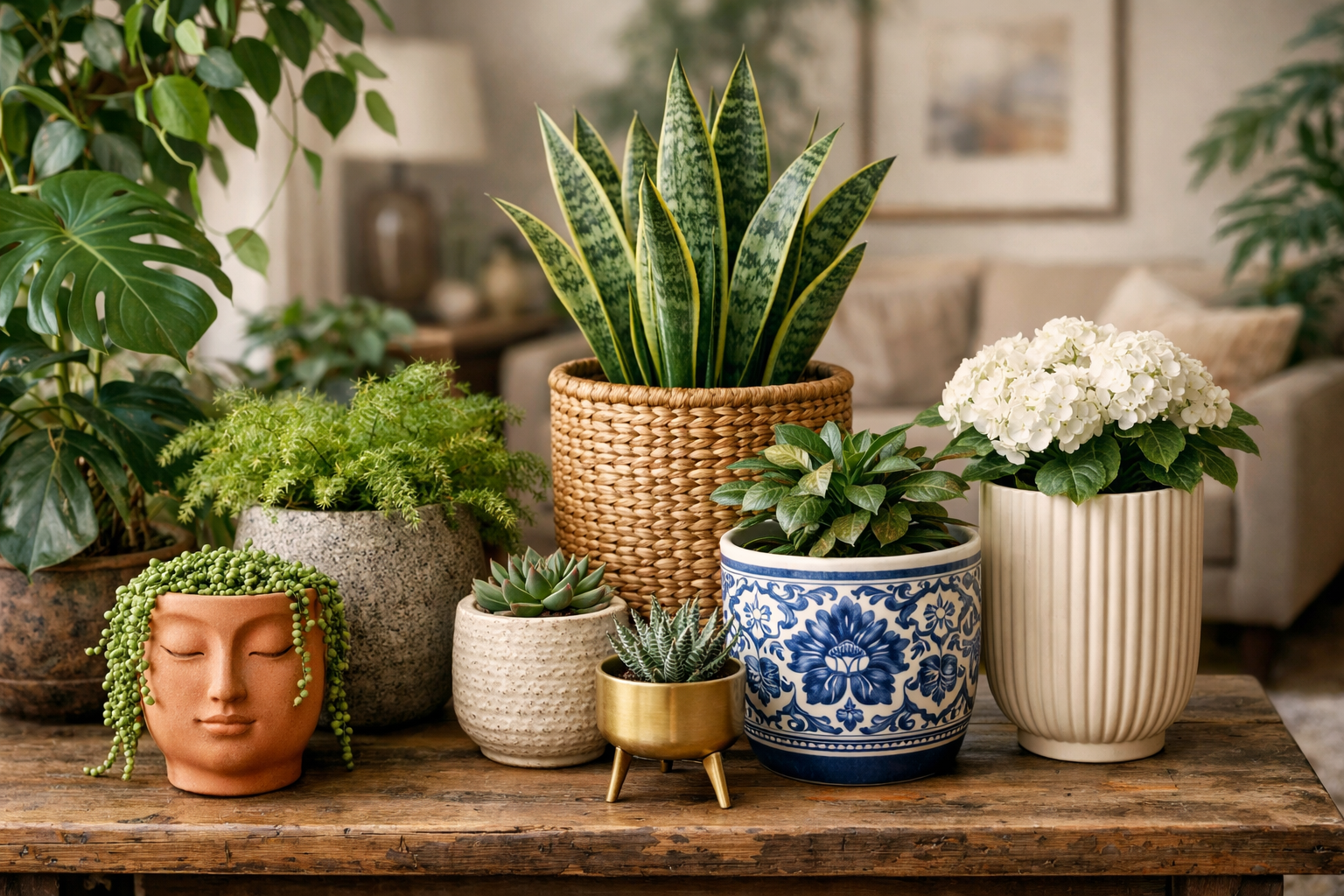
For console tables and shelving vignettes, the rule is restraint plus one bold choice. Two or three plant pots indoor in varying heights, one tall, one medium, one low, grouped with a sculptural object or a candle, create horizontal rhythm without visual noise. The plants themselves should vary in form: one architectural and upright, one trailing softly over the vessel’s edge.
Avoid clustering too many vessels across the floor. One or two commanding pieces anchored intentionally do far more for the room than a scattered collection that reads as indecision.
The Culinary Space: Utility and Crisp Accents
The kitchen presents specific constraints, higher humidity near cooking zones, oil and steam that accumulate on surfaces, and generally less available floor space. Here, plant pots indoor need to earn their place functionally as well as aesthetically.
Designer’s Choice: A geometric pyramid or low bowl-profile vessel in glazed ceramic or powder-coated metal, housing a compact herb plant, rosemary, mint, or Thai basil, placed on a window ledge or on the countertop corner furthest from the hob. In kitchens with open shelving, a trio of small matching ceramic pots in a single tonal family creates a collected, intentional look without overwhelming the workspace.
In culinary spaces, avoid porous terracotta near cooking surfaces, steam and oil accelerate its surface weathering. Glazed finishes and sealed ceramics clean more easily and hold up better in a humid environment. Hanging vessels in geometric metal forms work beautifully in kitchens with high ceilings, drawing the eye upward and using vertical space that otherwise goes unaddressed.
The Bedroom Sanctuary: Serenity and Soft Textures
The bedroom calls for a fundamentally different sensibility. The design goal here is not drama or scale, it is the kind of quiet, layered calm that makes a room feel restorative rather than stimulating.
Designer’s Choice: A slim, medium-height white ceramic or soft blush terracotta planter beside a reading chair or at the far end of a dresser, holding a peace lily or a ZZ plant. On the bedside table, a single small vessel, brushed brass, a low ceramic bowl, or a minimal geometric pot, holding a compact succulent or a trailing pothos, positioned within a three-object still life alongside a candle and a single decorative object.
Low-light tolerance is the primary practical filter for bedroom plant selection. Peace lilies, pothos, snake plants, and ZZ plants all thrive in the reduced light conditions of most bedrooms. The vessel should support the room’s tonal palette, soft whites, warm ivories, aged brass, and natural stone tones, keeping the space cohesive rather than introducing visual competition.
Keep the total number of plant pots indoors in the bedroom to two or three. More than that, and the room begins to feel like a greenhouse rather than a sanctuary.
The Green Vitality Protocol
A well-chosen planter protects both the plant and the surfaces beneath it. Run through this checklist after every installation.
- Line all decorative vessels with a fitted internal plastic liner before planting. This is non-negotiable for marble floors, hardwood, and premium rugs.
- Use a felt or cork pad beneath every planter placed on a console table, shelf, or wooden surface to prevent scratching and moisture transfer.
- Water in the morning, giving the soil time to absorb before evening humidity accumulates, is particularly relevant in Pakistan’s warmer months.
- Check drainage monthly. Compacted soil in sealed vessels can cause root rot within weeks. Refresh the topsoil layer seasonally and ensure the liner is draining between waterings.
- Wipe vessel exteriors weekly. Dust accumulates on both the plant leaves and the vessel surface, dulling the finish over time. A slightly damp cloth on the exterior, followed immediately by a dry buff, keeps premium materials looking their best.
- Rotate planters quarterly to ensure even light exposure across all sides of the plant, preventing the lopsided growth that makes even beautiful plants read as neglected.
- Avoid placing vessels directly over or underfloor heating vents. The concentrated heat dries soil rapidly and stresses root systems in ways that no watering schedule can compensate for.
Browse Creo Living’s full collection of luxury home decor, designer furniture, artisan lamps, premium serveware, and bespoke gifting at pk.creoliving.com, where every room finds the objects it was designed around.
FAQs
1. How do I prevent water damage to luxury console tables?
A: Always use a premium internal liner fitted inside your decorative planter, this keeps the outer vessel completely dry regardless of how much you water. For added protection on high-value surfaces, place a thin cork or felt mat beneath the vessel. Never rely on a shallow saucer alone for floor-standing planters; the overflow risk is too high, and a cracked or misaligned saucer defeats its own purpose.
2. Which indoor plants are the most low-maintenance for busy Pakistani households?
A: Snake plants, ZZ plants, pothos, and peace lilies are all genuinely forgiving. They tolerate irregular watering, adapt to lower light conditions, and respond well to Pakistan’s indoor temperature ranges. For kitchens specifically, rosemary and mint are both practical and visually attractive with minimal upkeep. Avoid ferns and calatheas unless you can commit to consistent humidity management, they punish neglect quickly.
3. How do I choose between a tall, narrow cylinder and a wide, low bowl for the same plant?
A: Follow the root system, not the foliage. Plants with deep, downward-growing root systems, fiddle leaf figs, snake plants, and palms need the depth of a cylinder. Plants with shallow, spreading roots, such as succulents, peace lilies, and ferns, are better served by a wider, lower vessel that gives the roots horizontal room. Forcing a shallow-rooted plant into a deep cylinder often leads to waterlogging at the base, which causes rot long before any surface symptom appears.
4. Can I use the same indoor planters outdoors seasonally?
A: It depends entirely on the material. Glazed ceramic, powder-coated metal, and fibre-reinforced concrete handle outdoor conditions well. Natural marble and unfinished brass are both susceptible to weathering from direct sun, rain, and temperature fluctuation, sealing them with an appropriate stone or metal sealant before outdoor exposure is essential, and even then, extended outdoor placement is not recommended. Terracotta, while beautiful outdoors, can crack in temperature extremes if moisture trapped in its pores freezes, less relevant in Pakistan’s climate, but worth noting for cooler highland regions.