From Hidden Utility to Countertop Art
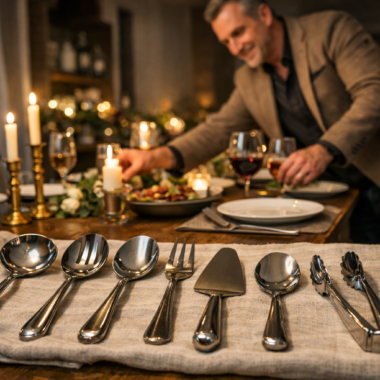
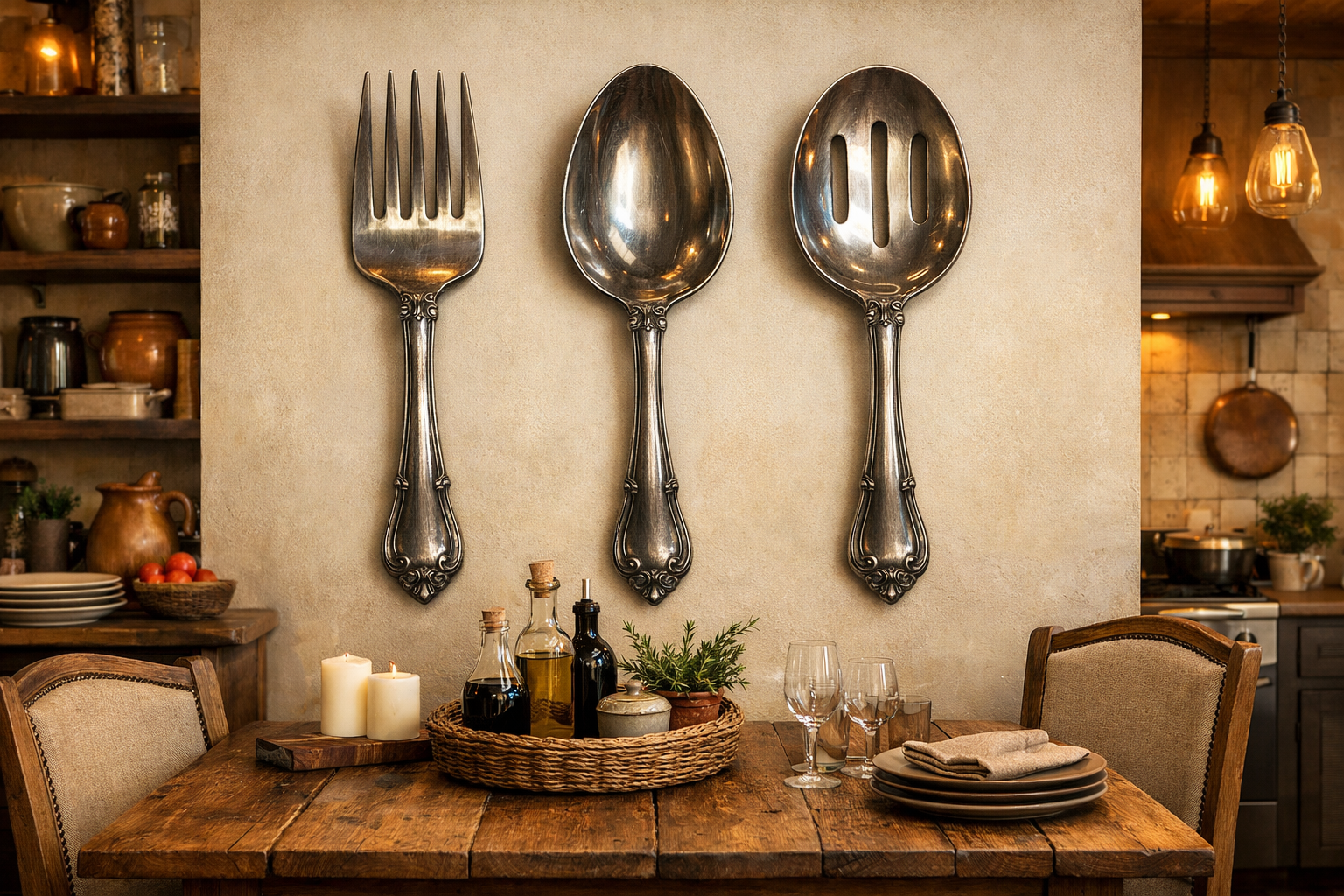
There was a time when the drawer was the final destination for every serving spoon, every set of tongs, every ladle worth owning. Function lived in the dark, and beauty was reserved for the dining table alone. That divide is closing fast in Pakistani homes. Kitchens are becoming the room guests linger in before dinner is even served, and the tools that once hid behind cabinet doors are stepping into the light, arranged on countertops, sideboards, and open shelving with the same care once given to a mantelpiece.
This shift isn’t about clutter or performative styling. It’s about recognizing that a hand-forged serving spoon or a carved wooden salad set is already a small work of craftsmanship. Leaving it buried denies the object its purpose twice over, first as a tool, then as something genuinely worth looking at. When prep work and hosting both become sensory experiences, the kitchen stops being purely functional and starts feeling considered, the way a well-dressed room does.
Sculptural Utility: Utensils as Design Objects
Look closely at a well-made serving piece, and you will notice it was never designed to disappear. Hammered brass catches light differently than stainless steel. Hand-carved walnut or sheesham holds the faint memory of the tool that shaped it. These aren’t accessories in the decorative sense, they are micro-sculptures that happen to serve a second purpose at the table.
Displayed with intention, they earn their place among a home’s other design objects:
- A polished brass ladle resting against the curve of a ceramic serving bowl
- Wooden salad servers standing upright in a narrow vessel, handles worn smooth with use
- A pair of vintage-finished tongs laid diagonally across a serving tray, adding a line of visual tension to an otherwise still surface
The contrast matters as much as the object itself. Metal against ceramic, wood against stone, this is where a countertop starts to read as curated rather than simply used.
The Vessel & Placement Guide: Curation on the Counter
A beautiful utensil still needs the right container to make sense visually. This is where most attempts at open storage fall apart, the tools are lovely, but the vessel holding them is an afterthought.
Choosing the right holder:
- Marble crocks ground the display with weight and coolness, ideal near a stove where heat and movement are constant
- Ribbed ceramic jars introduce texture without competing with the utensils themselves
- Antiqued metallic holders, brass, bronze, or aged copper, echo the finish of the tools inside them and read as intentional rather than mismatched
Placement principles worth following:
- Frame the cooktop with a single vessel rather than scattering tools across the counter
- On a kitchen island, keep utensil displays to one edge so the surface still functions for prep
- Near a sideboard, let a vessel of serving tools sit adjacent to a statement cake stand Pakistan hosts increasingly reach for at dessert time, the pairing signals that this corner of the room is built for entertaining, not just storage
The goal is restraint. One well-placed vessel says more than three competing for attention.
Creo Living’s Design Philosophy: Function Meets Artistry
At Creo Living, serving accessories are never treated as an afterthought to furniture or lighting. Each piece, spoon, tray, bowl, stand, is approached as a dual-purpose object meant to hold its own visually, not just perform a task and vanish into a drawer.
This philosophy draws from two directions at once. There’s the quiet luxury sensibility of modern artisan craft, clean lines, honest materials, finishes that age gracefully rather than wear out. And there’s the warmth of traditional Pakistani entertaining, where the table is never an afterthought and hosting is treated as its own art form. The result sits comfortably alongside contemporary dinnerware Pakistan collections that favour texture and restraint over ornamentation, giving a home’s everyday pieces the same design language as its statement furniture.
The Balanced Vignette: Usable Yet Beautiful
A countertop display only works if it survives daily use. The moment a vessel becomes too precious to touch, it stops being part of the kitchen and starts being clutter with good lighting.
Building a vignette that holds up:
- Start with one anchor piece, a serving tray, a vessel, or a cake stand, and build outward from there
- Vary the height by pairing a tall holder with something low and wide, like a shallow bowl or dish
- Mix materials deliberately, one metal element, one wood, one stone or ceramic, no more than three total
- Keep daily tools within arm’s reach of where they’re actually used, not tucked into a corner for looks alone
- Edit ruthlessly, if a piece hasn’t been touched in weeks, it belongs back in storage, not on display
Done well, this kind of styling doesn’t compete with the room, it completes it. The kitchen becomes a space where function and beauty share the same shelf, and hosting an impromptu gathering never requires a scramble to make things presentable.
Elevate your kitchen and dining spaces with Creo Living’s collection of premium serveware, dinnerware, and home décor, pieces made to be seen as much as used. Browse designer serveware online Pakistan shoppers trust for gifting, hosting, and everyday luxury, and bring artistry to every corner of your home.
FAQs
1. How should I clean and maintain displayed brass or metal serving utensils?
A: Wipe metal pieces after each use with a soft, dry cloth, and give brass an occasional polish with a mild, non-abrasive cleaner to preserve its natural warmth without stripping the patina entirely.
2. How do I prevent tarnish on open-air displayed serveware in humid Pakistani kitchens?
A: Keep displayed metal pieces away from direct steam or sink splashback, and store them in low-humidity corners of the kitchen; a light coat of food-safe mineral oil on brass also slows tarnish considerably.
3. What vessel materials work best for humid or high-heat kitchen environments?
A: Marble and ceramic tolerate heat and moisture far better than untreated wood, making them the more practical choice for vessels placed near stovetops or in direct sun.
4. How can I organize a small Pakistani kitchen counter without it looking cluttered?
A: Limit yourself to one display vessel and no more than four utensils at a time, choosing pieces that vary in height and material so the arrangement reads as curated rather than crowded.