





There is a quiet design principle that separates a styled interior from a merely furnished one, and it has nothing to do with budget, square footage, or the prestige of any single piece. It is the principle of visual containment. The deliberate act of drawing an invisible border around a group of objects and declaring: these belong together.
No tool executes this principle more elegantly, or more affordably, than the serving tray.
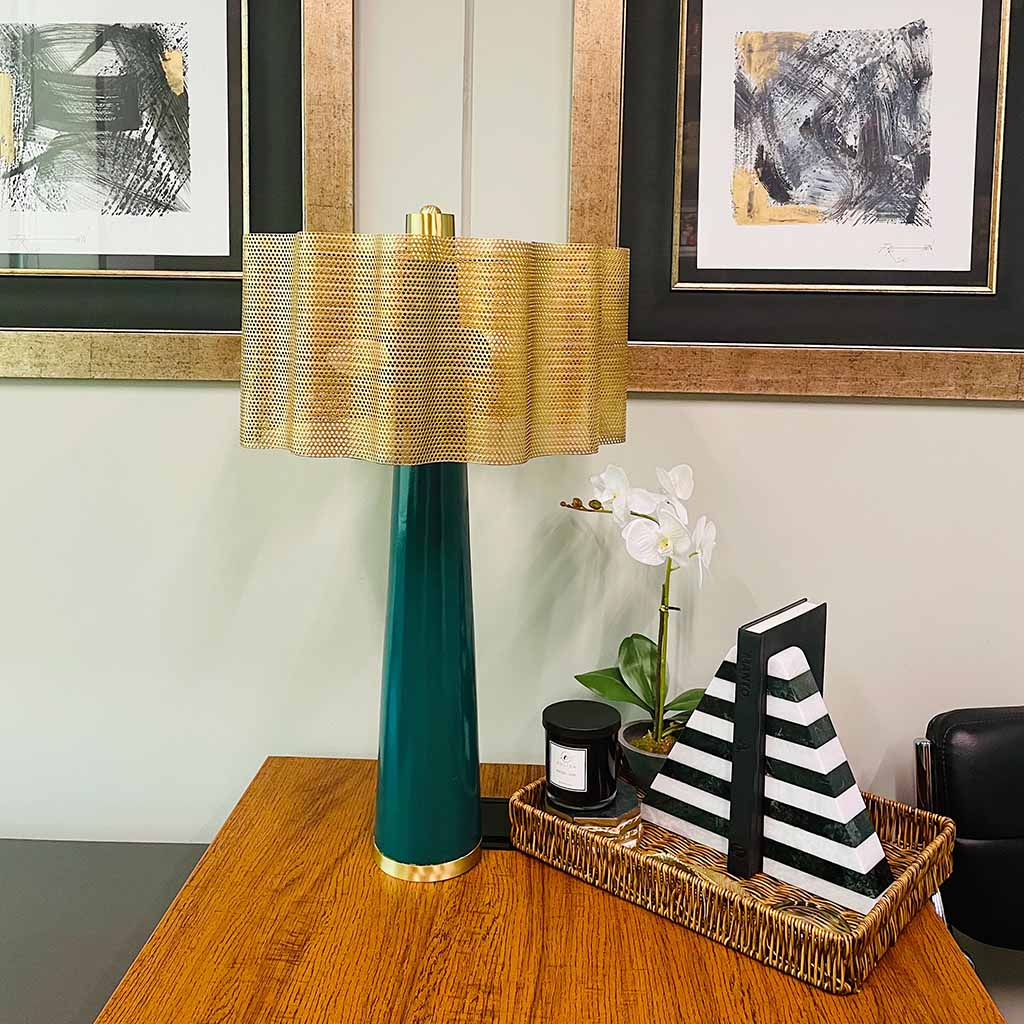
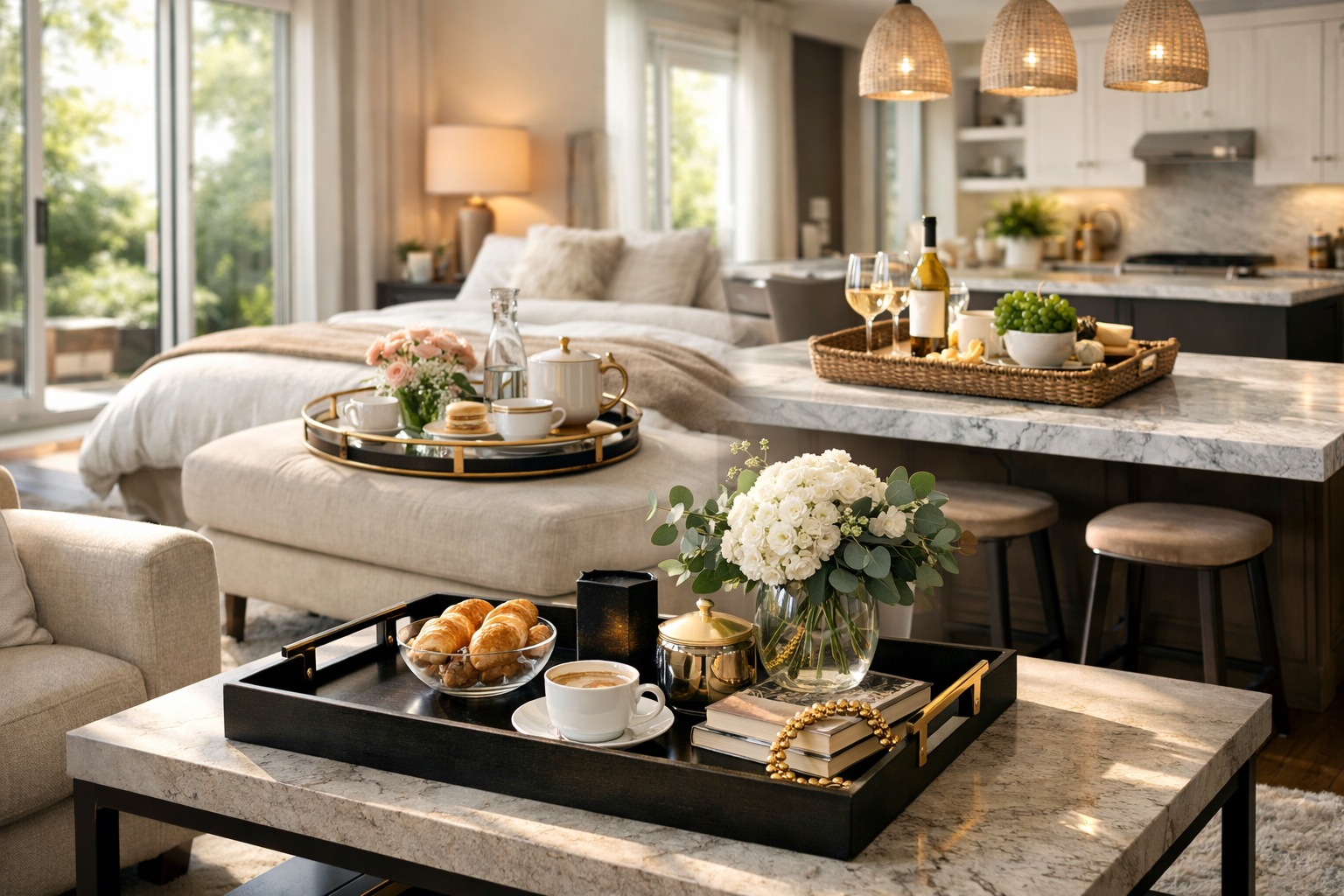
A tray does not simply hold things. It frames them. It transforms a candle, a small plant, and a stack of books from a collection of unrelated objects into a considered composition. It tells the eye where to look, where to rest, and where the vignette ends. In the hands of a confident decorator, a well-chosen serving tray is less a household item and more an architectural gesture, one that imposes order, amplifies beauty, and makes every surface it occupies feel intentional.
Surface by Surface: The Tray Styling Playbook
The Coffee Table
The coffee table is the most scrutinised surface in any living room, present in every photograph, every conversation, every quiet evening at home. It is also the most likely to accumulate the visual noise of daily life: remote controls, coasters, half-read magazines, and phone chargers that have forgotten their purpose.
A serving tray placed at the centre of a coffee table immediately imposes hierarchy. It becomes the primary zone, styled, curated, and untouchable. Everything outside it is permitted its functional chaos. Everything inside it answers to a higher standard.
Style the tray zone with intention:
- Ground the surface with the tray itself in a material that contrasts the table, a marble tray on a dark wood surface, a hammered brass tray on pale stone
- Introduce height with a slim pillar candle or a small sculptural object at the back of the arrangement
- Add organic softness with a compact succulent, a sprig of dried botanicals, or a single stem in a bud vase
- Anchor with weight using one substantial design or coffee table book, positioned flat and slightly off-centre
- Contain the practical, a single coaster set or a discreet remote holder, at the tray’s edge, where function meets form
Decorative trays for coffee table arrangements work best when they occupy roughly one-third of the total table surface, leaving negative space on either side to prevent visual suffocation.
The Sideboard or Credenza
The sideboard operates as the room’s supporting character, visually important, but rarely the focal point. A tray placed here shifts its role from storage surface to display gallery.
- Group by narrative: Decanters and glassware become a bar vignette; a tray containing a diffuser, a folded linen, and a single candle becomes a sensory moment
- Use the tray to frame, not fill: Allow at least one-third of the tray’s interior to remain open, negative space is not emptiness, it is breathing room
- Layer heights deliberately: Tall decanters at the back, medium glassware in the middle, a low object, a matchbox, a small dish, at the front
- Rotate seasonally: This is where a tray earns its permanence. Swap objects for Eid, for winter, for the entertaining season, while the tray itself remains the constant anchor
The Kitchen Counter
The kitchen is where styling instincts most often collapse under the pressure of function. Oils, salts, vinegars, and cooking essentials accumulate without ceremony. A tray solves this entirely.
- Cluster the essentials: A quality olive oil bottle, a ceramic salt cellar, and a small herb pot placed together on a tray instantly read as a styled zone rather than clutter
- Choose sealed, or non-porous materials for kitchen trays, such as lacquered wood, enamelled metal, or sealed stone that withstand humidity and cooking residue without staining
- Keep it edited: A kitchen tray should hold no more than three to four items. Restraint here is its own form of luxury
Material and Size: The Pairing Guide
Matching tray material to the room context is not instinctive, it is learned. Here is the framework:
| Material | Best Room Context | Design Effect |
| Polished marble | Living room, dining room | Cool, sculptural, high-contrast |
| Hammered brass or metal | Entryway, sideboard, bedroom | Warm, artisanal, light-catching |
| Rich walnut or dark wood | Study, kitchen, coffee table | Grounded, organic, approachable |
| High-gloss lacquer | Dressing table, bathroom shelf | Sleek, modern, colour-forward |
| Woven natural fibre | Bedroom, casual living zones | Textural, relaxed, layered |
On sizing: A tray should span at least 50–60% of the surface width it occupies. Too small, and it reads as an afterthought. Too large, and it competes with the surface rather than complementing it.
Micro-Zoning in Open-Plan Homes
The open-plan interior presents a paradox: boundless space that somehow feels harder to style than a series of contained rooms. Without walls to define where one zone ends and another begins, furniture arrangements alone cannot create the sense of distinct, purposeful areas.
Luxury serving trays Pakistan interiors increasingly favour, becoming the defining tool in this context. Placed deliberately across an open floor plan, trays perform the function of invisible walls:
- A large tray anchoring the coffee table defines the living zone
- A tray on the kitchen island creates a dedicated prep or styling station separate from cooking surfaces
- A tray on a console behind the sofa delineates the boundary between living and dining
- Matching trays used across different zones create a visual rhythm without physical division
The effect is a home that feels architecturally considered even in the absence of traditional room boundaries.
The Seamless Shift: From Hosting Centrepiece to Permanent Display
This is where the serving tray distinguishes itself from every other decorative accessory, its capacity to earn its place before, during, and after the occasion.
Before guests arrive: The tray is already styled in its permanent display configuration, candle, object, and book.
When guests arrive, clear the display objects into a sideboard drawer. The tray receives a drinks arrangement, a high tea spread, or a curated appetiser service. It performs without redesign because its proportions and placement were already correct.
After guests leave: The display objects return. The tray resumes its role as a visual anchor. Nothing needs to be re-learned, re-positioned, or rebuilt from scratch.
When you buy serveware online, this is the standard to hold every piece to: does it function under pressure, and does it remain beautiful in the quiet in between? The finest trays answer yes to both without hesitation.
Peruse the full collection of premium serveware, home décor, lamps, furniture, and gifting accessories at pk.creoliving.com, where every piece is chosen for the life it enables. Elevate every surface, every occasion, every gathering: find the tray that belongs in your home.
FAQs
Q: How do I clean a marble or stone serving tray without damaging the surface?
A: Wipe immediately after use with a damp, soft cloth. Avoid acidic cleaners, lemon, vinegar, or bleach-based products, which will etch and dull the stone over time. For sealed marble, a mild dish soap diluted in warm water is sufficient. Dry thoroughly after every clean; prolonged moisture compromises the seal.
Q: What is the ideal tray size for a standard coffee table?
A: For a coffee table between 100–130 cm in length, a tray measuring 45–55 cm works proportionally. It should occupy the central third of the table, leaving equal breathing space on both sides. In a smaller space, err toward a slightly larger tray, it reads as confident rather than cramped.
Q: Can I use a serving tray as a permanent decorative piece, or does it look out of place when not in use?
A: A well-styled tray is never “not in use.” Its display configuration, lamp, book, plant, or candle arrangement, is its resting state. The hosting function is secondary. Choose a tray you would be proud to display empty, and it will always earn its surface.
Q: Should trays match other accessories in the room, or can they contrast?
A: Contrast is almost always the stronger choice. A tray that matches its surface blends in; a tray that contrasts creates definition. Aim to share at least one material or finish note with other elements in the room, a brass tray echoed in a nearby lamp base, for example, rather than forcing a full match.