

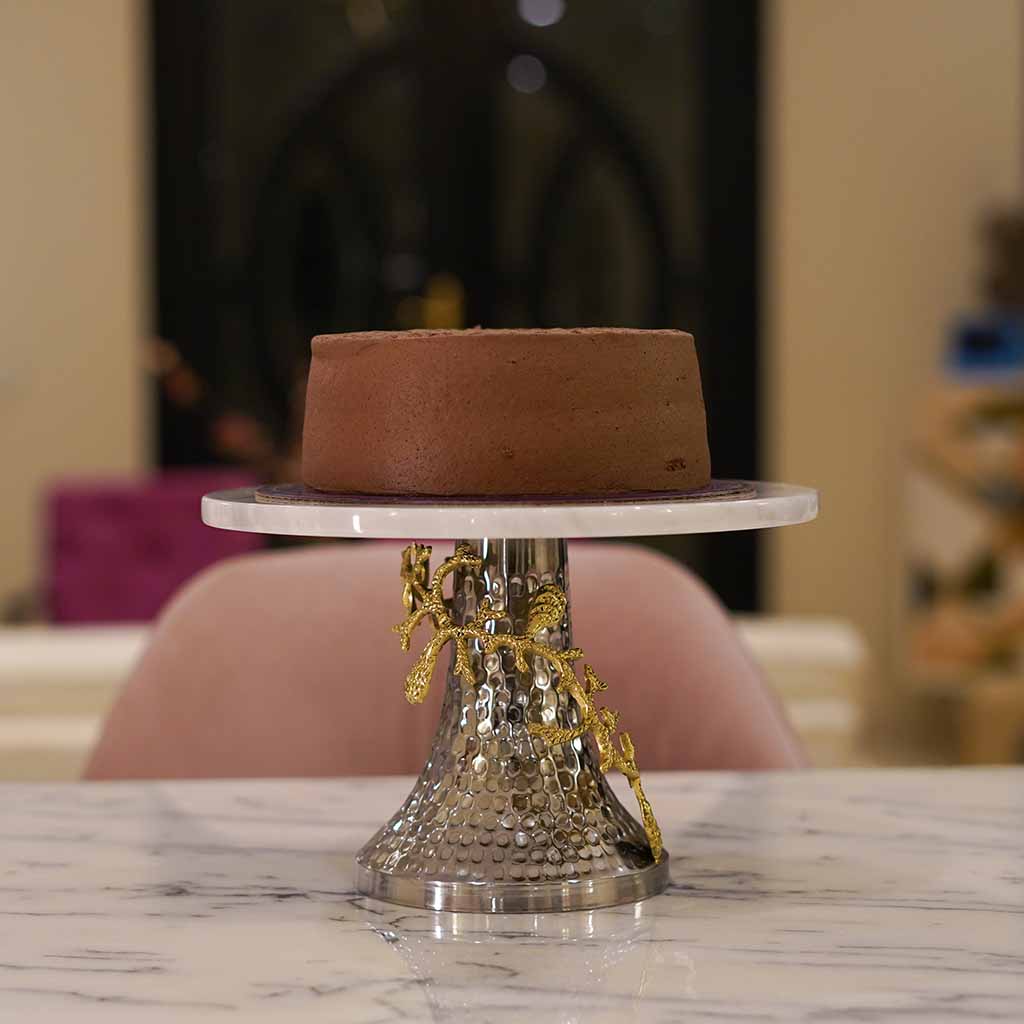
The cake stand has been miscast. For too long, it has lived its best life in the back of a kitchen cabinet, retrieved once a year for a birthday, admired briefly, and returned to darkness before the candles have fully cooled. This is a waste of one of the most architecturally powerful objects a home can possess.
A cake stand is not a party prop. It is a pedestal, and pedestals exist to elevate. In the right hands, a single well-chosen stand transforms a flat, forgettable surface into a composition with height, drama, and genuine visual authority. The question is not when to bring it out. The question is why it was ever put away.
Permanent Placement: Where the Stand Belongs Every Day
The first step in rethinking cake stands is committing to their permanent presence. Not as occasional centrepieces, but as fixed architectural elements of the surfaces they occupy.
The Kitchen Counter
The kitchen counter is where styling instincts most frequently surrender to function. A cake stand reclaims that space without sacrificing practicality:
- Fresh citrus arrangement: A shallow marble stand holding a loose pile of lemons and blood oranges is simultaneously sculptural and functional, the fruit is accessible, beautiful, and never buried in a bowl
- Artisanal bread display: A wooden pedestal stand holding a sourdough loaf or a cloth-wrapped bread basket elevates the morning kitchen into something worth photographing
- Herb and condiment station: A compact tiered stand holding small potted herbs, rosemary, thyme, basil, alongside a salt cellar creates a styled kitchen zone that earns its counter space daily
The Dining Table
Between meals, a dining table is dead space. A cake stand reanimates it:
- Position a single elegant stand at the table’s centre with a loose arrangement of seasonal fruit, a bowl of dried florals, or a stack of small artisanal chocolates
- Rotate the display weekly, it costs nothing and ensures the table always looks considered
The Dining Room Sideboard
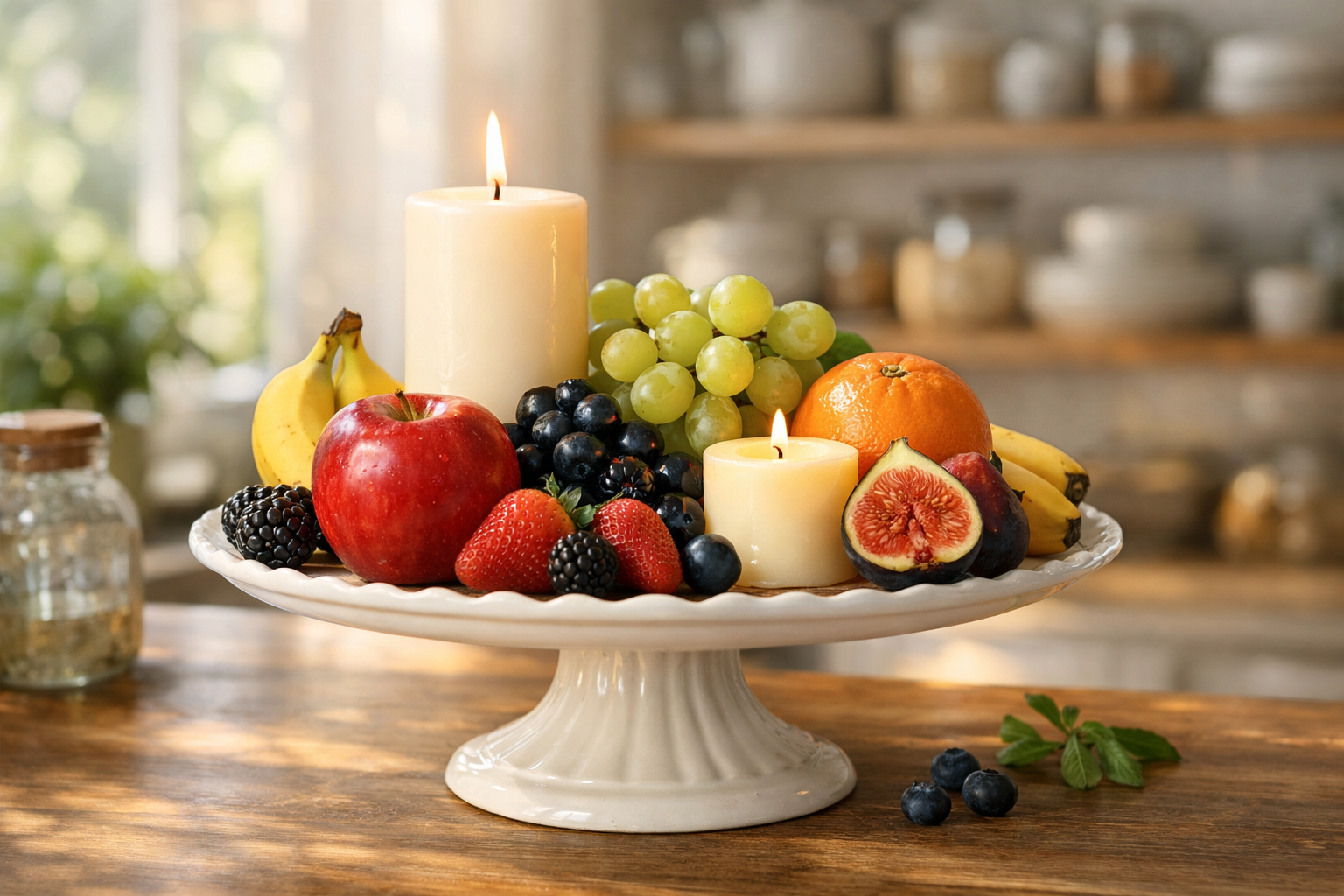
The sideboard is underutilised in most homes. A stand here becomes a display anchor rather than a serving piece, holding objects that read as sculpture: a cluster of ornamental gourds, a collection of polished stones, or a simple arrangement of pillar candles at varying heights.
Mastering the Vertical Dimension
Flat surfaces suffer from a single design flaw: everything on them occupies the same visual plane. Plates, platters, bowls, and trays, however beautiful individually, collectively create a horizontal monotony that the eye processes quickly and forgets faster.
Height is the corrective. And nothing introduces height with more elegance than a pedestal.
3-tier cake stands for desserts, or for any occasion-agnostic display, are among the most effective vertical tools available in a home stylist’s arsenal:
- Tier one (base): The heaviest, most substantial objects, a large fruit cluster, a statement floral arrangement, or the primary serving dish
- Tier two (middle): Medium-weight items with textural contrast, small desserts, cheese portions, folded linens, or a collection of small candles
- Tier three (top): The lightest, most delicate element, a single bloom, a small figurine, a sprig of herbs, or one perfect macaron
The result is a composition with genuine architectural presence: something the eye travels upward through rather than scanning sideways across.
The Layered Table: Mixing Platters and Stands
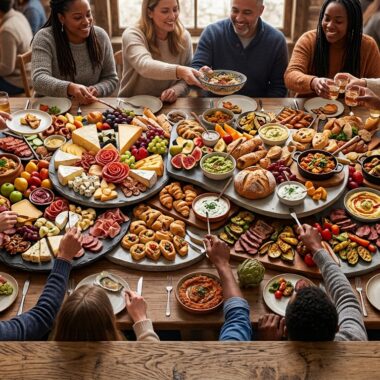
The most visually sophisticated tablescapes are never a single level. They are a deliberate conversation between elevation and flatness, between the stand that draws the eye upward and the platter that grounds it.
For a High-Energy Festive Spread
- Lead with height: Position the tallest stand, ideally a three-tier, at the table’s centre as the undisputed focal point
- Flank with mid-height stands: Two single-pedestal stands on either side, holding savoury bites or dessert portions, create symmetry without rigidity
- Ground with flat platters: Large marble or stone platters at the table’s edges carry the volume, the charcuterie, the breads, the spreads, while the stands above carry the theatre
- Allow negative space: Every surface between platters and stands should breathe; overcrowding collapses the architecture you have spent time building
For an Intimate Weekend Brunch
- Use a single stand as the centrepiece, a wooden or ceramic pedestal holding a small stack of pancakes, a fruit arrangement, or a cluster of pastries
- Two flat plates flank it on either side: one carrying sliced fruit, one carrying a simple cheese selection
- A bud vase or small candle sits beside the stand, not on it, at eye level with seated guests
- The mood is warm and unforced; the styling is minimal but unmistakably considered
From Festive Feasts to Daily Rituals
Grand Eid Spreads
Luxury cake stands Pakistan homes have embraced as centrepieces of the Eid table, bring a ceremonial quality to the spread that no flat platter can replicate:
- Tier one: A generous arrangement of dates, Medjool, Safawi, or Ajwa, presented in a small ceramic dish
- Tier two: Assorted mithai, barfi, ladoo, or halwa, arranged by colour for visual cohesion
- Tier three: Individually wrapped or plated petit fours, garnished with rose petals or crushed pistachios
- Surround the stand with flat platters of savoury pastries and fried bites to complete the spread’s range
Contemporary Dinner Parties
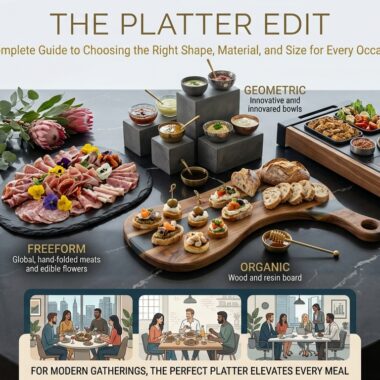
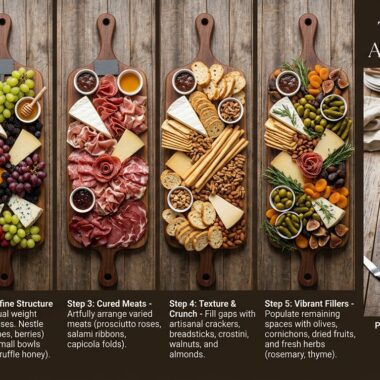
- A marble or glass stand carrying a curated charcuterie selection, cured meats, artisanal crackers, fresh figs, becomes the table’s social centrepiece
- Layer textures deliberately: the smoothness of sliced cheese against the roughness of seeded crackers against the softness of honeycomb
- Guests gather around the height instinctively; a stand at the centre of a dinner party table creates a natural congregation
Everyday Kitchen Elegance
- A single pedestal stand on the kitchen counter holding the morning’s baked goods, croissants, muffins, or toast, makes breakfast feel like a ritual rather than a routine
- A small tiered stand beside the kettle carrying tea essentials, sugar cubes, a honey jar, a teaspoon, transforms the tea corner into something genuinely lovely
Browse the full range of premium serveware, cake stands, home décor, lamps, furniture, and gifting collections at pk.creoliving.com, where each piece is chosen to make the everyday extraordinary. Find the centrepiece your table has always deserved and acquire the stand that earns its place on every surface, every day.
FAQs
Q: What material is best for an everyday cake stand that will also be used for serving?
A: Marble and sealed stone are the most versatile choices, visually striking, easy to wipe clean, and durable under daily use. For warmer, more organic interiors, lacquered wood or ceramic pedestals offer beauty without the weight. Avoid unsealed porous materials for food contact surfaces.
Q: How do I care for a marble cake stand after use?
A: Wipe immediately with a soft, damp cloth after any food contact. Never use acidic cleaners, lemon juice, vinegar, or citrus-based products will etch the surface permanently. For sealed marble, mild soap and warm water are sufficient. Dry thoroughly to prevent water marks from settling into the stone.
Q: What size cake stand works best for a standard dining table?
A: For a four to six-seater dining table, a stand with a base diameter of 25–35 cm reads as proportionally confident without dominating the surface. For larger tables or festive spreads, scaling up to 40 cm or using multiple stands of varying heights creates a more complete composition.
Q: When I buy cake stands online in Pakistan, what specifications should I check before purchasing?
A: Prioritise base diameter, overall height, and weight-bearing capacity, especially for tiered options. When you buy cake stands online in Pakistan, confirm whether the material is sealed (critical for marble and stone), whether tiers are removable for storage and cleaning, and request close-up photography of the finish in natural light to assess true colour and texture.