








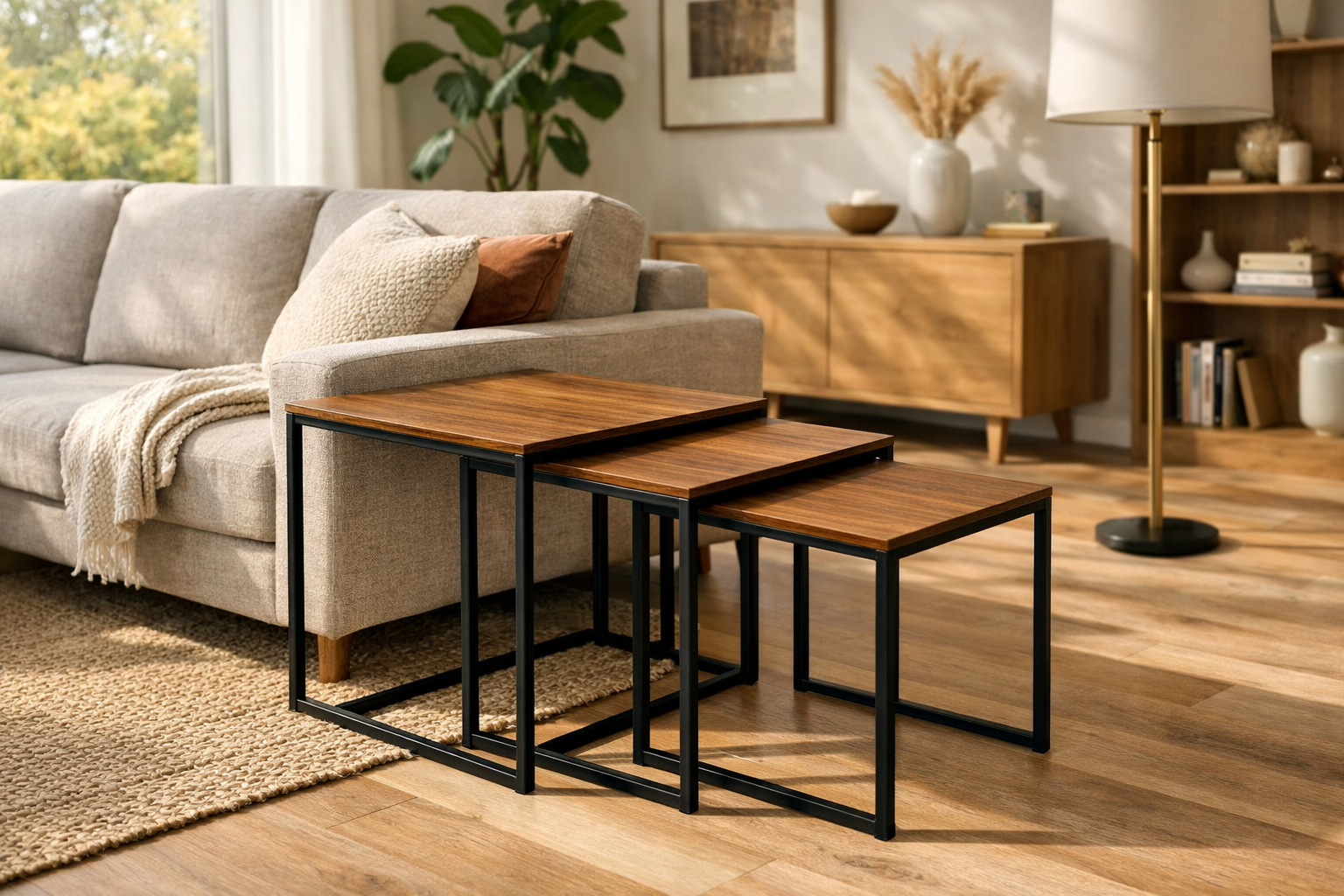
The Architectural Solution to Compact Living
A nesting table set is a family of two or three surfaces, graduated in scale, designed to slide beneath one another and re-emerge exactly when needed. It sounds like a small idea. In practice, it is one of the more disciplined pieces of furniture theory available to homeowners today, and it explains why designers keep returning to it project after project.
Most furniture is conceived as a fixed volume, a coffee table occupies its footprint whether you are hosting twelve guests or reading alone with a cup of chai. Nesting tables reject that premise. They behave less like static objects and more like fluid architecture: surfaces that expand, contract, and reconfigure in response to how a room is actually used. For homes across Karachi, Lahore, and Islamabad, where floor plans increasingly favour open-concept living and drawing rooms double as entertaining spaces, this adaptability is a genuinely practical solution for the limited square footage most of us actually have.
Tripartite Utility: The Power to Group, Separate, or Stack
The defining strength of a nesting set is that it offers three distinct configurations from a single purchase.
Grouped. Pushed together, the tiers create a cascading, sculptural centerpiece, each surface visible at a slightly different height, producing a layered silhouette that a single flat-topped table cannot achieve. This is the configuration for quiet weeks, when the room needs a defined anchor.
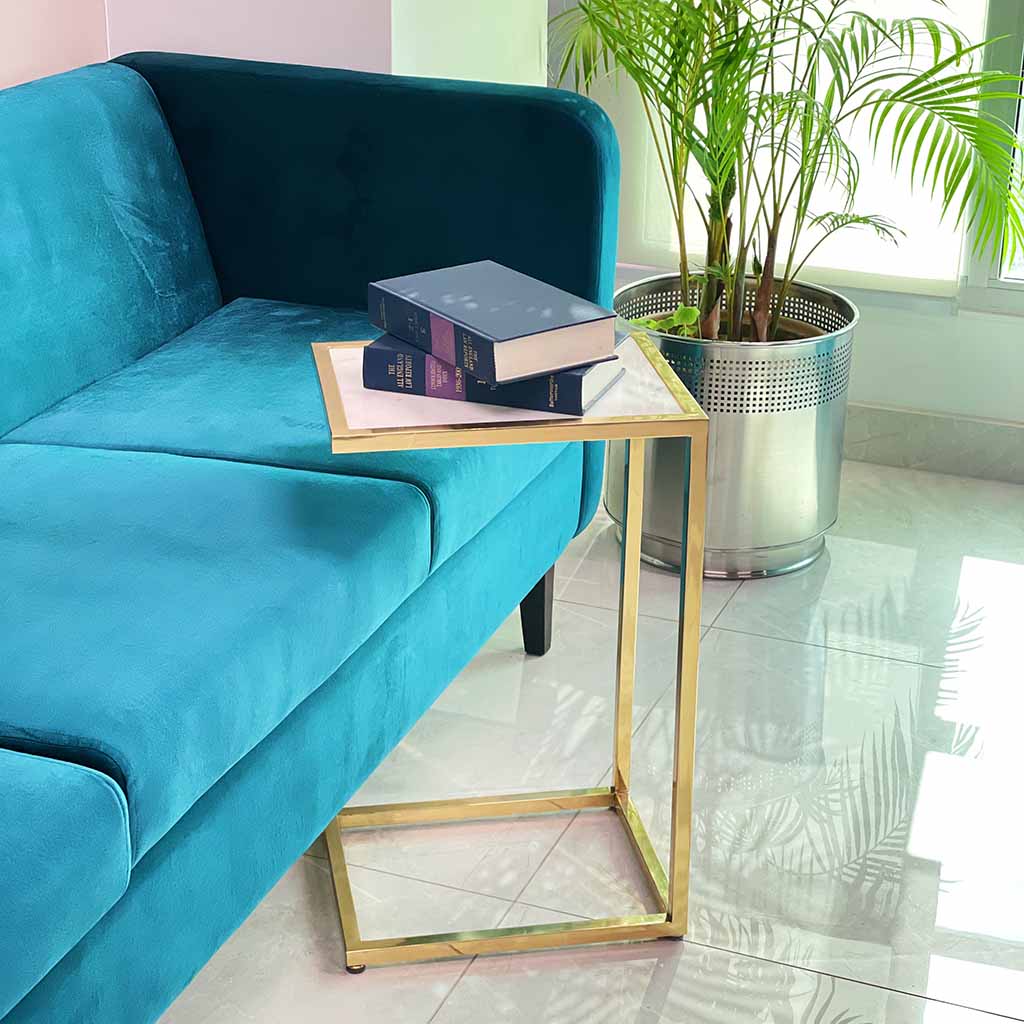
Separated. Pull the tables apart, and each becomes an independent unit, positioned wherever a flat surface is suddenly required, beside an armchair pulled in for a guest, next to a sofa arm for a resting teacup, or flanking either end of a sectional. This is where nesting tables outperform a fixed coffee table: they scale to the number of people actually in the room.
Stacked. Collapsed fully into one another, the set reduces to the footprint of its largest member, the option to reclaim floor space on demand, rather than living permanently around a piece sized for the busiest possible day.
No other category of furniture offers this range of movement from one investment, which is part of why nesting sets sit at the center of most contemporary interior design conversations about small-footprint living.
Room-by-Room Styling Guide
Living Rooms & Drawing Rooms. Use a nesting set in place of a single bulky coffee table when the room needs to preserve clear sightlines, particularly in drawing rooms used for both daily family life and formal sitting. Flank a sofa with two separated tiers instead of one central table, and the room reads more open, less furnished-in.
Bedrooms. A single tier of a nesting set makes an unexpectedly elegant nightstand, narrow enough to sit close to the bed frame, with a second tier tucked beneath to hold books, a reading lamp, or an evening glass of water without crowding the surface above.
Home Offices & Libraries. In a study or reading corner, a nesting table becomes a mobile side station, rolled or carried beside a desk to hold a laptop, a stack of files, or a tea tray, then tucked away again once the workday ends.
Tactile Luxury: Material Combinations That Elevate Spaces
Because nesting tables are handled and repositioned more frequently than most furniture, material choice carries real weight, both aesthetic and literal.
- Honed marble & sculptural metal. A cool, honed marble top set on a powder-coated or polished metal base delivers the visual gravity of stone without the bulk of a solid slab piece. Marble side tables for living room settings, in particular, benefit from this pairing, the stone reads as considered and permanent, while the metal frame keeps the silhouette light enough to move.
- Solid timbers & warm brass. A dark walnut or teak surface against a gleaming brass frame produces contrast that photographs beautifully and ages well in daily use, the wood develops patina, the brass holds its shine.
A well-made nesting table should never feel flimsy underfoot or in hand. Confirm joinery is solid, bases are weighted for stability rather than tipping, and that any stone top is properly seated and edge-finished before it enters daily rotation.
Buyer’s Guide: Matching Nesting Sets to Your Seating Arrangement
Scale is the single most common mistake in nesting table selection. A few working rules:
- Height ratio. The tallest tier should sit at or slightly below sofa-arm height, roughly 1 to 2 inches lower is the safest default for comfortable reach.
- Sectional seating. For L-shaped sectionals, separated tiers work better positioned at the corner and along the chaise, rather than centered, since the seating itself has no single center point.
- Accent armchairs. A single small tier, rather than the full set, is often enough beside an accent chair, reserve the larger grouped configuration for the main seating cluster.
- Silhouette matching. Pair angular, straight-legged bases with structured sofas; choose curved or sculptural bases for rounder, more relaxed seating profiles.
Getting this proportion right is what separates a nesting set that looks intentional from one that simply looks small. If you plan to buy side tables online in Pakistan, take room measurements and sofa-arm height before browsing, dimension-first shopping, rather than image-first shopping, is what makes a nesting set feel built for the room.
If your rooms are asking for furniture that moves as fluidly as your household does, Creo Living’s collection of nesting tables, side tables, and home accessories is built for exactly that kind of everyday elegance. Browse the full edit online in Pakistan and bring home a piece designed to work as hard as your space demands.
FAQs
1. How many pieces should a nesting table set include?
A: Two-tier sets suit smaller living rooms and bedrooms; three-tier sets offer more flexibility for larger drawing rooms that regularly host guests and need multiple independent surfaces.
2. How do I clean and maintain a marble-topped nesting table?
A: Wipe with a soft, slightly damp cloth and a pH-neutral cleaner, avoid acidic or abrasive products that etch the stone, and reseal honed marble periodically to protect against staining.
3. Can nesting tables replace a full coffee table entirely?
A: Yes, in most living rooms, a grouped nesting set can fully substitute for a traditional coffee table, while offering the added benefit of separating into individual surfaces when the room fills with guests.
4. Where should I position a nesting set relative to walking paths?
A: Keep the largest tier at least 14 to 16 inches from the sofa edge to preserve a clear walking path, and slide separated tiers back against seating when not actively in use.